Koten engei (literally ‘classical horticulture’) is the Japanese tradition of (somewhat obsessively) growing and displaying select groups of Japanese native plants with a focus on natural variations and mutations. Plant societies hold shows and the plants are displayed in special hand-made pots, which themselves are often very beautiful. The emphasis is almost always on foliage, with flowers a bonus rather than the main attraction. The societies classify and rank varieties in a document called a meikan, published once a year and based on the ranking system for sumo wrestlers.
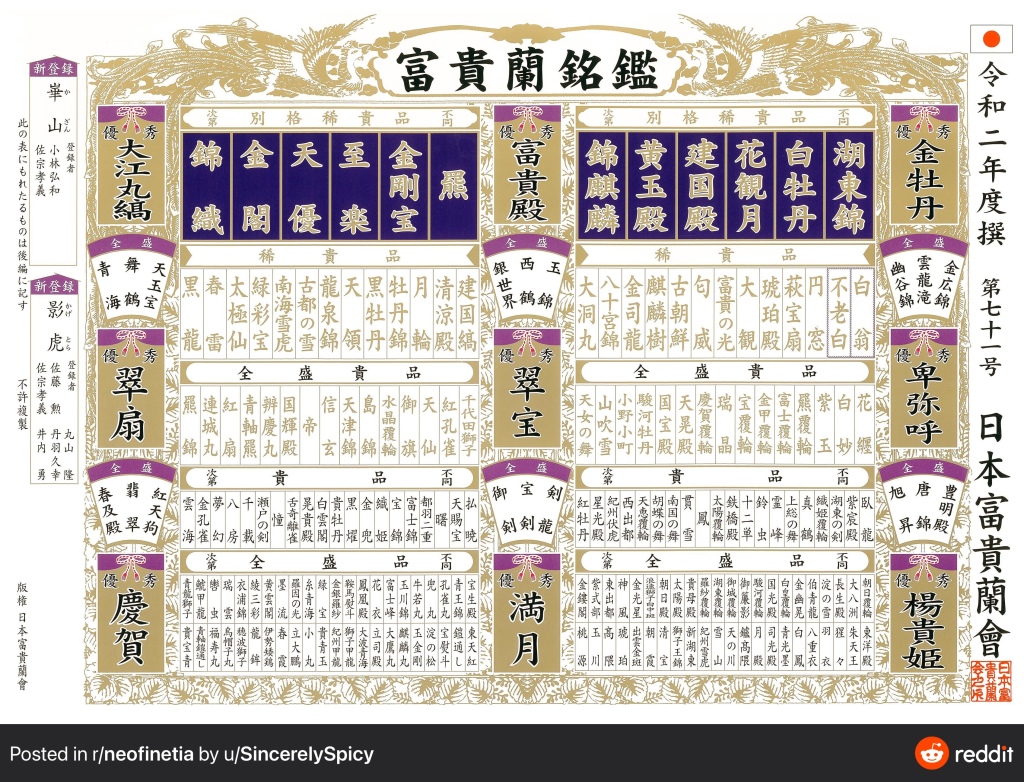
Variegated plants are highly valued in Japanese horticulture, and koten engei plants are no exception, with the various patterns of variegation classified and named. Often, the more highly variegated (and therefore weaker and more difficult to grow) plants are the most prized. Unusual leaf shapes and dwarf forms are also valued. In some plants, such as Neofinetia orchids, shapes of leaf joints and the colours of root tips are assessed and ranked.

The popularity of various koten engei plants waxes and wanes in a cyclical fashion over the years, with particular plants creating mini-booms rather like the Dutch tulip mania of the seventeenth century. There are around 30 koten engei shokobutsu – plants of the koten engei tradition- mostly native to Japan with a few introduced long ago from China and Korea. These include Rohdea japonica (Omoto, the Japanese Sacred Lily), Ardisia japonica, Nandina, Asarums (Wild Gingers), Neofinetia falcata orchids (now Vanda falcata), dwarf Rhapis excelsa (Lady Palms), Chrysanthemums, and Morning Glories (Ipomoea nil) amongst others.
 Japonica Plants Nursery