Maianthemum is a genus of rhizomatous perennials, widely distributed across Asia, Europe, North and Central America. Maianthemum japonicum, formerly Smilacina japonica, is native to Japan, China, Korea and the far east of Russia. Its common name is Japanese False Solomon’s Seal, as the genus is closely related to Polygonatum.
Maianthemum japonicum has arching stems to about 12-18”, 30-45cm, with a panicle of many tiny starlike white flowers at the tip of the stem in May and June. These are followed by shiny red berries in autumn. It prefers woodland conditions: humus rich soil in partial shade, not too dry. In its native habitat it grows in slightly damp montane forests. Propagation is by division of the creeping rhizomes in spring.
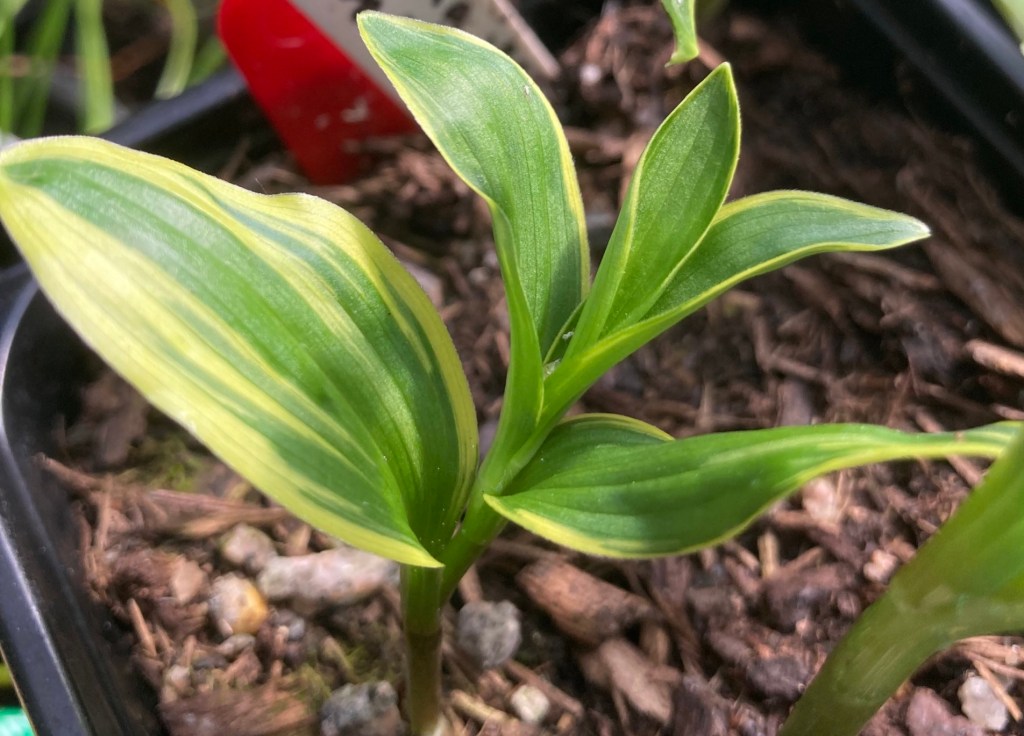
As with many native Japanese plants, a number of variegated varieties have been selected over the years.
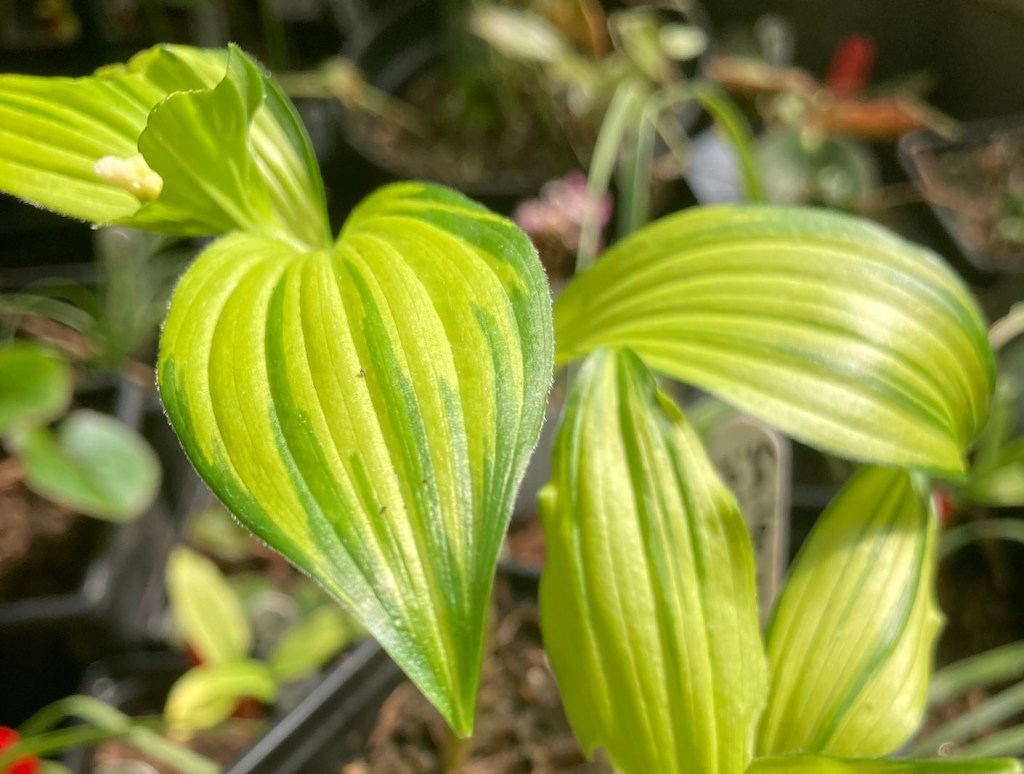
Maianthemum derives its name from the Greek for ‘May Flower’. The Japanese name, ユキザサ, literally ‘snow bamboo’ derives from the white flowers and leaves reminiscent of Sasa bamboo leaves. The new shoots are harvested and eaten as a wild vegetable in Japan, and when boiled are said to taste of adzuki beans, giving it the common name of ‘Red Bean Greens’.
 Japonica Plants Nursery