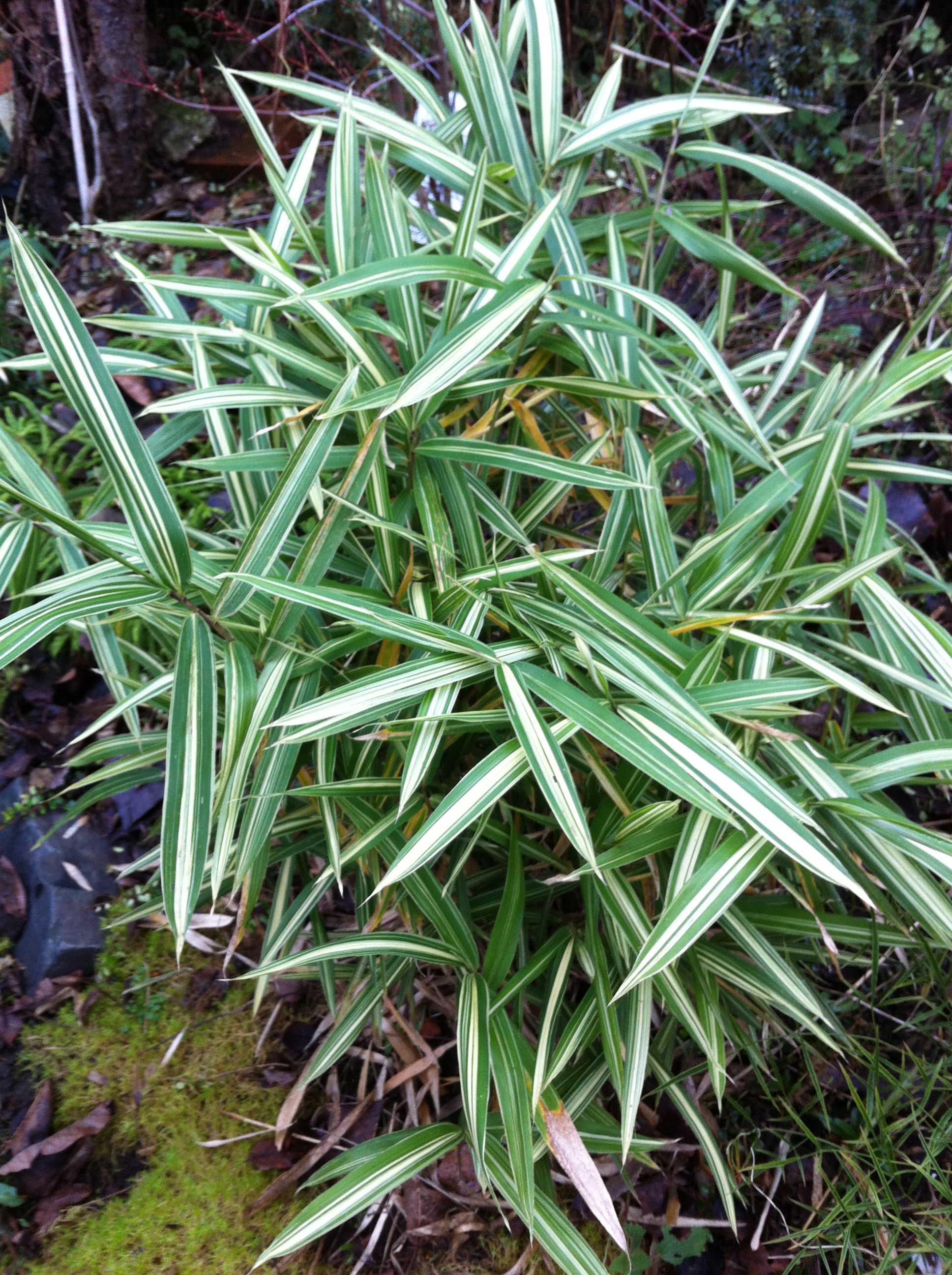
Plant profile: Borinda papyrifera CS1046

There are well over 200 species and varieties of temperate bamboo, and more being introduced all the time, but if I could only have one, this would be it.
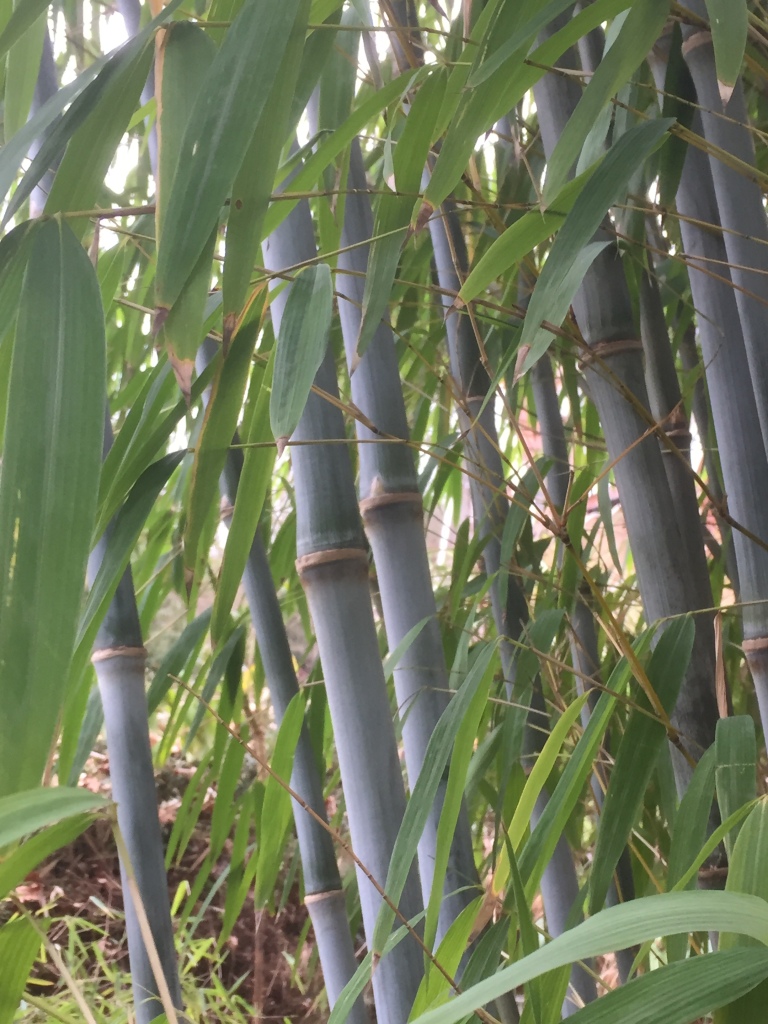
Borinda papyrifera CS1046

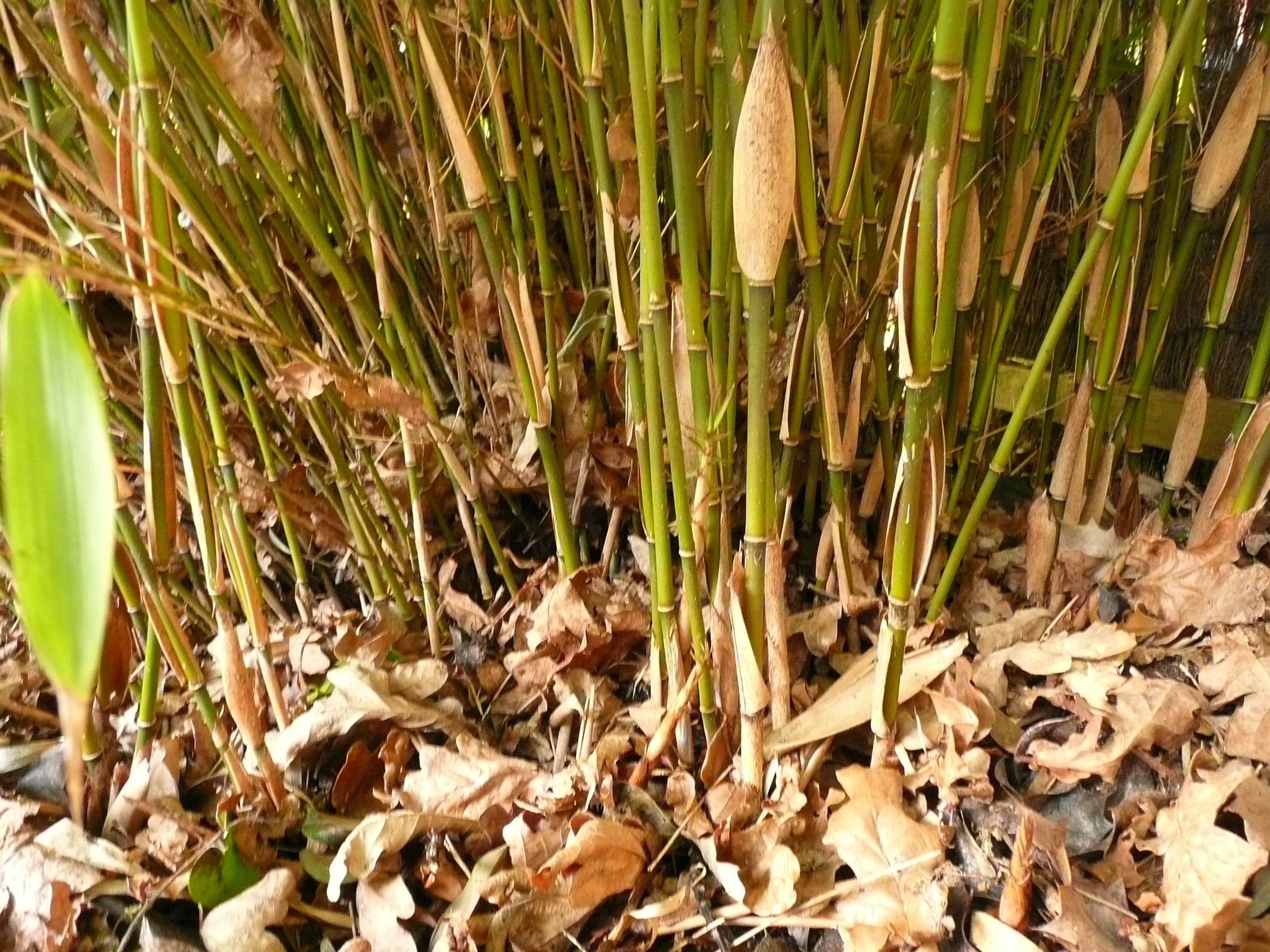
Borinda papyrifera CS1046 is a clump-forming bamboo collected from Yunnan in southwest China by Chris Stapleton (hence ‘CS’). The specific epithet ‘papyrifera’ refers to the large, papery sheaths which protect the emerging culms.
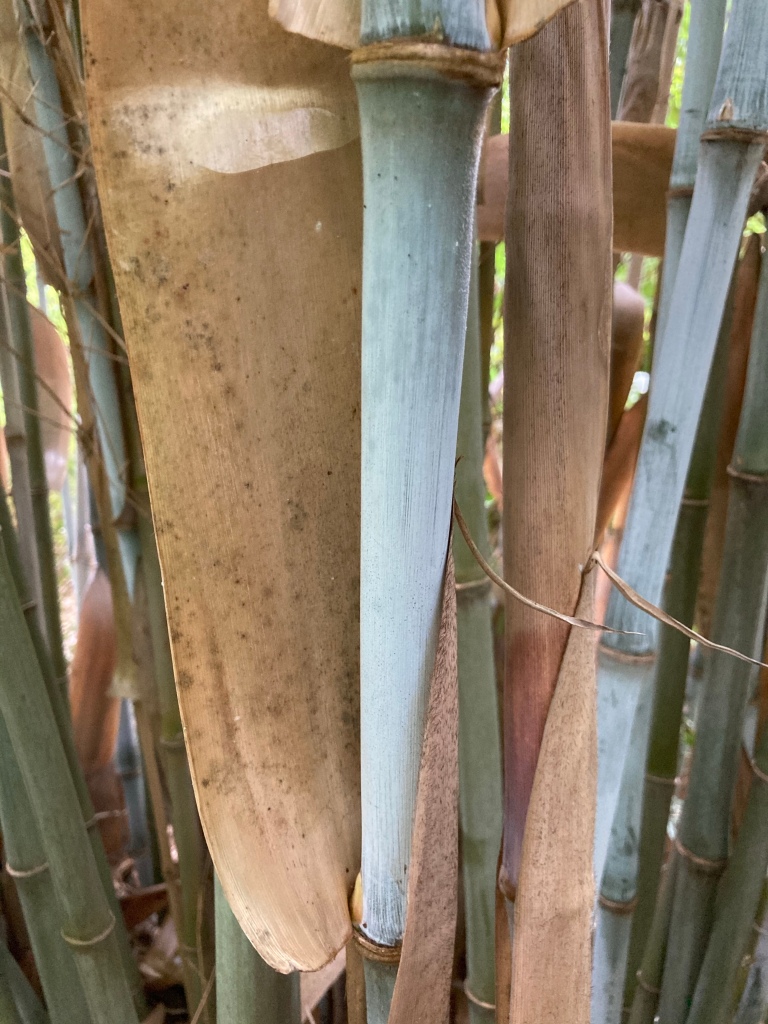
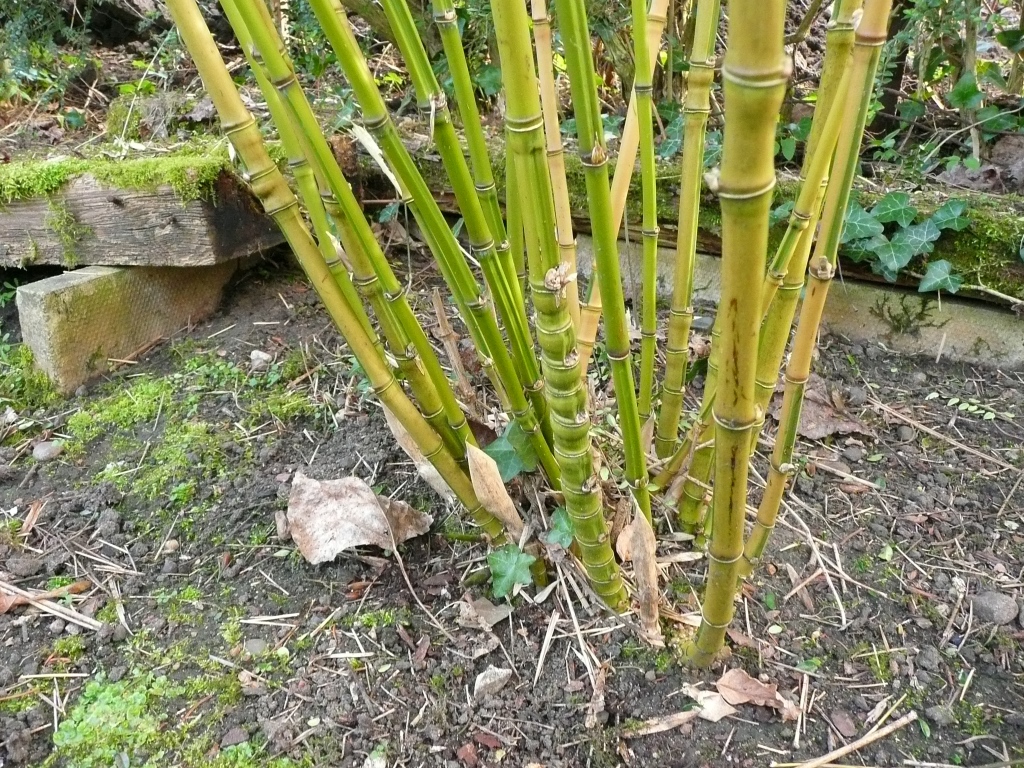
This year’s culm showing the pale colouration and the papery sheath that gives the plant its name.

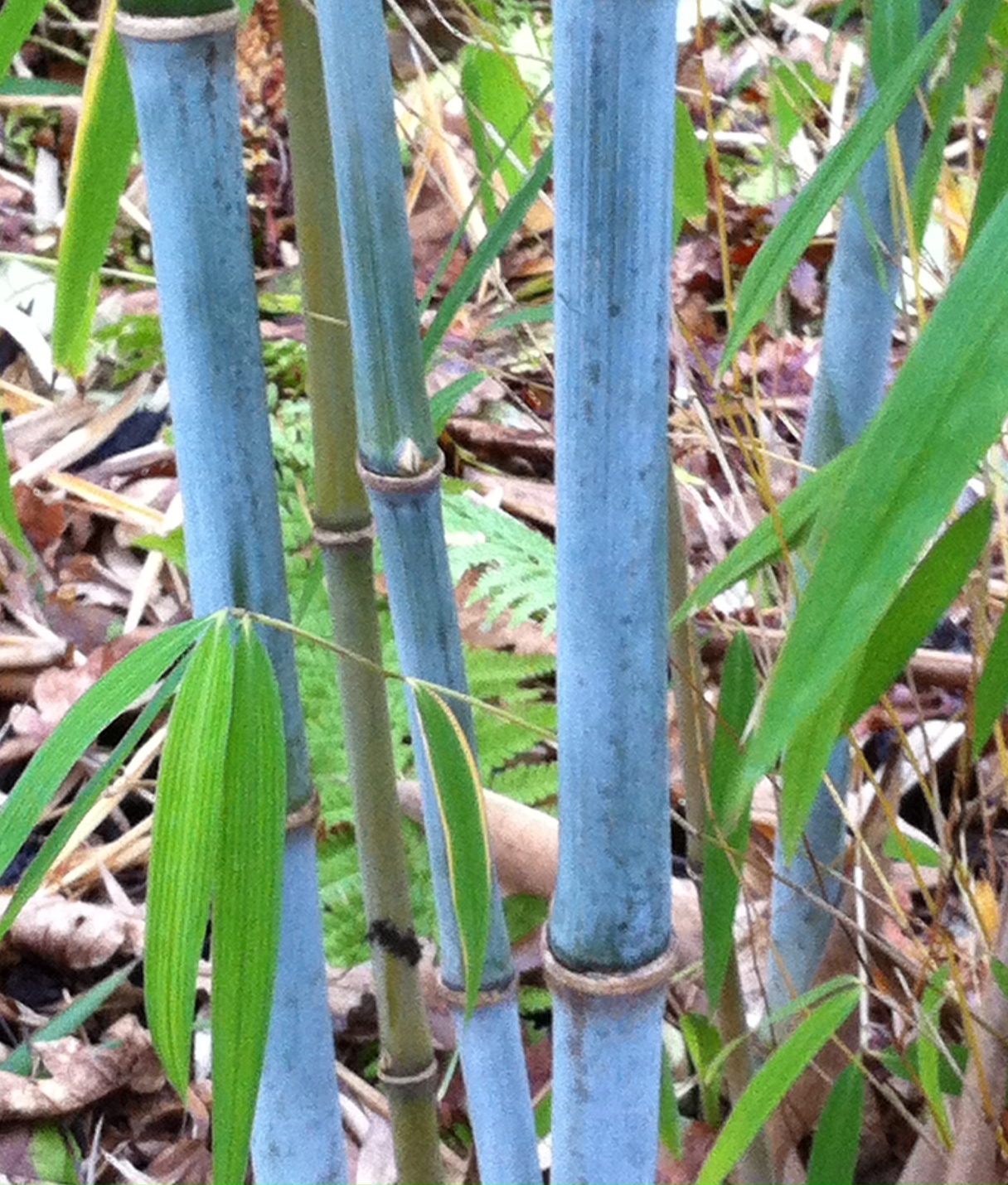
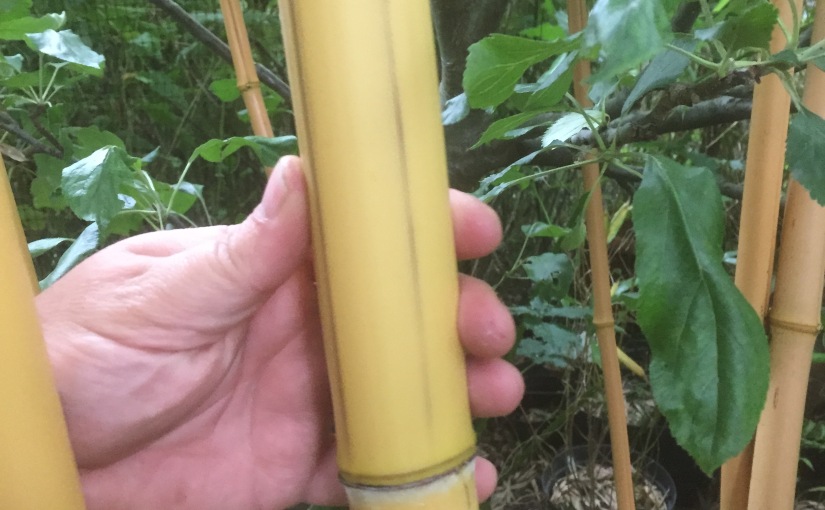
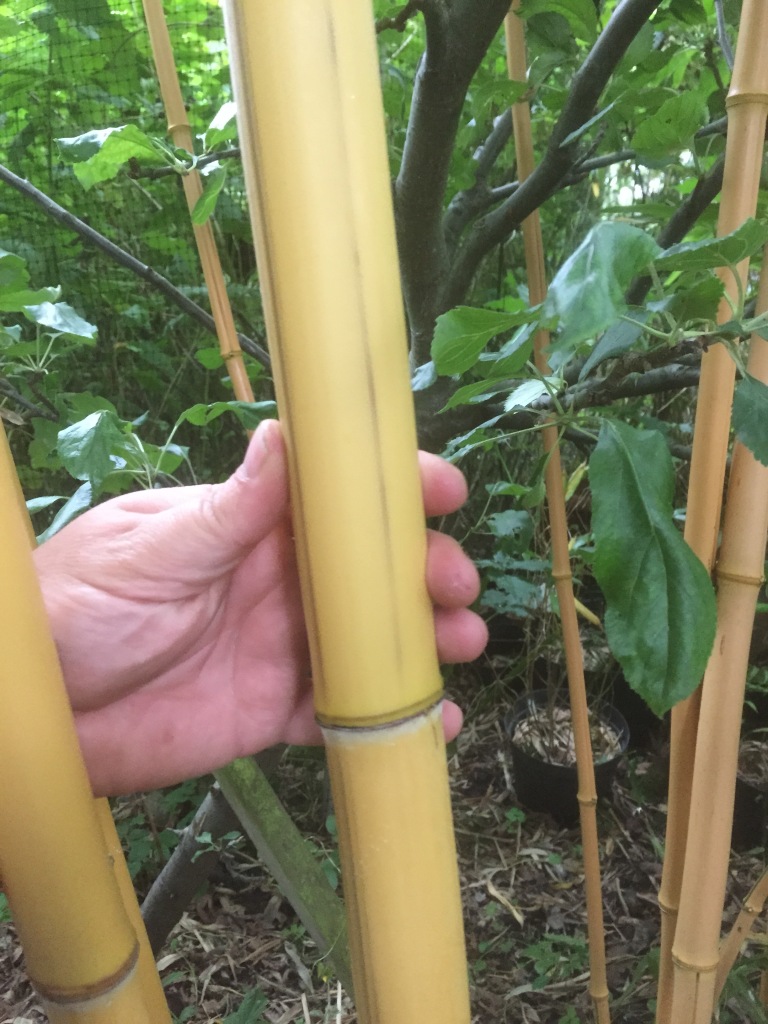
Its most striking and ornamental feature is the icy blue colour of its new culms. This colour is quite persistent, lasting a couple of years before fading to a more greenish shade. The culms are thick – about 2 inches in diameter on my 10 year old plant – and the leaves are quite large.
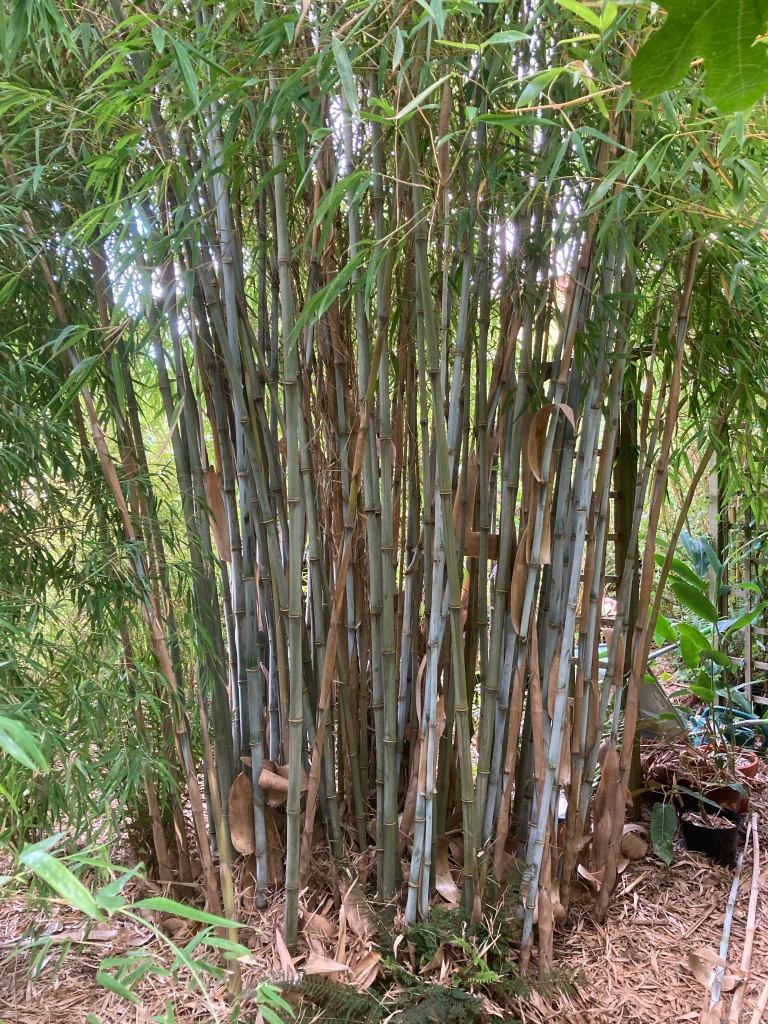
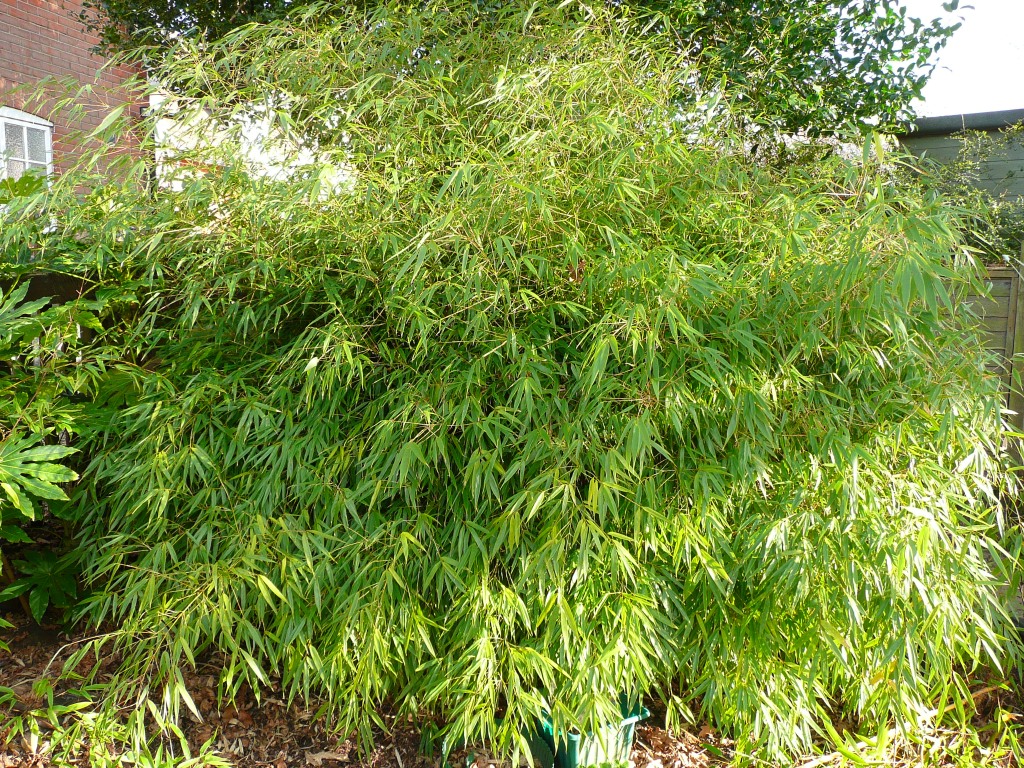
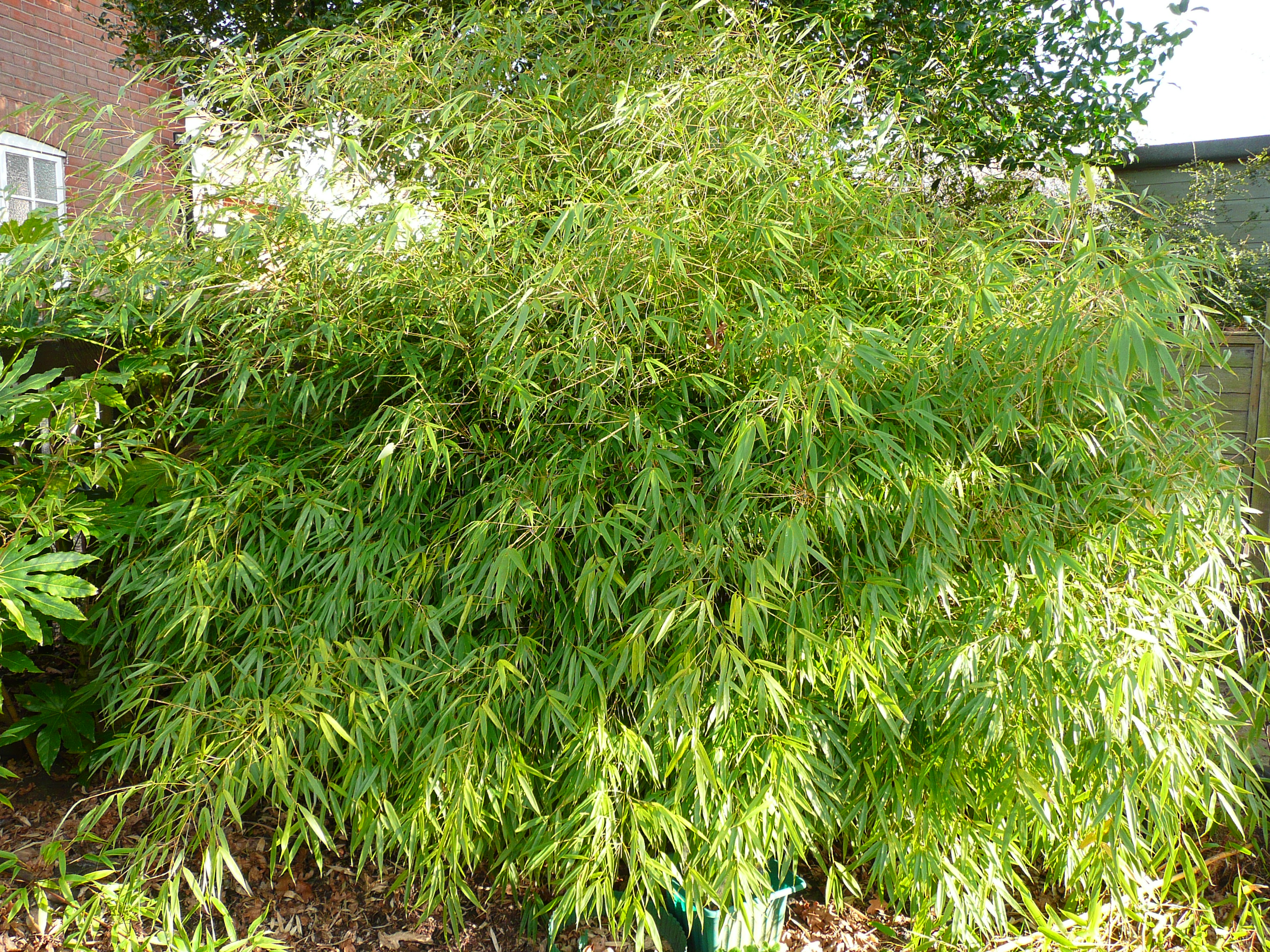
The 10 year old plant in my garden is now some 2.5m (8ft) across.

Though clump-forming it is by no means small. At 6m (20ft) plus with culms more widely spaced than many clumpers it is perhaps best described as statuesque. It would make an ideal specimen plant.

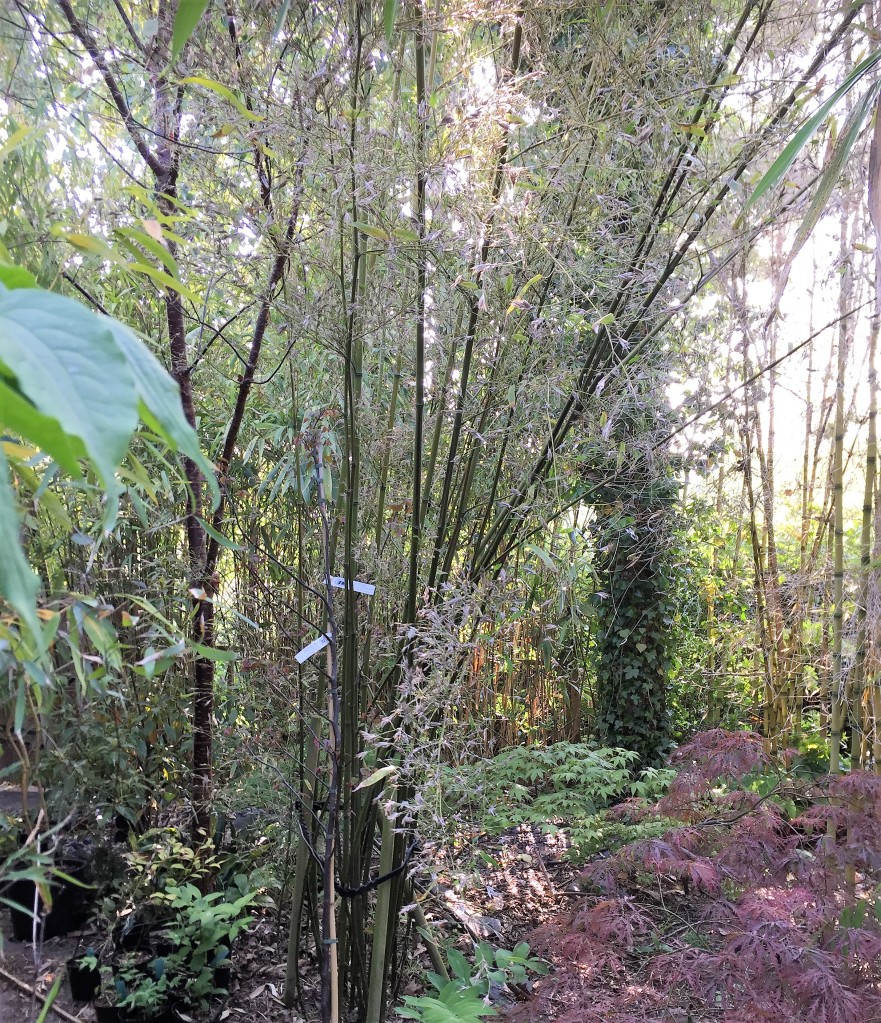
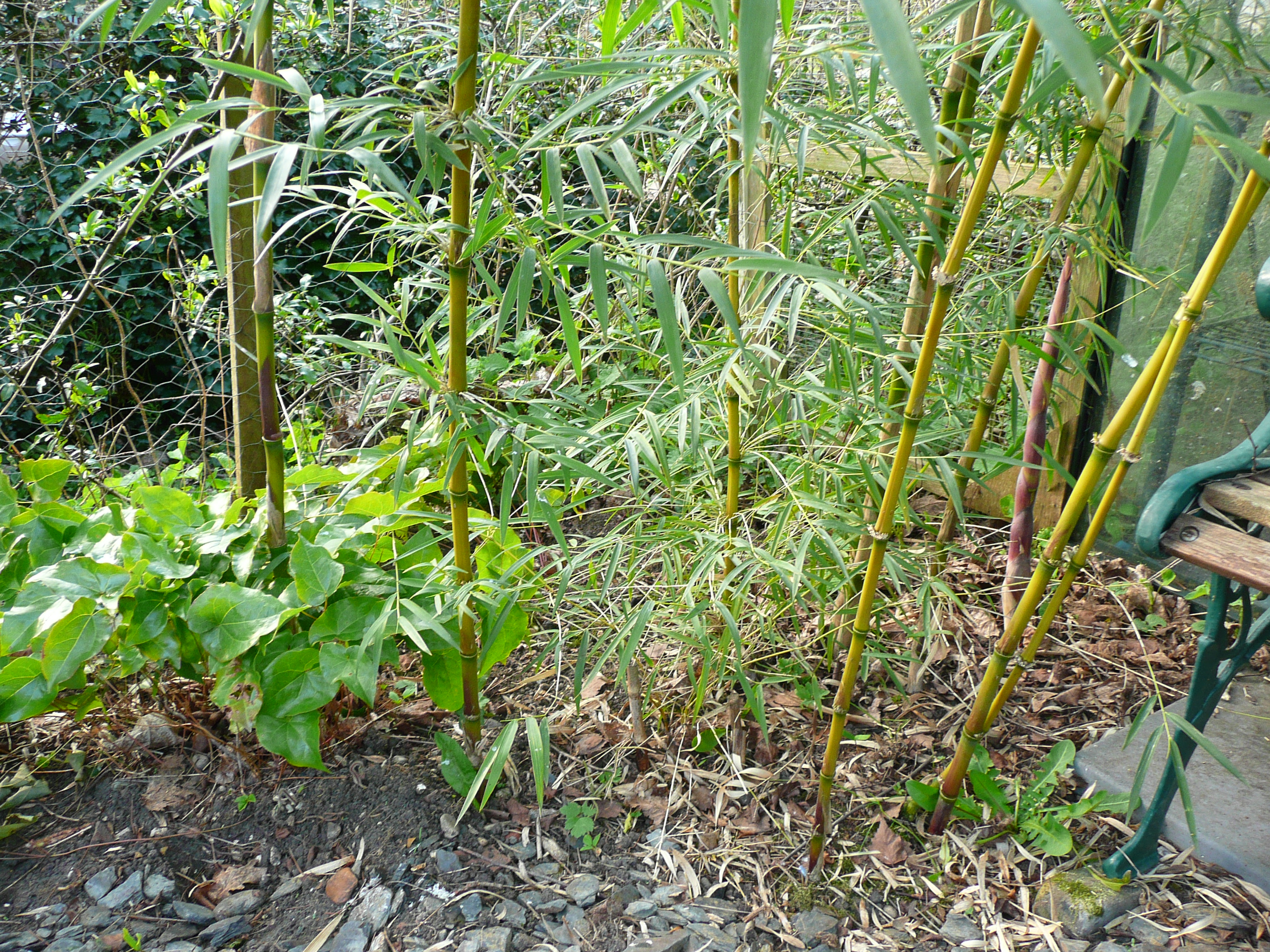
Borinda papyrifera CS1046 is not tremendously hardy as a young plant, but once established is much tougher. Mine was cut almost to the ground as a youngster in the hard winter of 2010, though it came back quite strongly, but didn’t lose a leaf in the ‘Beast from the East’ in 2018. Other clones of Borinda papyrifera are available, some of which were collected at higher altitudes and may prove hardier.
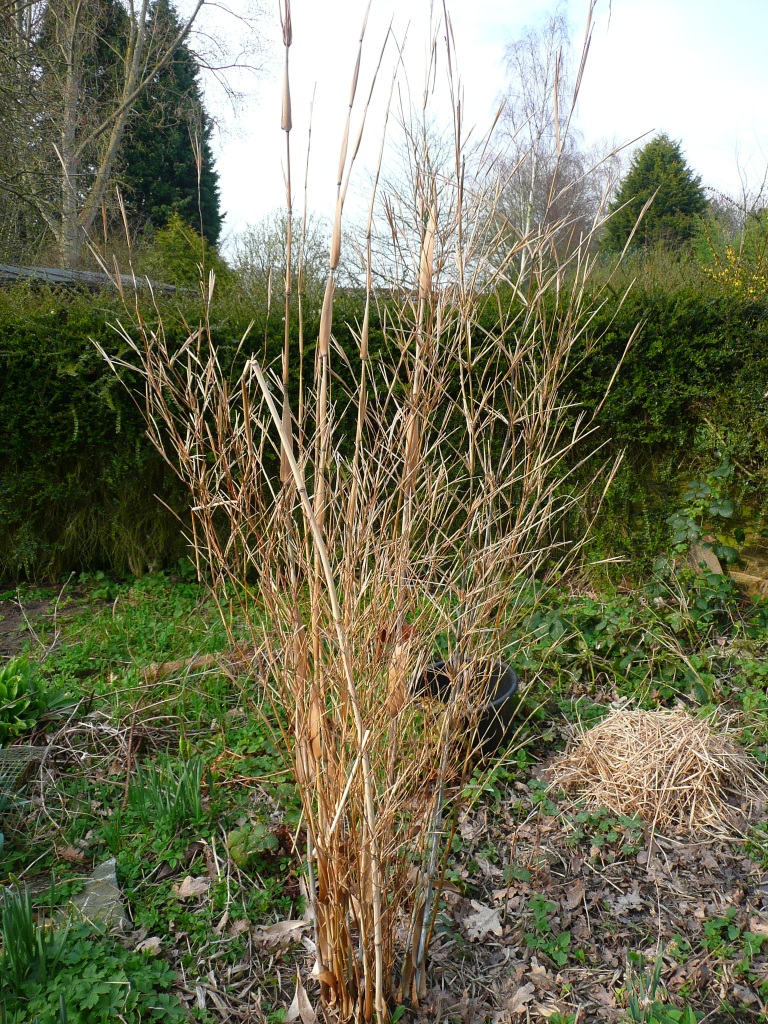
The same plant as above, after the winter of 2010.

It is reasonably tolerant of drought once established, but will tend to abort some culms in dry summers. My plant has attained its current size without extra watering until this year when I gave in to the realities of the changing climate and bought a hose. I also haven’t fed it, but always leave the shed leaves and sheaths in the base of the clump, which break down slowly and return their nutrients to the plant.

Unfortunately this very desirable bamboo is tricky to propagate, partly because it is quick to mature, which makes it hard to find and somewhat expensive. A variety called Fargesia ‘Blue Panda’ is being sold, which is apparently a micro-propagated form of Borinda papyrifera CS1046. If anything it seems to be more expensive than the original and, given what poor plants micro-propped Phyllostachys make, it would be wise to wait until more is known about its performance before buying it. Personally I would only buy a hand-propagated Borinda.
Using bamboo for screening

Bamboo is an extremely effective and decorative screen in the garden. Being evergreen, it blocks unsightly views all year round. The gentle sound of the foliage and its thickness means it is quite effective at filtering unwanted noise as well. Bamboo can also be used as a windbreak, although in exposed positions only the tougher species such as Pseudosasa japonica should be used. Pseudosasa japonica is also the best choice for screening salt winds, though measures must be taken to manage its spread. As always with bamboo, the most important thing is to choose the right variety in the first place.

Borinda papyrifera CS1046

The first thing to consider is height. If you want a really tall screen, over about 4m (16ft), you will need to go for a running bamboo. Clumpers don’t generally get above this height, and some are quite a bit shorter. Most Borinda species (clumpers) are exceptions to this, but are both expensive and hard to find. So if you wanted a tall but narrowish screen, where one plant would do, a Borinda would be a very attractive possibility. If you are looking at screening a longer length, a Phyllostachys species would be more economical. Phyllostachys aurea is widely available, tough, very hardy, and grows 5-8m (16-26ft) depending on conditions. It is a running bamboo, but generally quite well-behaved. (For more on clumping and running bamboos see here). For a taller screen still, Phyllostachys vivax or one of its forms would be a good choice. It can get over 8m (26ft) in the right conditions. It’s also quick to mature, with lovely thick culms, and several of the forms are very decorative, such as P. vivax f. aureocaulis which is a beautiful sunshine yellow with occasional fine green stripes. On the downside it doesn’t have much foliage low down on the culms, and is more vigorously spreading than P. aurea.


Phyllostachys vivax f. aureocaulis

The next thing to consider is the width of the planting. Generalising somewhat, running bamboos tend to be more upright, while clumpers tend to have a wide mushroom cloud of foliage over a narrower clump of culms. You should also consider the width of the planting area available. The taller you want your bamboo to be, the more growing space for the rhizomes you will need. So, for example, if you had a bed 30cm (1ft) wide, you couldn’t grow a bamboo to 8m (26ft) tall in that space. In fact only the smallest bamboos, such as Pleioblastus auricomus at 1-2m (3-6.5ft), could be grown in such a narrow space, and as it is quite invasive would need work to control it. The best option for such a small space would be to grow bamboos in containers.

Phyllostachys aurea ‘Koi’, with three sided concrete paver barrier visible behind it. This was one of the first bamboos I planted in my current garden about 12 years ago and it is still nowhere near needing that barrier though technically a runner!

The third factor to consider is how you will control the spread of your bamboo screen. If you are planting along a boundary I would always recommend using a barrier of some kind, even if you are planting clumpers. Though they will never send out runners, the clumps do expand in width every year and will eventually come up just the other side of the fence. There are a number of options you can use. I use a line of recycled concrete pavers on edge in the ground, overlapping an inch or so and also sticking up an inch or so above soil level. They are angled very slightly away from the bamboo, so that a runner meeting them is encouraged upwards. When it pokes over the barrier it is easy to see and trim. Bamboo rhizome barrier is available, but not cheap, and I know of one grower who swears by damp proof membrane! For a running bamboo you can encircle the entire planting area with a barrier, giving it the most space allowable, but after many years it will effectively become ‘potbound’ and will try to break through. I put a barrier along no more than three sides of a plant, so it can only spread out of bounds in one direction and I can cut and dig out rhizomes should it eventually become necessary.

Fourthly, and related to all the above factors, is whether to plant your screen of bamboos in the ground or grow them in pots. The advantage of growing in containers is that the spread is controlled and you can grow almost any species you like regardless of how invasive it would be in the ground. The disadvantages are that the plants will stay shorter than they would in the ground, and that you will have to water them. Bamboos established in the ground are pretty drought tolerant, but in pots will die if allowed to dry out completely. If you need height, P. vivax will still get to a decent height in pots, and the larger the container you can give it the taller it will get.

Fargesia rufa, a clumping bamboo which forms a mushroom of foliage.

The final thing to consider is the likelihood of flowering. Bamboos flower very infrequently, with gaps for many species upwards of thirty years. However, there is always a small chance, and clumpers in particular are likely to die if they flower completely (more on bamboo flowering here). If planting a long row of clumping bamboos it is a very good idea to choose a mix of species and varieties, so that if you are unlucky you only lose one or two plants and not the whole row. Fargesia nitida and its numerous forms have flowered since the 2000s so are unlikely to flower again soon. A number of hybrids between F. nitida and F. murielae have recently become available, show promising vigour (F. murielae itself is very slow to get going) and also should not flower for many years. F. robusta and its forms are among the taller clump formers at 4-5m (14-16ft). F. rufa is one of the shortest, topping out at 3m (10ft), but has a particularly wide cloud of foliage, is quick growing, and tough as old boots.

Omens, plague, and bamboo flowering

In China, Japan, and parts of India, the rare phenomenon of bamboo flowering is considered a bad omen. In China, a proverb warning of ‘pestilence or famine’ presaged by bamboo flowers was reported in a letter to Kew from a British Medical Officer who noted that bamboo flowering in Hong Kong in 1894, 1896, and 1898 coincided with outbreaks of bubonic plague. It was during this epidemic that Alexandre Yersin discovered both the bacillus responsible for the plague and the fact that it was present in rats. Given that we now know that the abundance of food provided by bamboo seeds from mass flowerings creates booms in the rodent population, and that fleas on rats transmit plague, the proverb seems well-founded.

In 1958 the authorities in Mizoram in north eastern India were warned that the bamboo was flowering and famine would follow. They dismissed the reports as local superstition. The bamboo flowered, the rat population exploded and a ‘rat flood’ consumed every scrap of every crop in the area. The resultant famine was so bad it led to an armed uprising.

Wild bamboo flowering in Guangdong, 2013

In India this phenomenon is known as ‘Mautam’, bamboo famine. 90% of all the bamboo in the area is the same species, a tropical clump former with a relatively stable flowering cycle of about 48 years. It all flowers at once (gregarious flowering) and then dies. Not all species of bamboo are so predictable or, fortunately, so devastating in the effects of their reproduction. 

In fact, there is a great deal we don’t understand about bamboo flowering, despite records of the phenomenon going back some 2000 years in China. What triggers it? How do plants of the same clone, growing in different locations, know to flower at the same time? Why are the flowering cycles so varied (between 1 and 120+ years)? Why do many bamboos die after flowering?

Sporadic flowering of Phyllostachys praecox ‘Viridisulcata’, 2020

Many factors have been proposed as possible triggers over the years, from external environmental factors to an internal clock. It is generally believed now that the flowering does follow an internal time table, modulated slightly by environment and cultivation. The exact mechanism is not yet understood. In the 1970s, the ecologist Daniel Janzen theorised that bamboos flowered in synchrony as a method of overwhelming seed-eating predators. So many seeds would be produced that they could not all be eaten and some would germinate and grow. Plants that fell out of sync would not have this protection, their seeds would be eaten, and their genes would not continue.

Complete flowering of Phyllostachys nigra ‘Megurochiku’, 2019

A group of biologists at Harvard extended this theory to explain how the long flowering cycles evolved. Supposing in a forest of bamboos which flowered every year, a few mutated to flower every two years. They would have longer to prepare and more stored energy to produce seed. Their seeds would have an advantage and their offspring would increase. More and more bamboos would flower every two years, and eventually those flowering every year would not produce enough seeds to survive predation. They would die out. Then suppose a few bamboos mutated to flower every three years. They also would not have the protection of flowering and producing seed in synchrony and would die out. What about mutations that flowered every four years? Again, they would have the advantage of more time to store energy but still flower in synchrony with plants on the two years cycle. So bamboos which flowered in multiples of the cycle would gradually predominate, and the cycle would get longer and longer over time.

Phyllostachys nigra ‘Megurochiku’ showing signs of recovery, 2020

What does all this mean for bamboos in the garden? First of all, bamboos flower at very long intervals, so the plants in your garden may never be affected. However, given the likelihood of them dying if they do flower, it is a good idea to plant a mix of different species if you are planting a bamboo hedge, to protect against expensive losses if you are unlucky.

Secondly, there’s nothing you can do to stop a bamboo flowering. The only thing to do is wait and see. It may only be sporadic flowering, which shouldn’t harm the plant. If it is complete flowering (anecdotally more common in clump-forming bamboos than runners) the plant is both more likely to die and more likely to set seed. You can water and feed it if you wish, and it may recover, but it will take a long time to do so if it does and will look awful in the meantime, so most people dig them out or at least cut them down. I have found seeds more likely to germinate in situ, if they escape the notice of hungry birds.

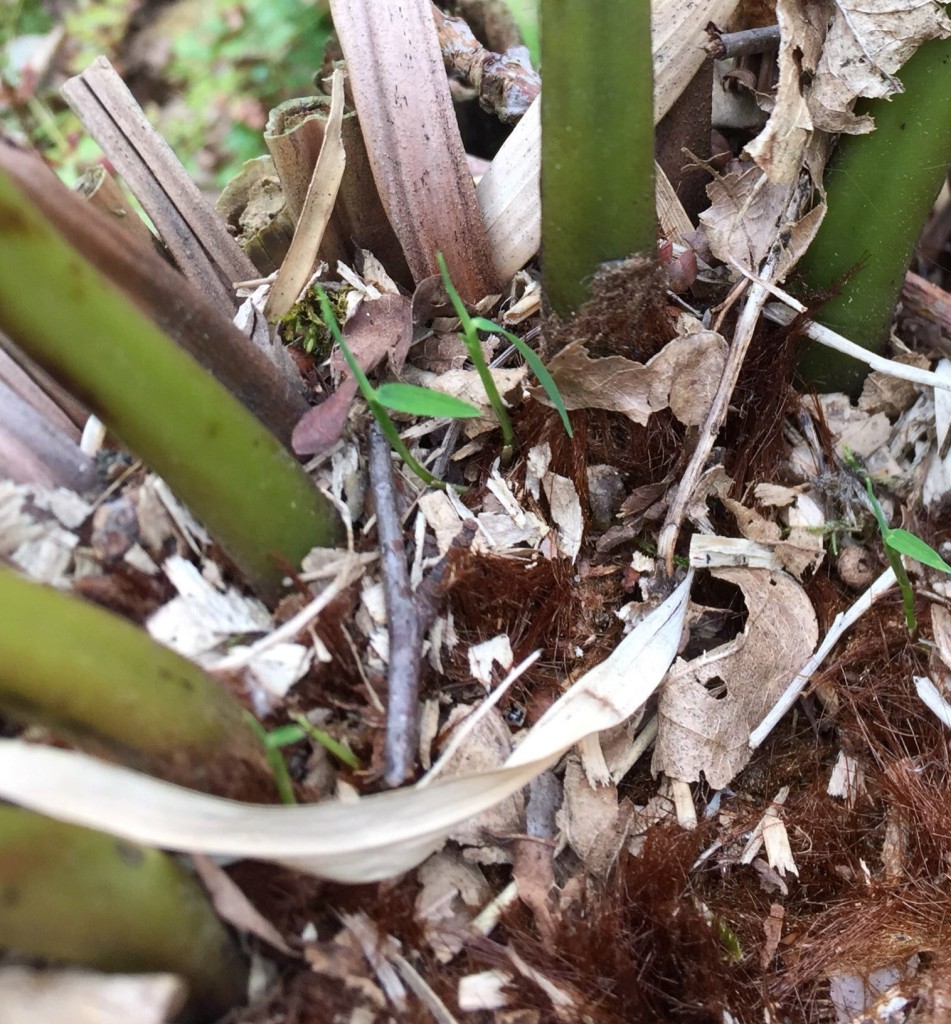
Fargesia nitida seedlings germinating in the crown of a tree fern, 2018

In 20 years of collecting bamboo, I have had three species flower completely out of a collection of more than a hundred: Fargesia nitida, Chusquea gigantea, and Phyllostachys nigra ‘Megurochiku’. The Fargesia, a clump former, produced viable seed and died. The Chusquea and the Phyllostachys, a giant clumper and a runner, next to one another in my garden, flowered at the same time last year. A forest of seedlings has appeared, but I have no way of knowing their parentage. The Phyllostachys is recovering. The Chusquea has as yet shown no signs of doing so, but I have not cut it down yet as I will not be opening my garden this year and can live with the eyesore if there’s any chance of regrowth. It is a favourite plant and I will be very sad to lose it. Fingers crossed, but as I have learnt over the years, you might be able to predict famine and plagues, but bamboos rarely do what you expect them to do.

A quick guide to clumping and running bamboos

One of the most wonderful and most exasperating things about bamboos – and indeed many other plants – is that they vary so much and so unpredictably. The answer to almost any question I am asked about bamboo begins, “Well it depends, but generally…” With that in mind, there are not always hard and fast answers to how a bamboo will behave, but let’s generalise a bit.

Bamboos have different rhizome structures which dictate their growth patterns. Broadly speaking they can be divided into clump formers and runners. Clump-forming bamboos send out new rhizomes which turn up to become new culms. Runners send out rhizomes which send up new culms along their length and continue on. Clumping bamboos therefore send up new culms around the edges of the clump, expanding slowly and evenly.

Typical, closely packed culms of clump-forming Fargesia rufa

Runners can send up new culms at quite a distance from the main clump, expanding rapidly and unpredictably. However, clump forming does not necessarily mean small! While typical clumpers (e.g. Fargesia) send up new culms very close to the clump, some (e.g. Yushania and Chusquea) have rhizomes with a long ‘neck’ which can grow outward 30cm or so before turning up into a culm. These can form a large, relatively open clump very quickly.

Chusquea gigantean, a 'long-necked' clumper and a real giant.
Chusquea gigantea, a ‘long-necked’ clumper and a real giant.

Other clump formers can fountain outwards from a tightly clumped base, requiring space to appreciate their form. The foliage of such a bamboo may easily be four times the width of the base.

Fargesia rufa, a clumping bamboo which forms a mushroom of foliage.

Running bamboos are harder to generalise about. Some (Sasa and Chimonobambusa most notably) are rampant and aggressively spreading. A few are very reluctant to spread or even bulk up (some of the rarer Phyllostachys bambusoides varieties, for example  – which is why they are rare). Most are somewhere in between. Unfortunately, it’s impossible to say exactly where in that range a given plant will be in a given garden situation. Some people have found that their bamboos are more prone to wander in dry soil; the theory is that they spread in search of moisture. Several plants in my garden have done the opposite, spreading rapidly in rich soil with plenty of moisture.

Widely spaced culms of Phyllostachys bambusoides 'Castillonis Inversa' a gently 'running' bamboo
Widely spaced culms of Phyllostachys bambusoides ‘Castillonis Inversa’, which might be called a ‘gently running’ bamboo

A plant of Phyllostachys vivax ‘Aureocaulis’, for example, has run in almost a straight line in both directions from the original planting. In four years it has spread from a five litre pot to a five metre wide plant. As it is a giant timber bamboo I was not expecting it to be compact, so it has plenty of room in the middle of the garden, well away from my neighbours.

Phyllostachys nigra, the black bamboo, is notoriously variable in habit. This may in part be due to the number of different clones available. P. nigra was one of the earliest bamboos introduced to the U.K. in 1823 and is still one of the most popular and most widely available. Some plants remain in a tight clump whilst others spread quickly. If you plant this bamboo, it might be wise to put in a partial root barrier or at least keep a close eye on it.

One of the myths that I often hear about bamboo is that all bamboos will run eventually. This simply isn’t true. A clump forming bamboo does not have the capacity to send out long runners. However big it gets it will not suddenly pop up elsewhere in the garden. What is true, however, is that all running bamboos do have this capacity. Many of those available will stay in a well-behaved clump. Some may, after many years in the ground, send out a single runner which is easily dealt with. Many others will wander if allowed to but can be kept in check fairly easily. And some should really not be planted in the ground at all, unless you have acres which you would be happy to see invaded.

Phyllostachys aurea 'Koi'
Phyllostachys aurea ‘Koi’

Just to demonstrate the range of ‘running’ bamboos, the plant above has been in the ground as long as the five metre wide P. vivax ‘Aureocaulis’. It has spread perhaps six inches in that time, and remains the tightest clump of any of the forty odd species I have planted out, including the clump-formers.

Bearing in mind the huge range of bamboos available in the UK, with a little research and perhaps some input from a specialist nursery, it should be possible to find a suitable bamboo for almost any garden situation.

Why you should grow bamboo – and why you shouldn’t

Bamboos are beautiful plants that add height, structure and movement to a garden. They come in an astonishing range of culm colours: black, green, yellow, blue, olive, grey, purple, white, brown, red, blotched with brown, yellow with green stripes, green with yellow stripes, green with a black sulcus, and green with multi-coloured stripes. The culms may be grooved, zig-zag, bulbous, or just ridiculously large. The leaves can be tiny and delicate or huge and tropical.

Blue bloom on culms of Borinda papyrifera

Evergreen plants, bamboos add interest to the garden year round. The shooting season begins in early spring with some Fargesia species and continues at least until August with the late shooting Phyllostachys bambusoides cultivars. The shoots themselves are often interesting, even grotesque, rather than ornamental but it is fascinating to watch the speed at which they grow. Some species attain their full height of 40ft in six weeks!

Congested internodes on a culm of Phyllostachys aurea 'Koi'
Congested internodes on a culm of Phyllostachys aurea ‘Koi’

Once established in the ground, bamboos are very resilient, low-maintenance plants. They are unfussy as to soil and most are very hardy. They can be grown in situations ranging from full sun to full shade, and are practically pest and disease free in the UK. They appreciate feeding and supplementary water but don’t need them, and established plants can survive periods of drought or flooding. Similarly, although they benefit from occasional tidying, they don’t require pruning.

photo 4
Variegated foliage of Pleiblastus fortunei

Hopefully some of this has persuaded you to think about growing bamboos. However, there is no denying that some people have come to regret planting them, so it’s important to consider the possible drawbacks.

Bamboos are big plants, often bigger than people expect them to be. This is not helped by the tendency of garden makeover programmes to put 8ft specimen bamboos into a small space in people’s gardens as if they are going to stay that size. In fact they can gain height and width very rapidly. When a bamboo reaches maturity, it can send up culms twice as thick as the previous year’s and half as tall again. If you have a big garden it can be very exciting to see new, larger culms coming through. In a small garden, however, a running bamboo can quickly become a problem and whilst it is a myth that all bamboos eventually run, even a clump former can get too big for its space.

Which leads on to the second potential drawback. No one who has ever dug up an established bamboo has any wish to repeat the experience. Removing a running bamboo that has got out of control can be an expensive and time-consuming process, leaving aside the potential problems with angry neighbours.

Sasa kurilensis 'Shimofuri'
Sasa kurilensis ‘Shimofuri’

The best thing to do is to buy a bamboo from a specialist nursery who will have a far wider range than the average garden centre and should be able to give you useful advice based on experience of growing these wonderful plants. Choose the right bamboo and site it carefully, and you will have a fabulous plant that will enhance any garden, and possibly the beginnings of a lifelong obsession.