Plant Profile: Asimitellaria

Asimitellaria is a recently recognised genus of plants in the Saxifrage family, previously included in the genus Mitella, and related to Tiarella, Heuchera, and Tellima (which is an anagram of Mitella). There are 11 species, 10 endemic to Japan and one to Taiwan. Asimitellaria are woodland plants, preferring a humus rich soil, not too dry, in partial to full shade. They are mostly small, evergreen, clump-forming or gently creeping perennials, grown for their attractive lobed foliage, which is sometimes patterned in reds and purples. The spikes of tiny cap shaped flowers in spring give the plant its common name of Mitrewort or Bishop’s Cap. They usually produce plentiful seed which germinates readily when fresh and kept moist.

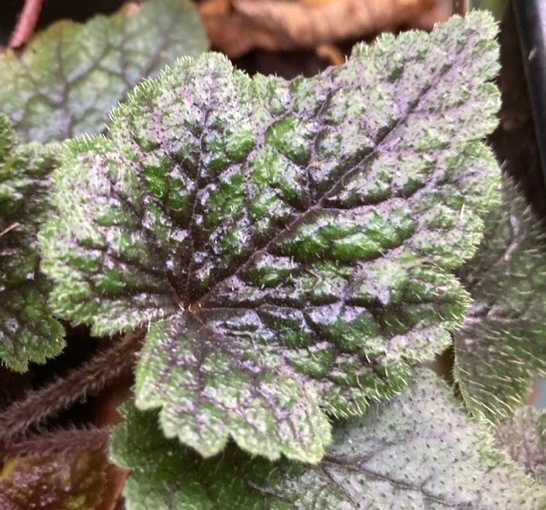
Asimitellaria makinoi

Asimitellaria makinoi is a diminutive species – only around 10cm tall- from Japan, introduced by Crûg Farm. The leaves are delightfully patterned in purple with silvery patches, and the flowers and flowering spikes are red.

Asimitellaria acerina

Asimitellaria acerina is rather larger, growing up to 40 cm in height, with leaves up to 10 cm. The glossy green palmate leaves give it its Japanese name of Maple-leaved Mitella. The delicate spikes of little flowers are greenish-pink.
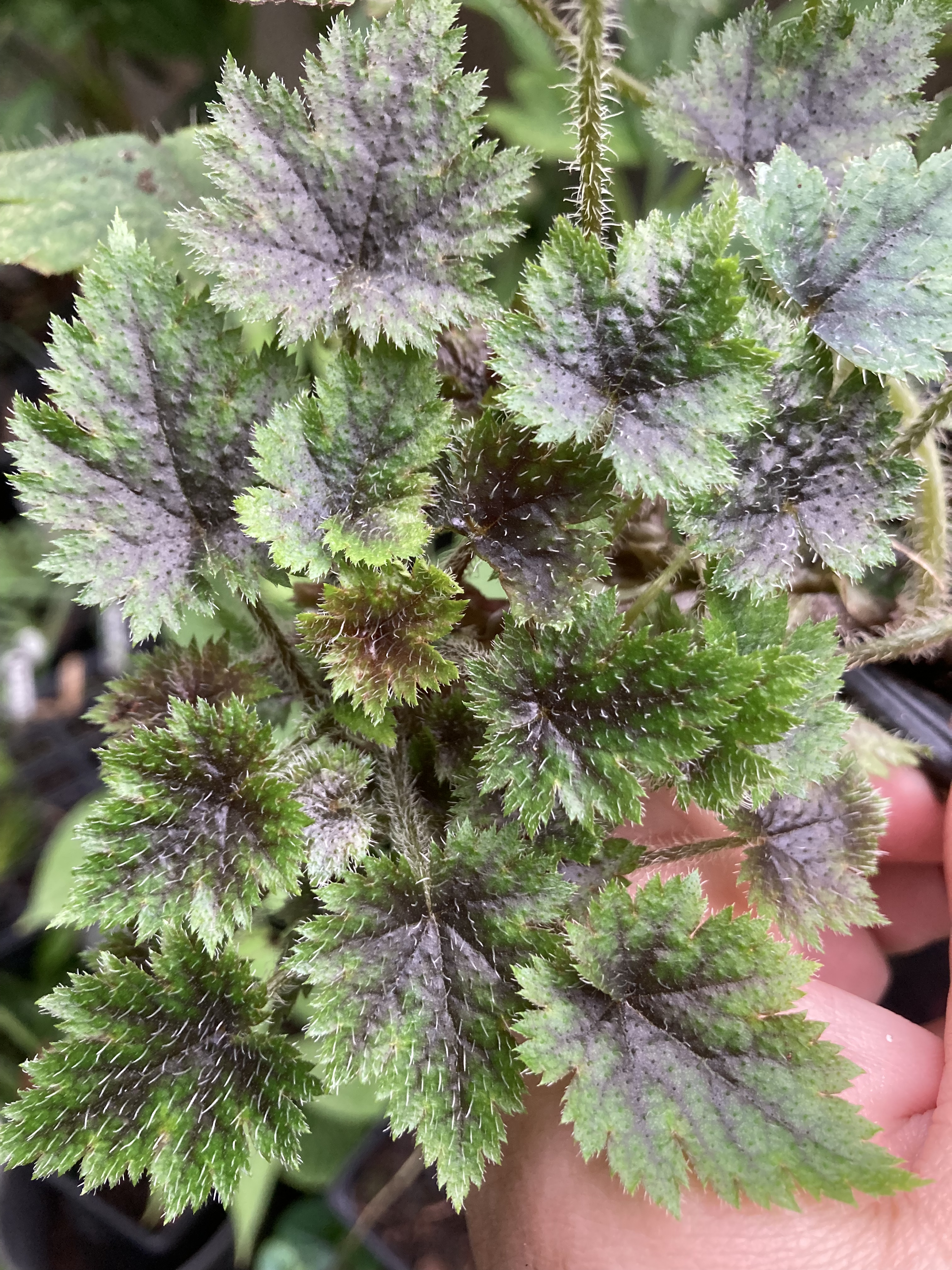
Asimitellaria kiusiana

Asimitellaria kiusiana is another low-growing plant, to only 20 cm or so. The green leaves have variable red patterning along the veins, and the flower spikes are pale green.
Alternative ground covers for a Japanese moss garden

Few things symbolise the tranquillity of a Japanese garden quite as well as a textured green carpet of moss.

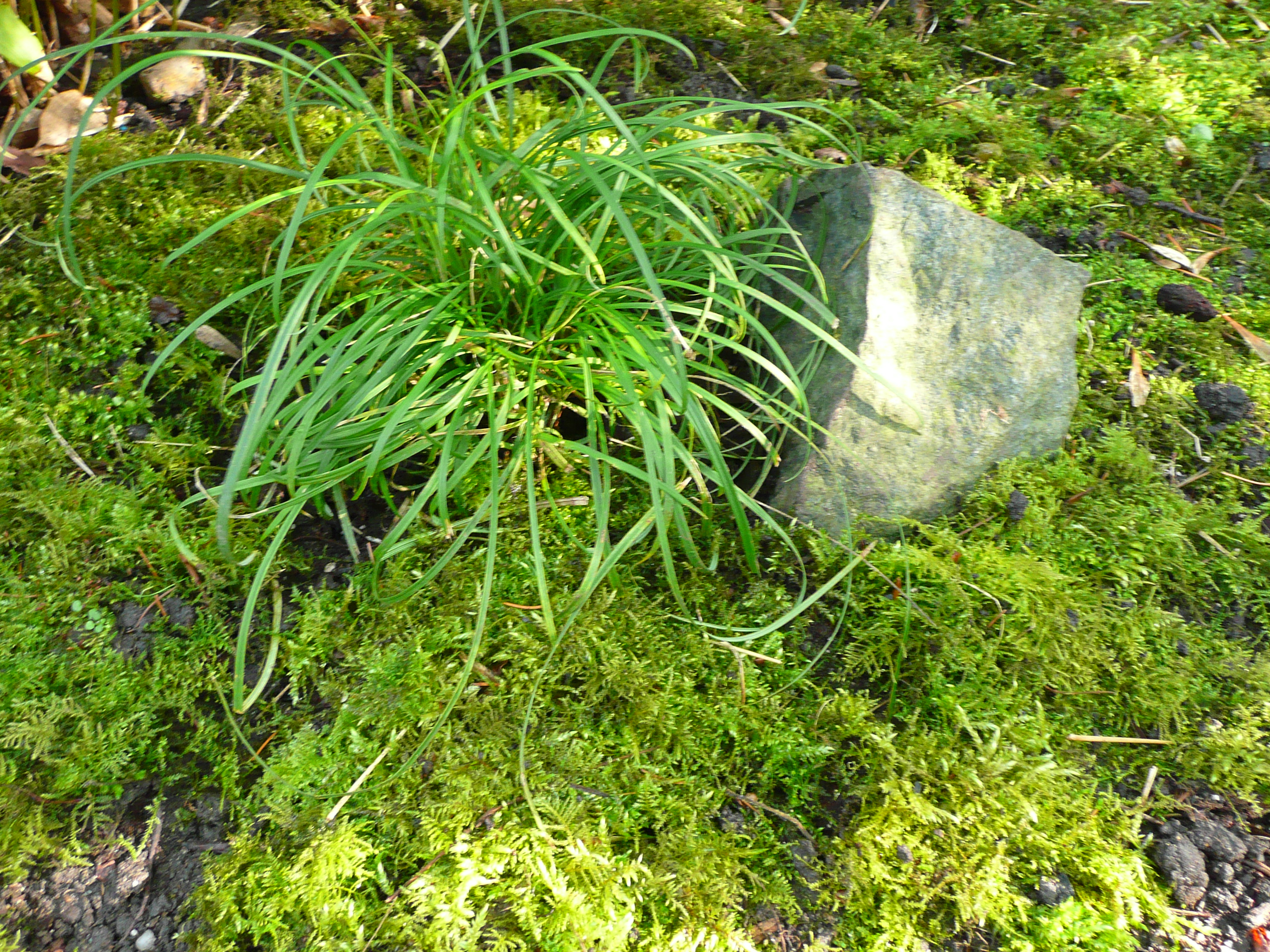
P1060511 Ophiopogon formosanus and moss

Whilst it is possible to grow and transplant moss, and it can spread fairly quickly when happy, it has quite specific needs (shade, moisture, slightly acid soil) and is not suitable for all situations. Here then are the top alternative ground covers I have found to achieve a mossy effect in different growing conditions.

Selaginella kraussiana Selaginella kraussiana

1. Selaginella kraussiana (Spikemoss). This primitive plant grows happily in full or partial shade as long as it has adequate moisture. Sometimes listed as tender or semi-evergreen it has proved surprisingly hardy and evergreen here in Suffolk, and spreads at a respectable pace. Different forms are available, including aurea and ‘Gold tips’ but the differences in colour are slight.

P1060514 Sagina subulata ‘Lime’

2. Sagina subulata (Pearlwort; Irish or Scotch moss) This rapidly spreading ground cover forms beautiful hummocks of green which give a lovely natural moss effect. This is a good ground cover for a sunny spot as long as it is not allowed to dry out; grown in too much shade it tends to become tall and stringy. It has inconspicuous white flowers in spring. Again, different forms are available, of which ‘Lime’ seems to be the best.

3. Chamaemelum nobile ‘Treneague’. (Roman Chamomile) Another good ground cover for sun, this plant has the added attraction of deliciously scented feathery foliage. It grows best in light, well-drained soil and struggles on heavy clay. ‘Treneague’ is a dwarf form which does not flower and is used for chamomile lawns. Chamomile can withstand light foot traffic.

Soleirolia solerolii Soleirolia soleiroleii

4. Soleirolia soleiroleii (Mind your own business, Baby’s tears). A good, rapidly spreading and very attractive ground cover for damp shade. It may be deciduous in a hard winter but will regrow. Popular in Victorian times, it was used as a decorative edging to conservatory staging.

Moss growing through Selaginella kraussiana Moss growing through Selaginella kraussiana

Like many things in gardening, finding the right ground cover can involve a bit of trial and error. These plants are species I have tried in my ‘Japanesque’ garden. All except the chamomile, in partial shade on clay, have worked well for me and all are worth trying.  A number of different mosses are also establishing themselves on the ground and on logs and stones, some of which are merging with the planted ground covers to create a very pleasing effect. It is well worth experimenting with a mixture of different plants to provide a variety of textures and greens, and give the full effect of a moss garden.