Tinkling jade and pine waves – the sounds of the Chinese garden

In the classical Chinese garden, sound was an essential element. The garden is a representation of nature in miniature, and that includes the evocative sounds of the Chinese landscape. Borrowed scenery is an important concept in the Chinese garden and in The Craft of Gardens, Ji Cheng discusses it at length. Borrowed scenery refers not just to views of landscapes outside the garden, but to other elements which can be brought in, such as sounds, fragrances, and wildlife.

Planting flowers serves to invite butterflies, piling up rocks serves to invite clouds, planting pine trees serves to invite the wind… planting banana trees serves to invite the rain, and planting willow trees serves to invite cicadas.

Zhang Chao (1650-1707)

Plants, chosen for their symbolic meanings as well as aesthetic effect, were often used to create sounds. Bamboo is one of the essential plants of the Chinese garden, representing spring, and symbolising the virtues of the Confucian gentleman – such as humility, resilience, and uprightness. The sound of the wind blowing through bamboo leaves was known as ‘the sound of heaven’, and pavilions would be sited to take advantage of this effect. It was also compared to tinkling pieces of jade. There is a story that one of the Sui empresses could not sleep without the sound of bamboo, so the emperor order courtiers to hang jade pendants from the eaves to mimic the sound.

The Bamboo Garden, West Lake, Hangzhou

The effect of wind in the pines was called songtao 松涛, often translated as ‘pine wind’ but ‘pine waves’ or ‘pine surf’ might be better. Large areas of pines were planted where space allowed, at the Summer Palace in Chengde, for example. In smaller gardens a single pine could evoke this.
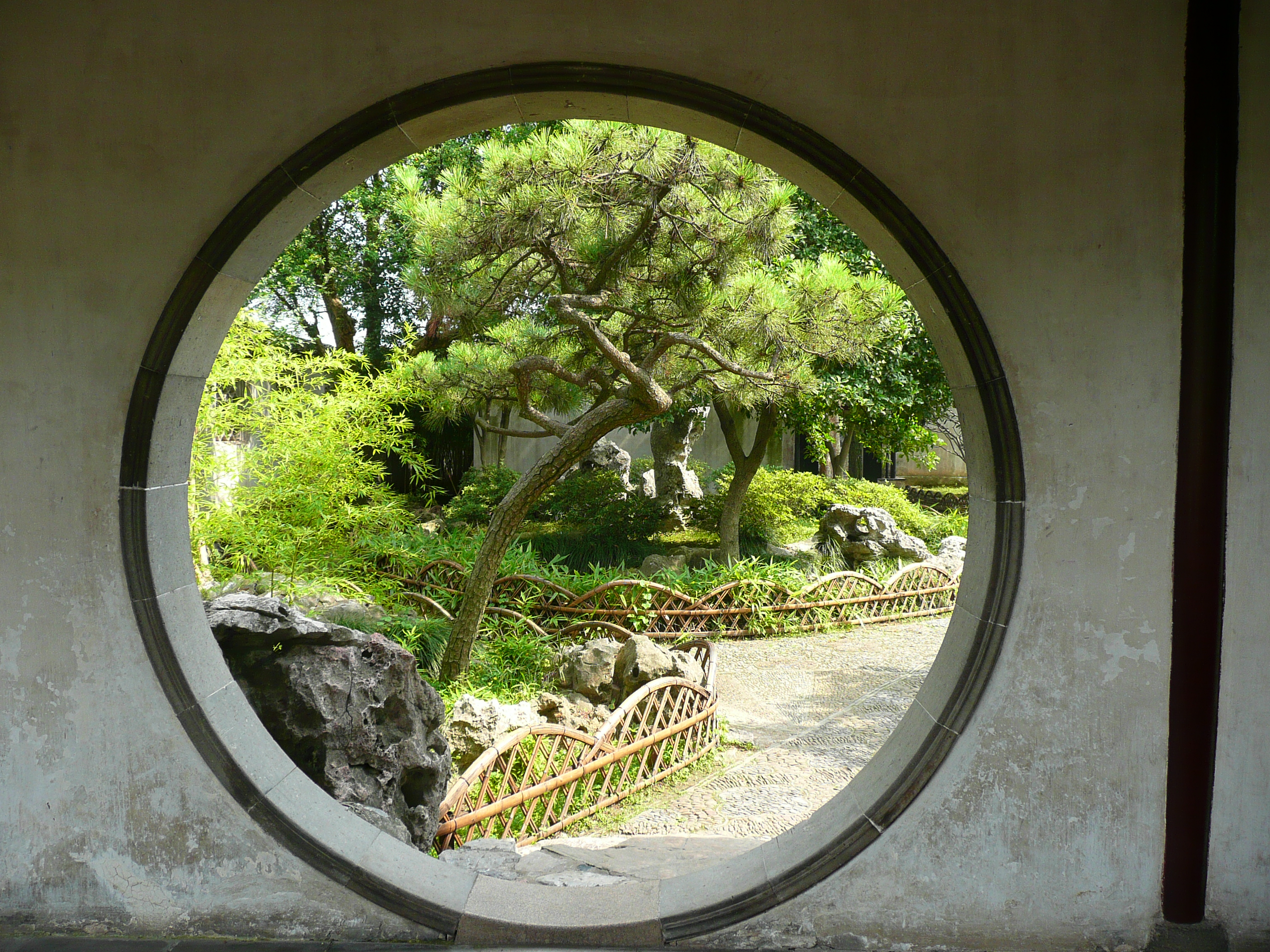
Pine in The Couple’s Retreat Garden, Suzhou

‘Wind through the pines’ is a phrase found in a number of poems and songs, and is also represented in paintings. Pine is another highly symbolic plant, associated with strength, resilience, and long life.

‘Listening to the wind in the pines’, Ma Lin

Large leaved plants such as banana and lotus were valued for the sound of rain falling on their leaves. Bamboo leaves are prone to being shredded by the wind, so to protect them they were often planted in clumps against a sheltering wall, against which their shadows moved. A pavilion would be built nearby with windows looking out onto the bananas to enjoy the aesthetic effect, both visual and auditory.

Bananas in the Humble Administrator’s Garden, Suzhou

The pattering of rain on withered lotus leaves was a theme often used in poetry to create a feeling of melancholy, and was particularly associated with autumn. The Listening-to-the-rain Pavilion in the Humble Administrator’s Garden, Suzhou, was placed to highlight the different sounds of rain on various types of leaves.

Lotuses, West Lake, Hangzhou

Other natural sounds were produced by birds, animals, and insects. The song of Orioles was particularly admired, and willows in particular were planted to attract them. This association was also used in paintings and poems, perhaps most notably this by the great Tang poet Du Fu.

Two golden orioles sing in the green willows,
A row of white egrets against the blue sky.
The window frames the western hills’ snow of a thousand autumns,
At the door is moored, from eastern Wu, a boat of ten thousand li.

Jueju (Two Golden orioles Sing in the Green Willows) by Du Fu, translation from chinese-poems.com

Willows were also associated with cicadas, one of the sounds of summer, and a symbol of rebirth and the cycle of life and death. As they were believed to live solely upon dew, cicadas also represented a pure and refined life.

Finally, sounds in the garden could be artificial – music, singing, nearby temple bells or prayers. Occasionally, elements of the garden would be built to produce sounds, although this is not as common as it is in Japanese gardens. One example of this is Winter Hill in Geyuan garden in Yangzhou, which has a wall with 24 round holes in it, through which the wind blows. This makes noises reminiscent of winter storms. (This section of the garden also faces north so it gets no direct sunlight and has white quartzite rocks to evoke the effect of snowy mountains).

Photo from: Wang, Wanlin. (2021). The Application of Soundscape in Environmental Art. 10.2991/assehr.k.210106.098.

As with everything else in the Chinese garden, sounds existed in balance and harmony with their opposite, silence.

The forest is more peaceful while cicadas are chirping. The mountain is more secluded while the birds are singing”

Wang Ji
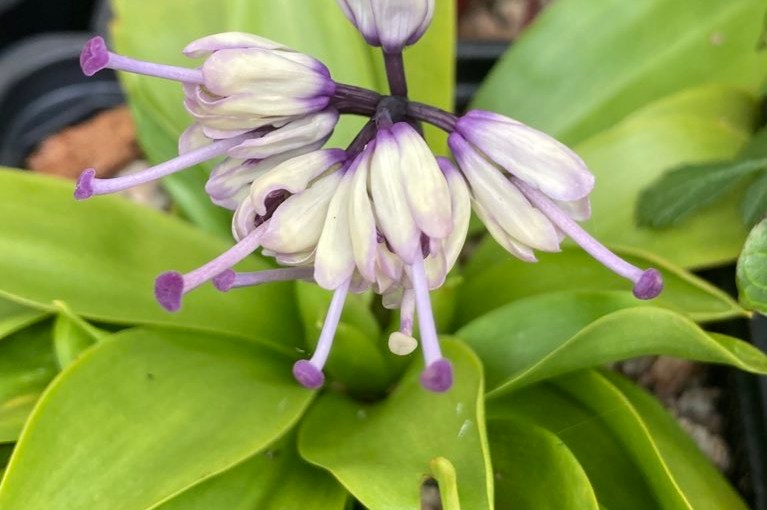
A new National Collection of Heloniopsis and Ypsilandra

Heloniopsis tubiflora

I was delighted to be awarded a new National Collection of Heloniopsis and Ypsilandra in November 2023. The collection contains eleven species plus five cultivars and forms – all that are currently available in the U.K. (There is a variegated form of Heloniopsis orientalis, not available here at present, which I would love to get my hands on!) They are all in propagation and I hope to be able to offer small numbers of most forms for sale in the next few years.

Heloniopsis and Ypsilandra are two very closely related genera of evergreen woodland perennials from East Asia – so closely related that some authorities place them in a single genus, Helonias. They belong to the Melanthiacaea family, together with more well-known plants such as Trillium and Paris.

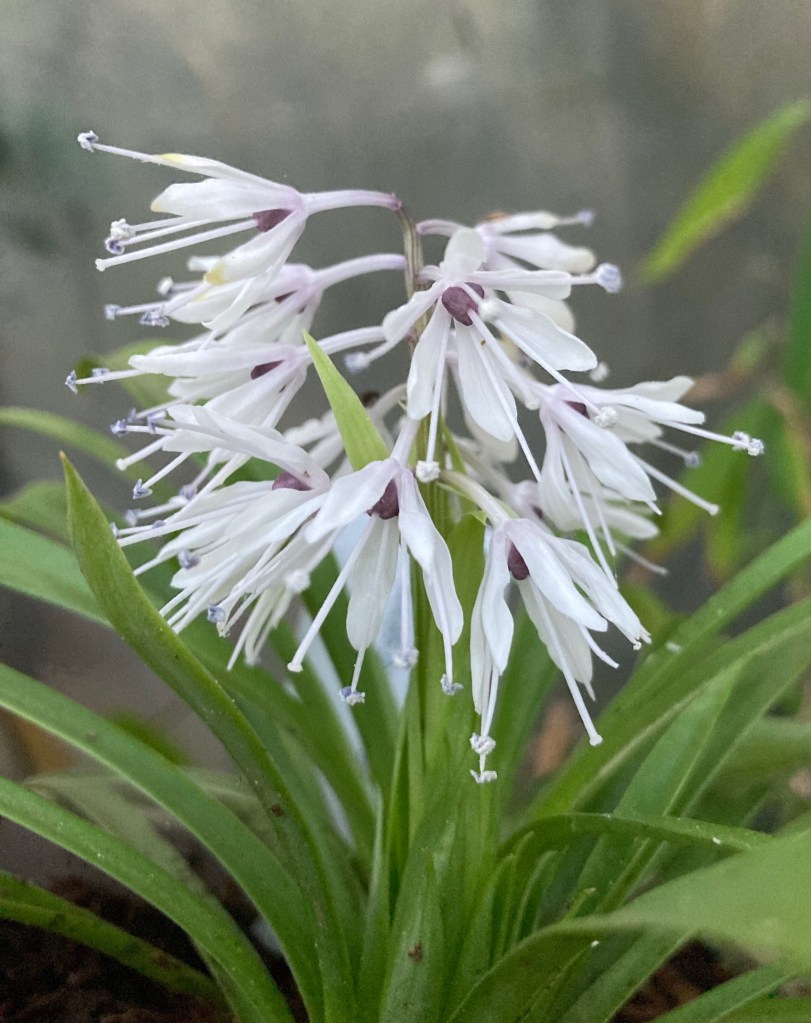
Ypsilandra thibetica

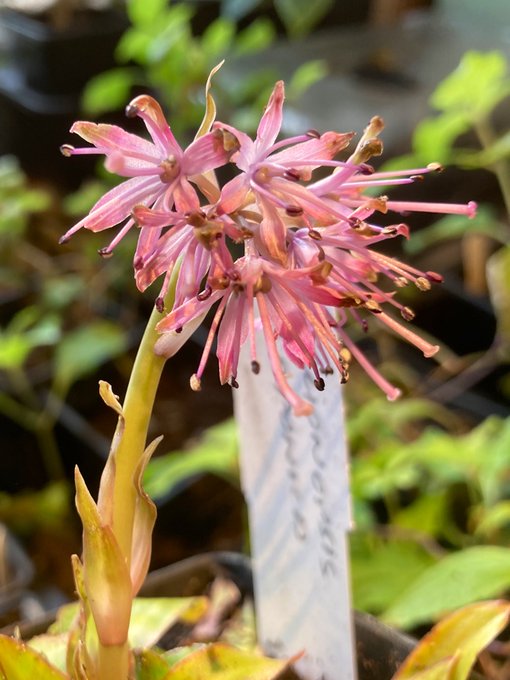
Ypsilandra contains about 5 species and Heloniopsis about 7. They are quite uncommon and not all species are in cultivation in the U.K. The most commonly available is Ypsilandra thibetica. They all have low rosettes of strap-like leaves and produce flower spikes of nodding, tubular flowers in shades of white, pink, and lilac, in late winter into early spring.

Heloniopsis orientalis (syn. H. japonica)

Heloniopsis are native to China, Japan, Taiwan, and Korea. Their common name is Oriental Swamp Pink or Japanese Hyacinth, and their name in Japanese is Shoujou Hakama (Shoujou is a red-haired, sake-drinking spirit, and Hakama are the traditional Japanese wide trousers). They require a reliably moist, humus rich soil in at least partial shade. It is a good idea to plant the rosette at a slight angle to allow water to run off and avoid rotting.

Ypsilandra yunnanensis var. fansipanensis

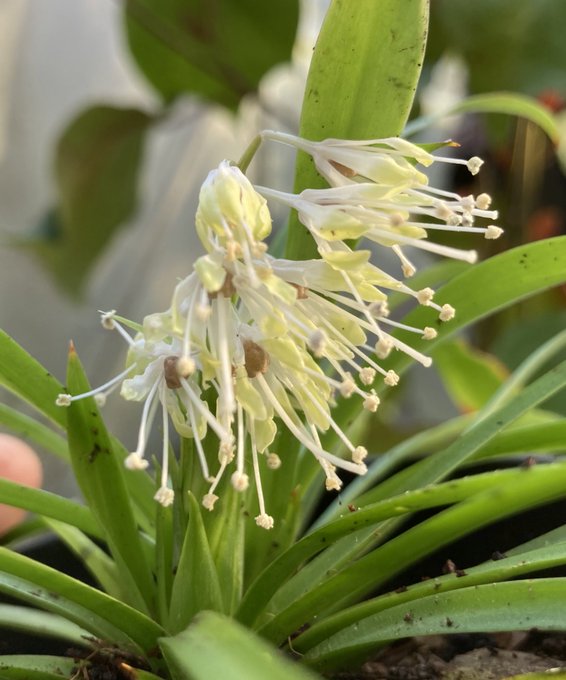
Ypsilandra are native to China, Myanmar and Thailand. They require similar growing conditions to Heloniopsis but will tolerate slightly drier conditions, which Heloniopsis absolutely will not. They flower very early – often in February – and have lightly scented white flowers with unusual pale blue anthers. The flowers fade to a coppery pink as they age. They are used in Chinese medicine to stop bleeding.

Heloniopsis orientalis producing plantlets at the leaf tips.

Both Ypsilandra and Heloniopsis can be rather reluctant to produce many seeds, but can be propagated, carefully, by division in spring. However, they can be propagated more reliably by leaf cuttings. Last year’s leaves are detached and placed in trays with both ends of the leaf inserted in a slightly damp growing medium. The trays are then placed in indirect light and kept warm. Plantlets may be produced at either end, and sometimes along the central vein. They take three years or so to reach flowering size. Heloniopsis orientalis naturally produces these plantlets where the tips of its leaves touch the soil, and in fact this is its main method of reproduction in its native habitat.

Heloniopsis tubiflora ‘Temple Blue

Though uncommon, they are great garden plants and worth seeking out, providing delicate colour at a time of year when every flower is especially valuable. I particularly recommend Ypsilandra thibetica, Heloniopsis orientalis, and Heloniopsis tubiflora ‘Temple Blue’.

Plant profile: Clerodendrum bungei

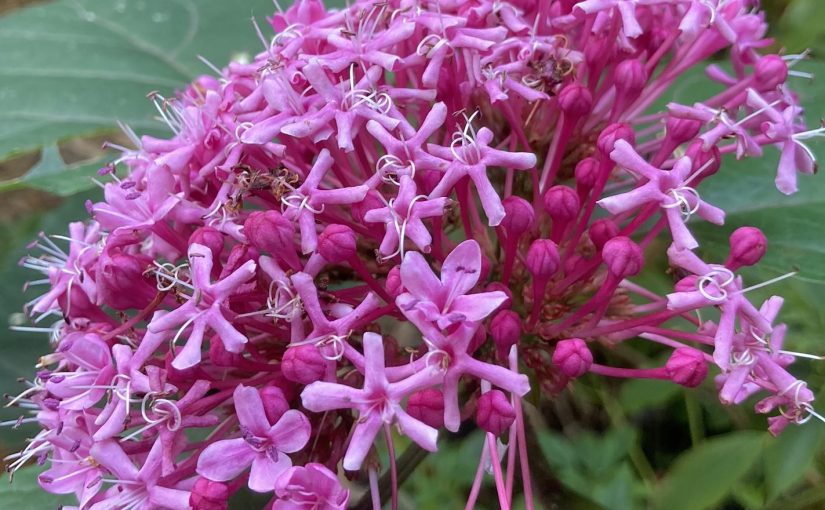
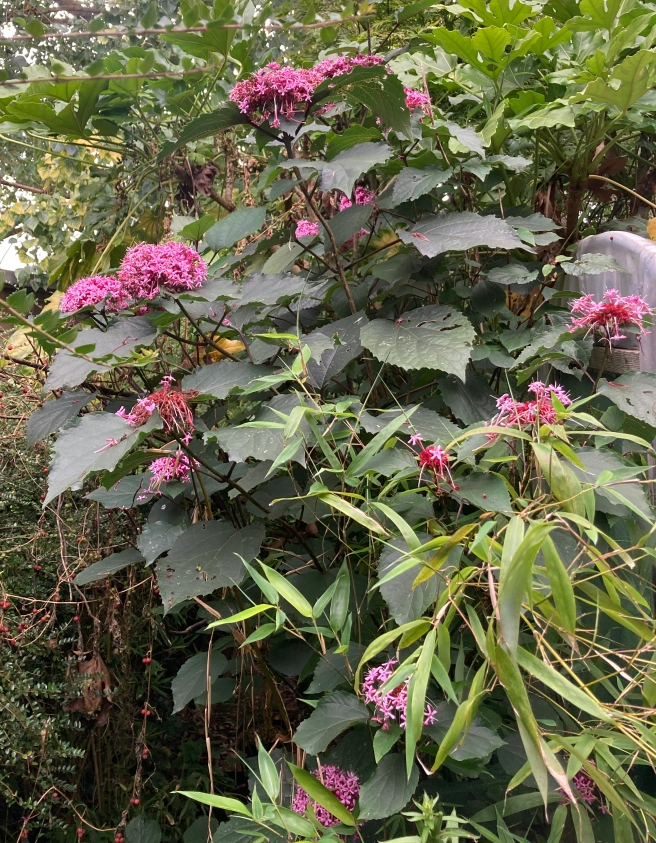
This exotic looking shrub, native to China and northern India, has a number of common names: Rose Glory Bower, Glory Flower, Kashmir Bouquet and Mexican Hydrangea. Rather more prosaically, it is known in China as Chou Mudan, stinky peony, and stinky safflower in Japan. Indeed it was originally introduced to the West under the name Clerodendrum foetidum. These names refer to the leaves, which smell quite unpleasant to some people, although to others the scent is reminiscent of peanut butter. Ironically, it is used medicinally in China to ‘dispel wind’, amongst other things. The large, showy, pink flowers, produced from late summer into autumn, are sweetly and strongly fragrant. The large ovate leaves, flushed dark red when young, are very attractive and give a distinctively exotic effect.

Clerodendrum bungei is hardy to zone 7, dying back to the ground in some parts of the U.K., although in my dry, shady, East Anglian garden it has yet to do so, even in the last winter (22/23). It gets to a good 6ft, 2m, in height, and once established in conditions it likes, can become invasive. It can spread quite a distance – up to 6 metres! – by suckers, and also self-seeds, though not prolifically. I find growing it in drier conditions keeps it reasonably well in check. It has become naturalised in several parts of the world and is an invasive weed in parts of the southern U.S. In its native China, it is a plant of mixed woodland slopes and waste ground, preferring shady, moist conditions and a humus rich soil.

There is also a variegated form, Clerodendum bungei ‘Pink Diamond’, which has attractive grey-green leaves with cream-variegated margins, and is slightly more compact than the straight species.

Plant Profile: Asimitellaria

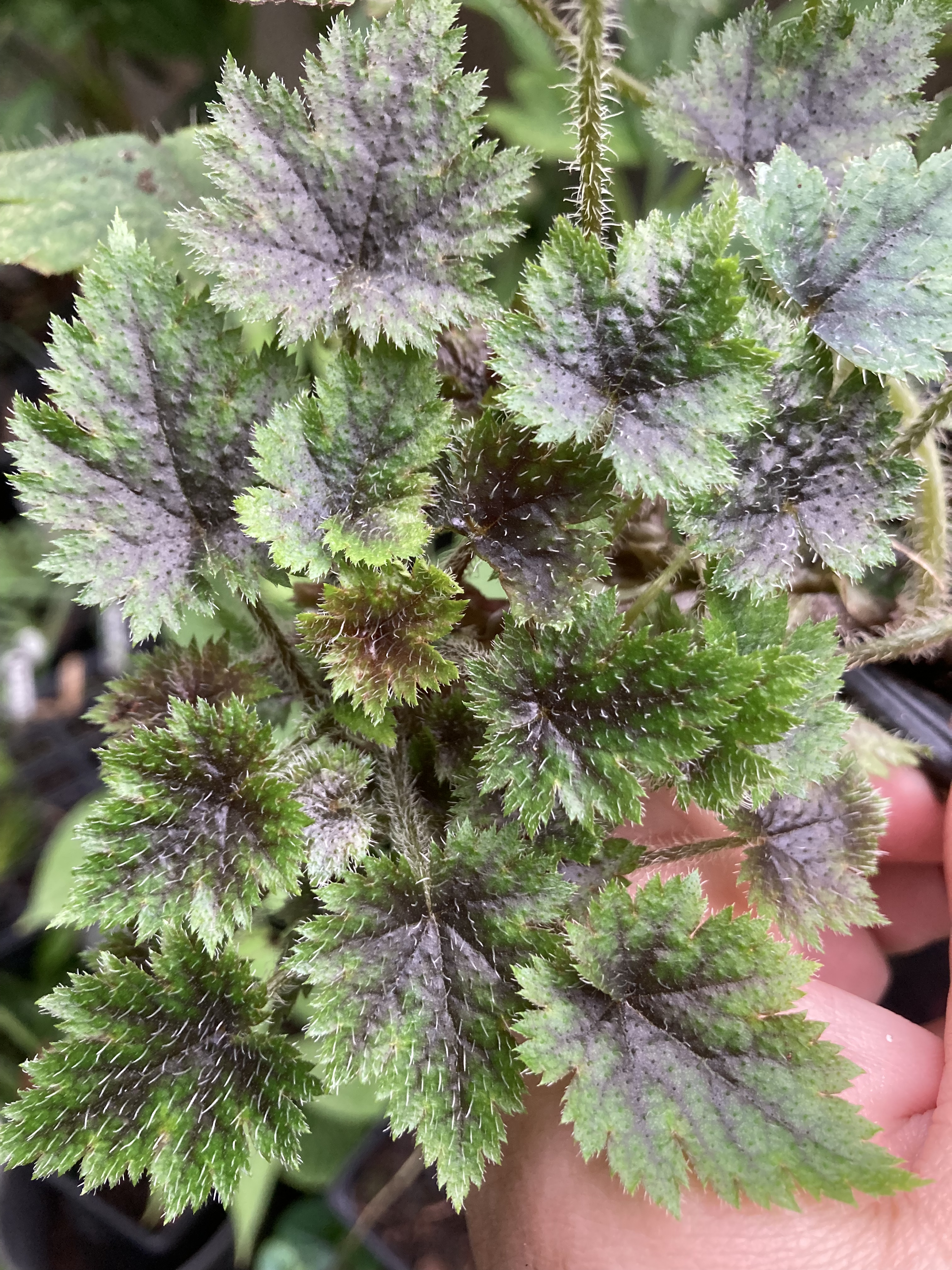
Asimitellaria is a recently recognised genus of plants in the Saxifrage family, previously included in the genus Mitella, and related to Tiarella, Heuchera, and Tellima (which is an anagram of Mitella). There are 11 species, 10 endemic to Japan and one to Taiwan. Asimitellaria are woodland plants, preferring a humus rich soil, not too dry, in partial to full shade. They are mostly small, evergreen, clump-forming or gently creeping perennials, grown for their attractive lobed foliage, which is sometimes patterned in reds and purples. The spikes of tiny cap shaped flowers in spring give the plant its common name of Mitrewort or Bishop’s Cap. They usually produce plentiful seed which germinates readily when fresh and kept moist.

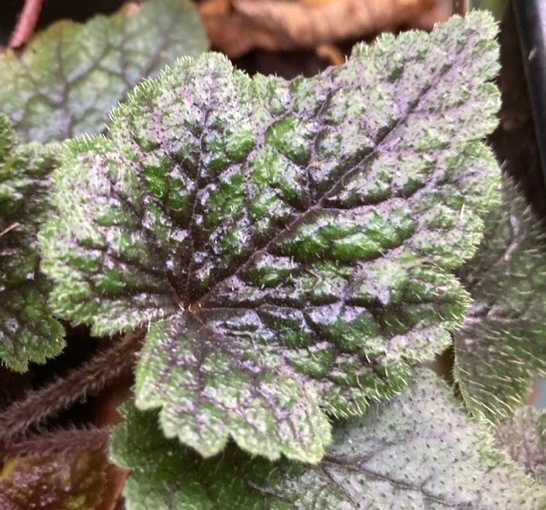
Asimitellaria makinoi

Asimitellaria makinoi is a diminutive species – only around 10cm tall- from Japan, introduced by Crûg Farm. The leaves are delightfully patterned in purple with silvery patches, and the flowers and flowering spikes are red.

Asimitellaria acerina

Asimitellaria acerina is rather larger, growing up to 40 cm in height, with leaves up to 10 cm. The glossy green palmate leaves give it its Japanese name of Maple-leaved Mitella. The delicate spikes of little flowers are greenish-pink.

Asimitellaria kiusiana

Asimitellaria kiusiana is another low-growing plant, to only 20 cm or so. The green leaves have variable red patterning along the veins, and the flower spikes are pale green.

Plant Profile: Deinanthe

Deinanthe is a small genus, of only two species, closely related to hydrangeas and rarely grown in U.K. gardens. Commonly known as false Hydrangeas, the botanical name comes from the Greek Deinos meaning extraordinary, and anthos meaning flower. They are herbaceous perennials, very hardy, slowly forming a clump about 15-18″, 40-50cm tall and wide. They are woodland plants and need partial to full shade and a humus rich soil. Summer moisture is essential – they will not tolerate drying out. Watering should be reduced as the growing season comes to an end.

Deinanthe bifida ‘Pink-Shi’

Deinanthe bifida is a Japanese endemic, introduced to the West by the Russian botanist C. J. Maximowicz in 1860. The flowers are white. A few varieties are available, such as ‘Pink Shi’ and ‘Pink-Kii’, which have pink buds opening to slightly pink-tinged flowers, and may occasionally produce a few sterile florets. It is slightly larger and easier to grow than Deinanthe caerulea. The hydrangea-like leaves are split at the end rather attractively.

Deinanthe caerulea

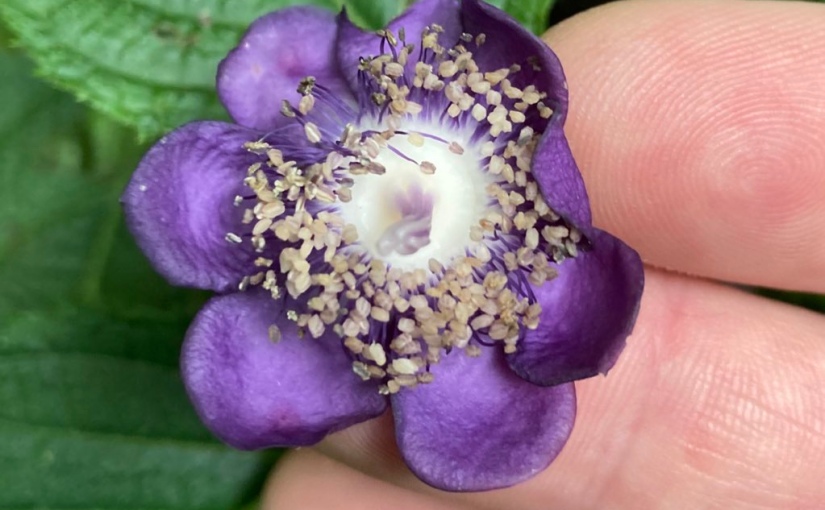
Deinanthe caerulea is a Chinese species, native to Hubei, introduced by E.H. Wilson in about 1911. Smaller and slower-growing than D. bifida, it is even less tolerant of summer drought. The flowers are a remarkable waxy purplish blue. It is sometimes sold under the trade name ‘Blue Wonder’. There is also a hybrid between the two species, sometimes known incorrectly as D. caerulea European Form, which has pale blue flowers.

Propagation is by seed, when produced, or more reliably by division in spring.

The Mother Of Gardens

In 1899, the plant hunter Ernest Wilson set out on his first plant hunting expedition to China for James Veitch and Sons nursery. He was looking for Davidia involucrata, the fabled Dove Tree, discovered by Père Armand David in 1869. “Stick to the one thing you are after and don’t spend time and money wandering about. Probably every worthwhile plant in China has now been introduced to Europe,” he was advised by his employers. They could hardly have been more wrong. In his 1929 book “China, Mother of Gardens”, Wilson wrote about collecting some 3500 species in China alone, of which about 1800 were new introductions to the West.

China is second only to Brazil in the number of native plant species and its botanical diversity is unparalleled amongst temperate countries. With a similar land area to the USA, China has about twice as many plant species – 31000. About half of these are endemic. Where does this biodiversity come from? One important factor was the relative lack of glaciation in China during the last major ice age. Some species which would once have been found across the northern hemisphere were wiped out elsewhere, surviving only in China. This accounts for the ‘living fossils’ such as Metasequioa glyptostroboides, the Dawn Redwood, described as a species from fossils of the Mesozoic Era in 1941 and discovered as a living plant in China in the same year (although the connection was not made until 1946).

Metasequioa glyptostroboides

Similarly, Ginkgo biloba, the Maidenhair tree, is the last remaining species of a genus found in the fossil record around the world. By the end of the Pliocene, Ginkgo species were restricted to central China. Introduced to the West from Japan in the 17th century, having made its way there from China in the 14th century, Ginkgo biloba was long believed to be extinct in the wild. Some specimens planted by temples are said to be 1500 years old or more, with one perhaps 4000 years old. Such a long history of cultivation in China makes it hard to determine whether plant populations are wild or cultivated – small existing populations of Ginkgo in Zhejiang province have very little genetic diversity, suggesting they may have been planted, probably by monks, about 1000 years ago. Small populations recently studied in the Dalou mountains show much greater genetic diversity, suggesting they may be of wild origin.

This long history of cultivation may be another, though lesser, factor in China’s remarkable diversity of plant species. Many ornamental species were first cultivated in China for food and/or medicinal purposes, and a number of trees were grown for symbolic and religious reasons as far back as 5000 years ago. This may have preserved species now extinct in the wild. For example Trachycarpus fortunei, the Chusan or Windmill palm, though widely grown, may have no truly wild specimens in existence.

Trachycarpus fortunei

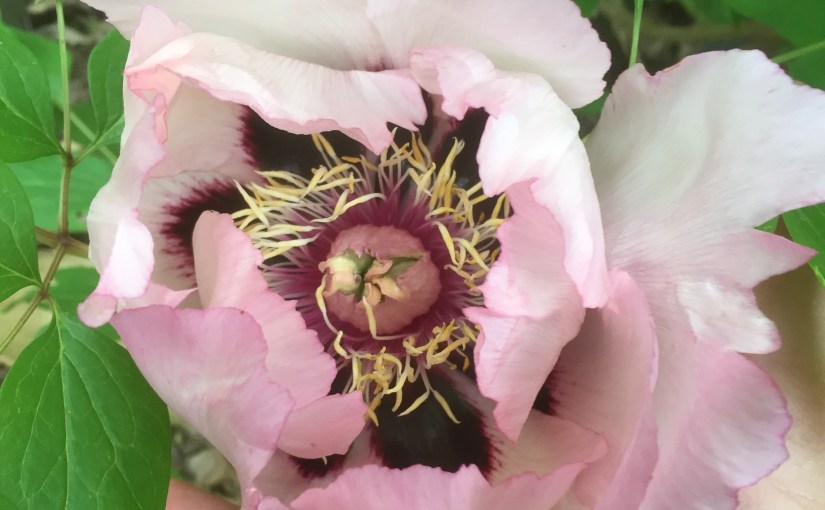
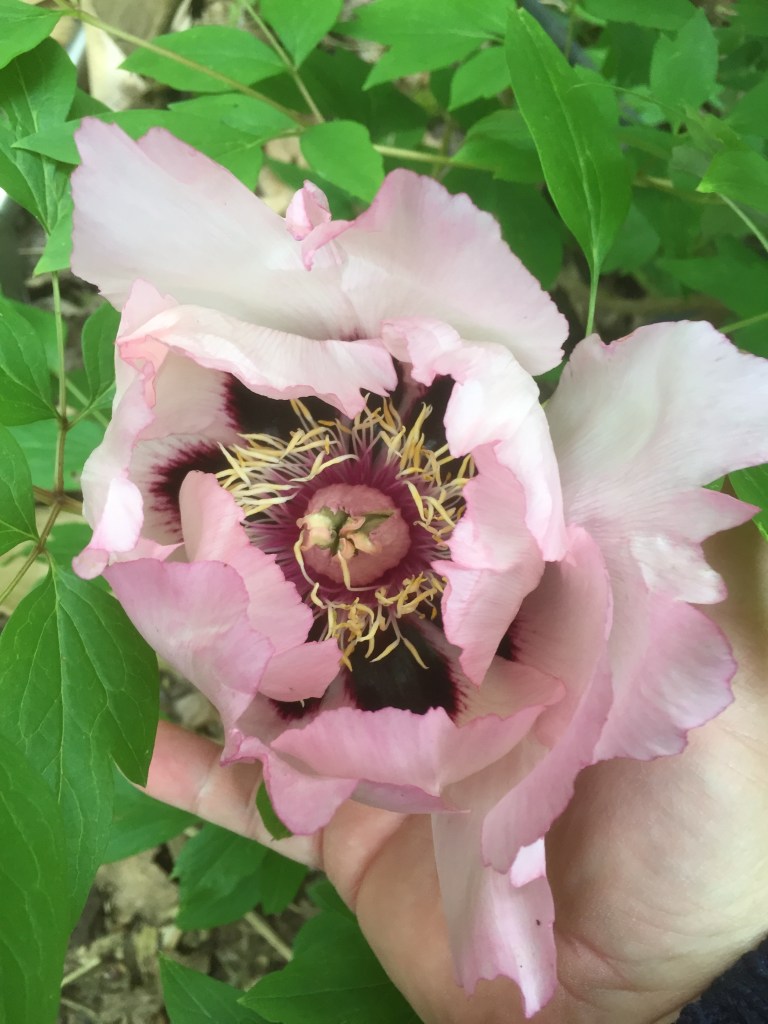
China is the centre of distribution for roses (93 out of 150 species); camellias (the number of species varies depending on the authority – the Flora of China counts about 120 species, 97 native to China with 76 endemic); maples (half of the 110 species are found in China); peonies (about 30 species, half native to China, 10 endemic), and many other plants, without which our gardens would be very much the poorer.

Paeonia rockii

Plant profile: Eomecon chionantha

Eomecon chionantha, the snow poppy or dawn poppy, is an uncommon perennial plant from China, and the only species in the genus. It has delicate white poppy-like flowers with yellow stamens sporadically through the summer and into autumn. The fleshy leaves, an attractive feature in their own right, are glaucous green, and kidney-shaped with scalloped edges. In a mild winter it is evergreen. It forms spreading clumps on long rhizomes when happy.

Eomecon chionantha

In its native habitat it grows on riverbanks and in moist woodlands in eastern China. In the garden it appreciates moist, humus rich soils in partial shade. It will take full sun but not drought. It is not prone to pests or diseases in general but may need protection from slugs.

The generic name derives from the Greek eos meaning dawn or the east and mekon meaning poppy (as in Meconopsis). The specific name chion meaning snow and anthos meaning flower give the plant its common name. It is also sometimes known as Chinese Bloodroot or Asian Bloodroot. It is related to Sanguinaria, the Bloodroot of North America, and like its relatives bleeds a reddish sap from cut rhizomes.

Plant Profile: Ypsilandra thibetica

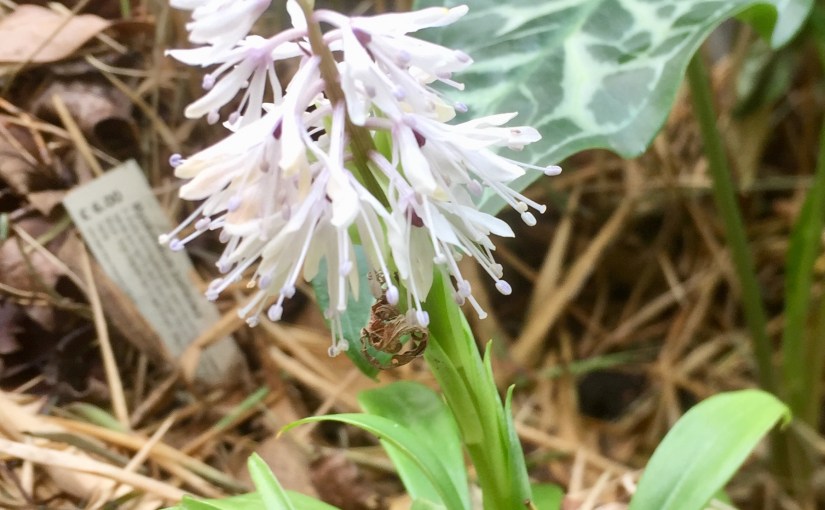
Ypsilandra thibetica is an attractive and unusual evergreen perennial, not common in the U.K., native to southwestern China and Taiwan. There are five other species in the genus, all from East Asia. It usually has white scented flowers which become slightly coppery or pink as they age, with pale blue anthers. Some forms have pink or pale lilac flowers, and the flowering stems reach about 30 centimetres tall. The leaves are strap-like and form rosettes, bulking up slowly to form a clump of multiple rosettes.

Ypsilandra needs at least partial shade, not too dry and not too hot in the summer. It likes a humus rich soil. In its natural habitat it grows on wooded slopes, and it is best to plant it with the rosette of foliage at a slight angle to allow water to run off and avoid the risk of rotting.

The generic name comes from the Greek ‘ypsilo’ (y-shaped) and andros (anthers). It is used in Traditional Chinese Medicine to stop bleeding amongst other things.

Disporopsis, Disporum, and Prosartes – a new National Collection for Suffolk

These three related genera contain some excellent perennials for shade and deserve to be more widely grown. The genus Disporopsis is closely related to Polygonatum and its common name is Evergreen Solomon’s Seal. The genus Disporum has had rather a convoluted taxonomic history, having at various times been included in the Convallariaceae (with Disporopsis), Liliaceae, Asparagaceae, and Uvulariaceae. More recent genetic research places it in the family Colchicaceae. Disporum and Disporopsis are native to temperate parts of Asia, especially China, Japan, Korea and Taiwan. The genus Prosartes contains the North American species which were previously included in Disporum.

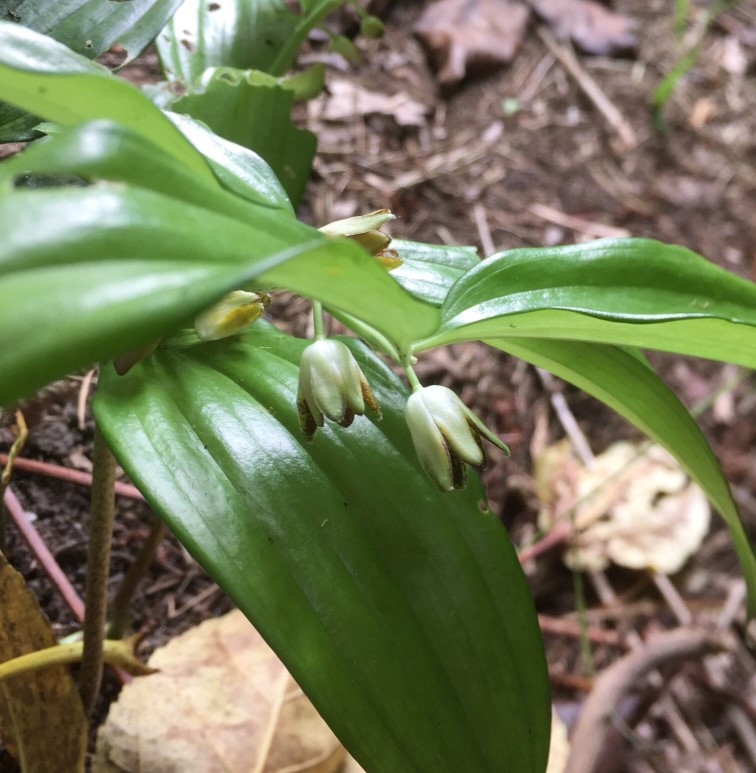
Disporopsis aspersa

Disporopsis are quite tough little plants, with small white or cream, sometimes purple spotted, bell shaped flowers in spring. The flowers are usually lemon scented, and followed by purple berries. They form clumps from slowly spreading rhizomes, and although they prefer moist woodland conditions, will tolerate dry shade. Disporopsis pernyi, from China, is the most widely available of the eleven or so species. Besides being evergreen, Disporopsis species have the significant advantage over their herbaceous relatives of being untroubled by Solomon’s Seal Sawfly.

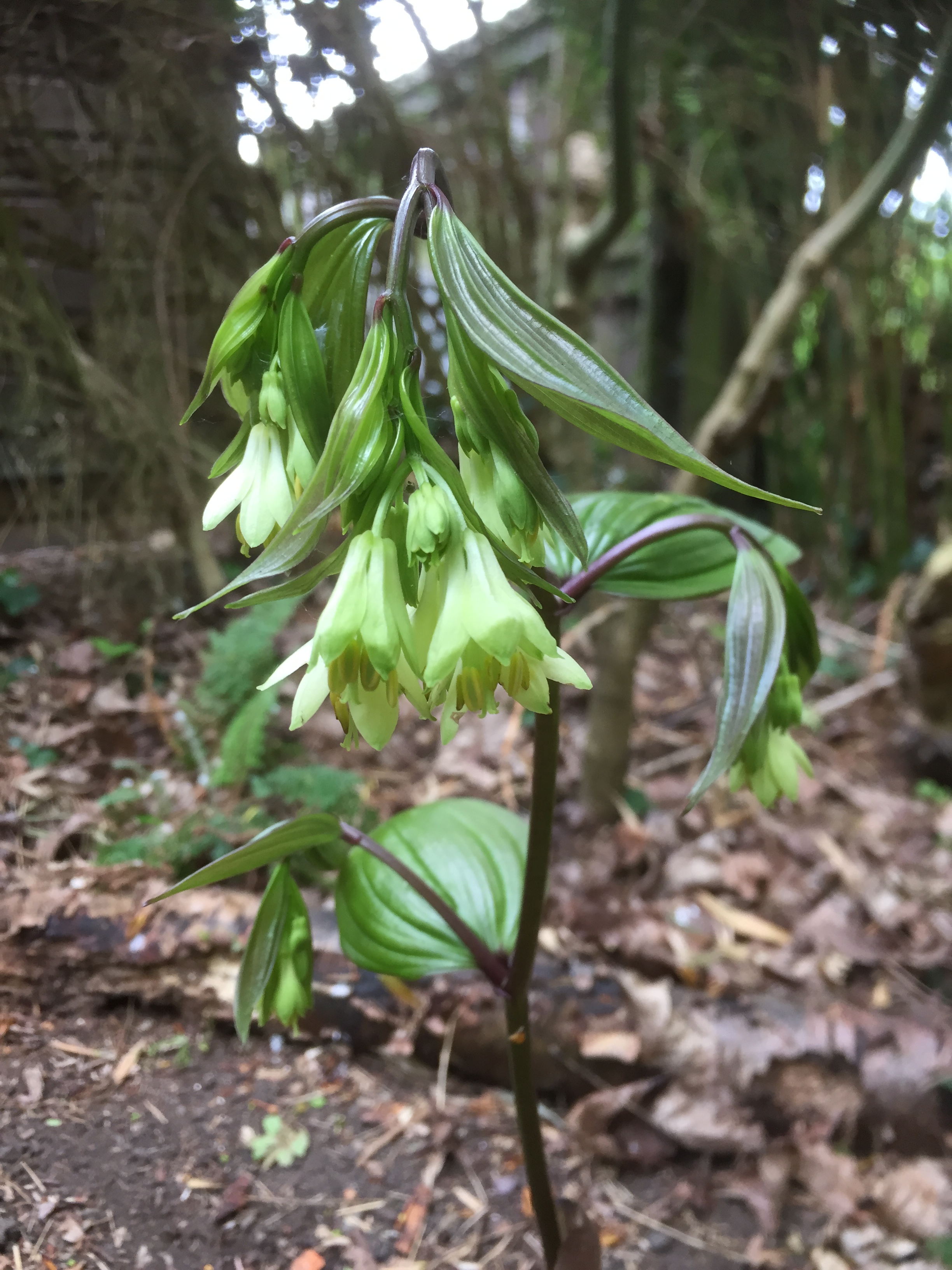
Disporum bodinieri

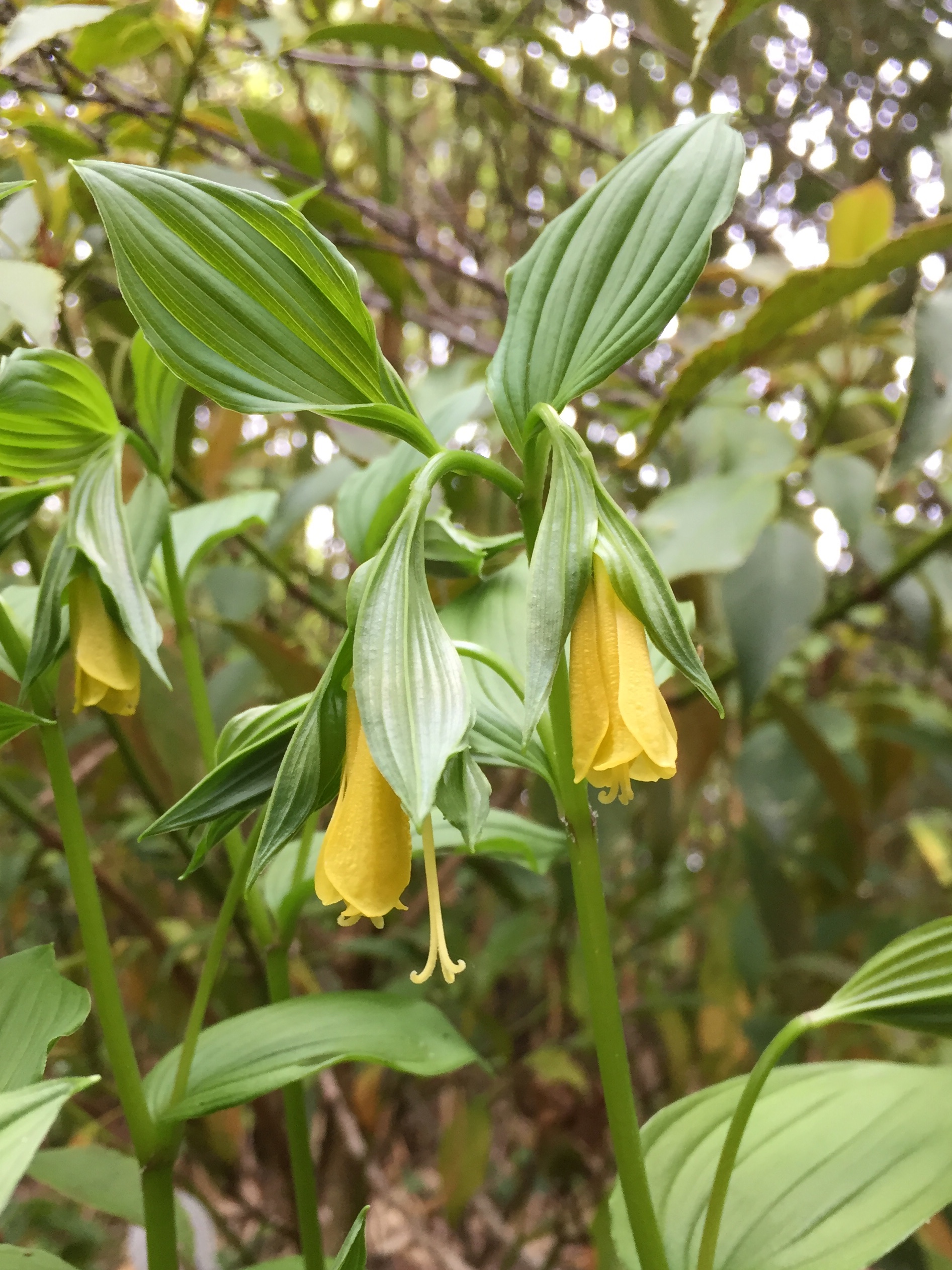
Disporum is a larger and more varied genus, with approximately twenty five species, and includes some striking architectural plants. It is probably the most ornamental of the three genera, but unfortunately a little fussier as to cultivation than Disporopsis. Disporum longistylum ‘Green Giant’ is a Dan Hinkley introduction from Sichuan, China, with bamboo like stems up to 8 feet tall, and delicate greenish white flowers. Disporum longistylum ‘Night Heron’ is a slightly shorter plant with amazing dark, chocolatey new foliage in spring. One of my personal favourites, Disporum bodinieri, is a more delicate plant at 2-3 feet tall, with pretty cream bell shaped flowers in May. Some forms of Disporum cantoniense have attractive purple flowers, whilst Disporum uniflorum has comparatively large yellow flowers. Disporum sessile is a shorter Japanese species, one foot to eighteen inches tall, of which there are many different variegated forms, showing the Japanese horticultural love of both variegation and finding infinite varieties of their native species. Disporum smilacinum is another species with many variegated forms cultivated in Japan, and also a pink flowered form. They all require at least partial shade, humus rich soil, and adequate moisture, being less tolerant of dry conditions than Disporopsis. Some species are evergreen or semi-evergreen, and most have black berries.

Disporum uniflorum

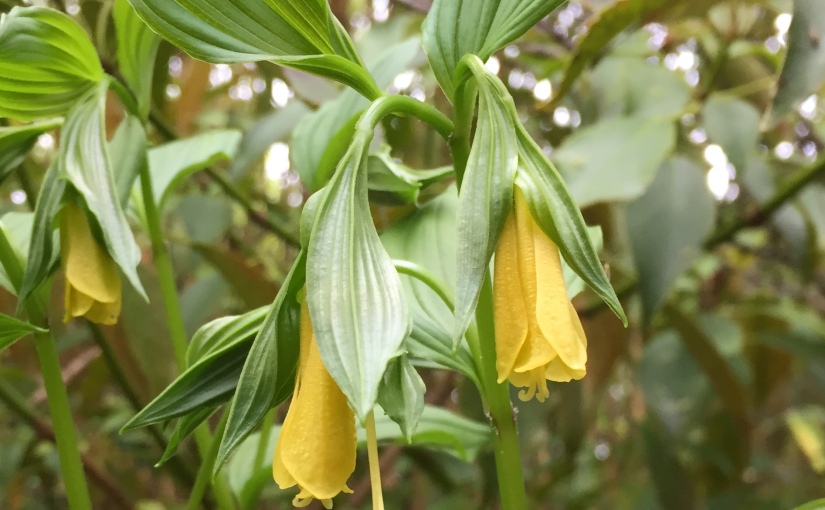
Finally, Prosartes, the North American genus, shares its common name of Fairy Bells with Disporum. There are currently six species. Most are shorter, to about 2 feet tall. The most commonly encountered are Prosartes hookeri, known as ‘Drops of Gold’ because of its protruding yellow anthers, and Prosartes smithii, also known as ‘Fairy Lanterns’. The flowers are generally followed by red berries, which are reputedly edible though not especially flavoursome. Unlike Disporum and Disporopsis, which are clearly quite tasty, the leaves of Prosartes species contain a compound which deters slugs and snails.  

Plant profile: Borinda papyrifera CS1046

There are well over 200 species and varieties of temperate bamboo, and more being introduced all the time, but if I could only have one, this would be it.

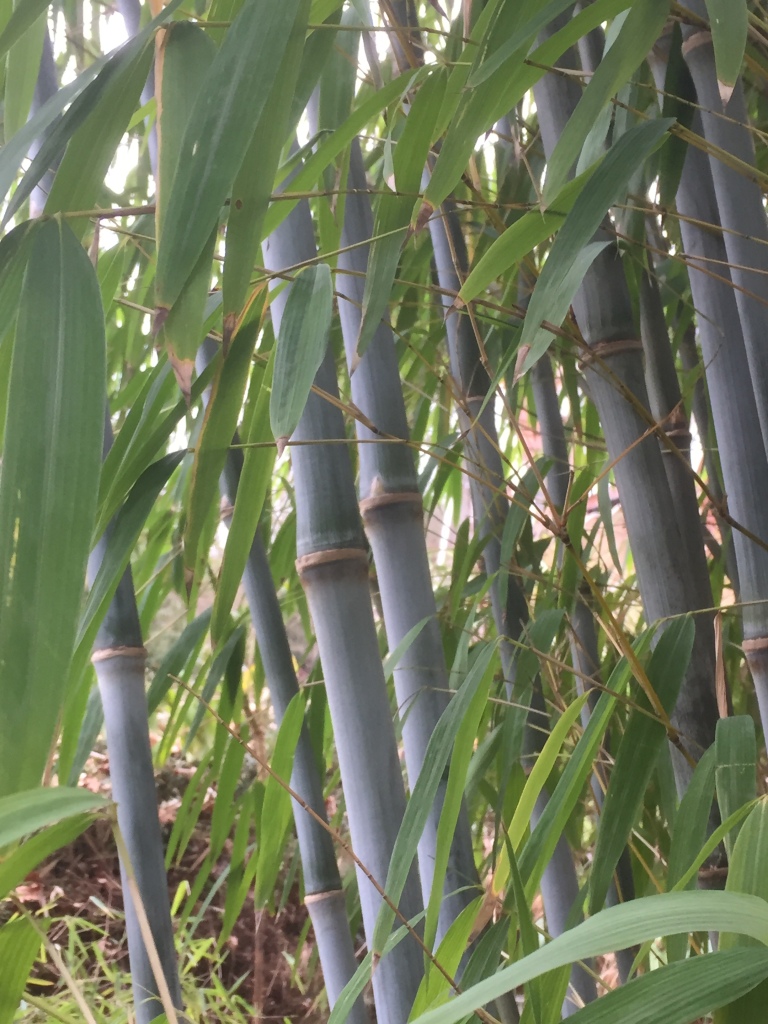
Borinda papyrifera CS1046

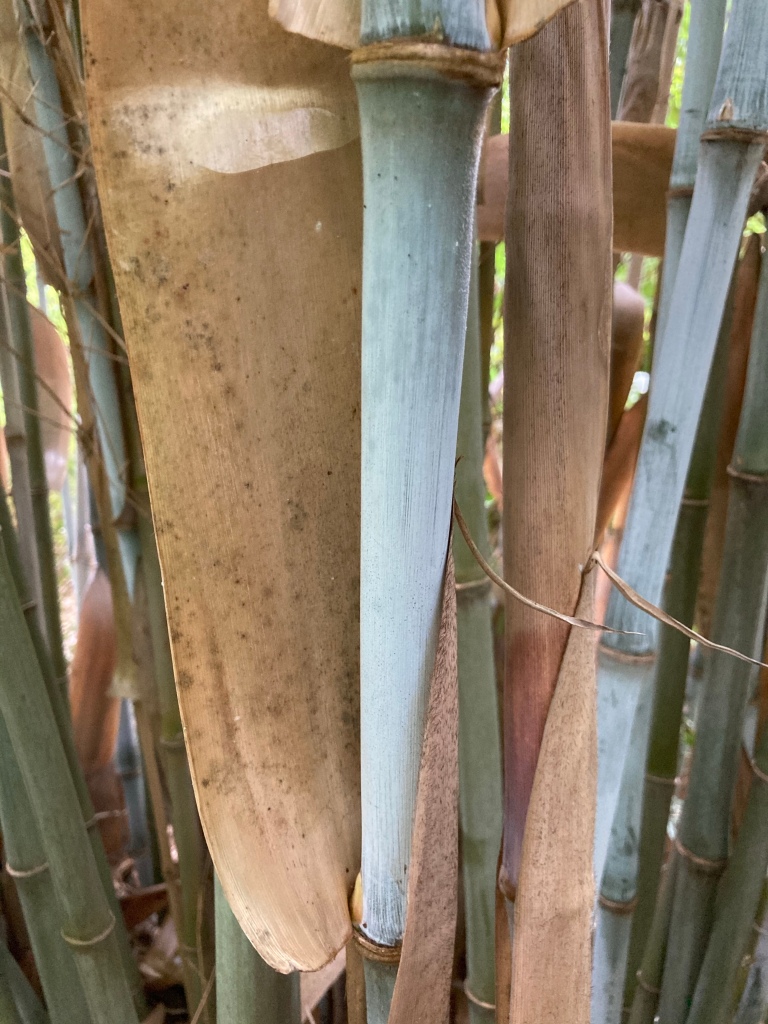
Borinda papyrifera CS1046 is a clump-forming bamboo collected from Yunnan in southwest China by Chris Stapleton (hence ‘CS’). The specific epithet ‘papyrifera’ refers to the large, papery sheaths which protect the emerging culms.

This year’s culm showing the pale colouration and the papery sheath that gives the plant its name.

Its most striking and ornamental feature is the icy blue colour of its new culms. This colour is quite persistent, lasting a couple of years before fading to a more greenish shade. The culms are thick – about 2 inches in diameter on my 10 year old plant – and the leaves are quite large.

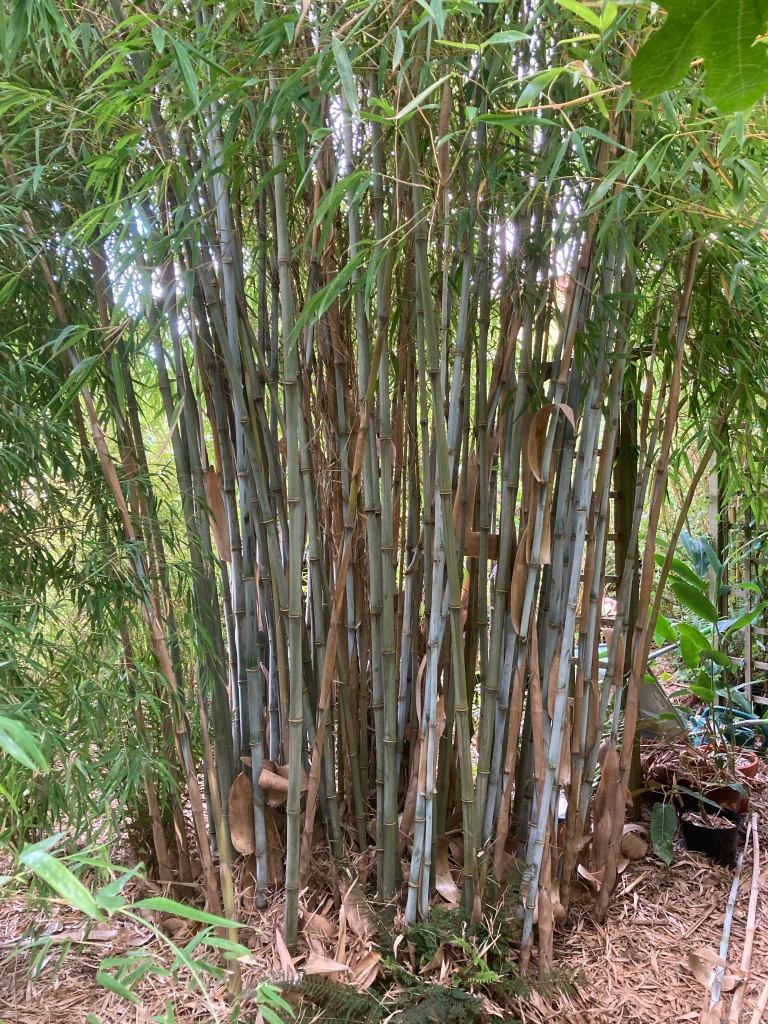
The 10 year old plant in my garden is now some 2.5m (8ft) across.

Though clump-forming it is by no means small. At 6m (20ft) plus with culms more widely spaced than many clumpers it is perhaps best described as statuesque. It would make an ideal specimen plant.

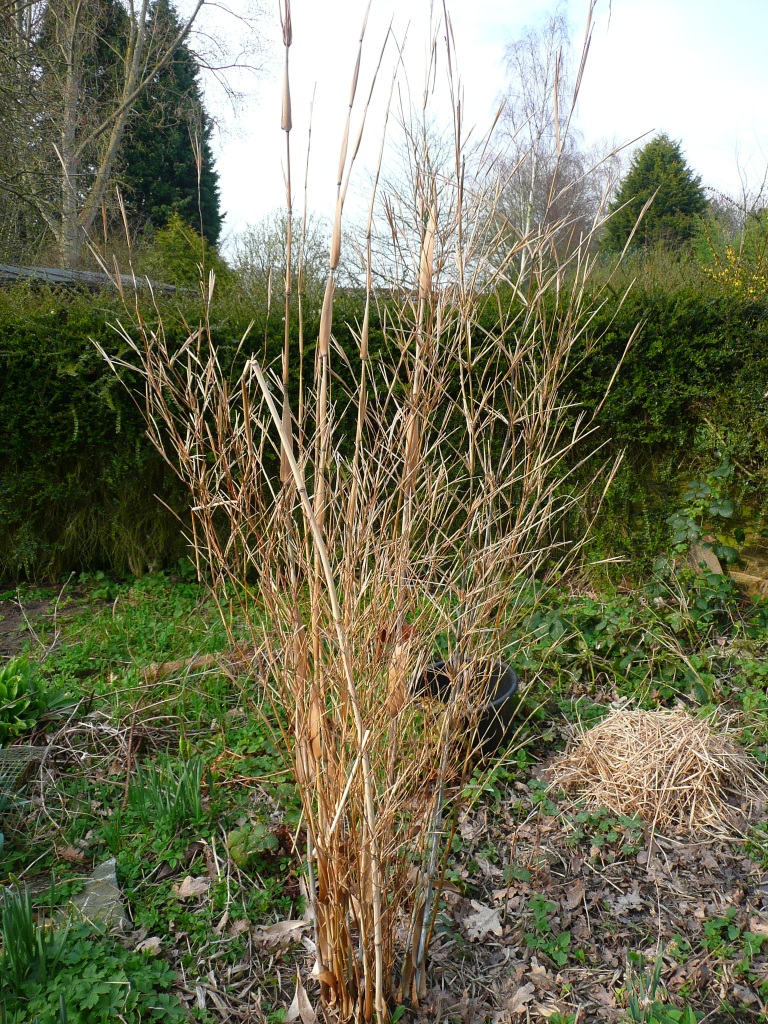
Borinda papyrifera CS1046 is not tremendously hardy as a young plant, but once established is much tougher. Mine was cut almost to the ground as a youngster in the hard winter of 2010, though it came back quite strongly, but didn’t lose a leaf in the ‘Beast from the East’ in 2018. Other clones of Borinda papyrifera are available, some of which were collected at higher altitudes and may prove hardier.

The same plant as above, after the winter of 2010.

It is reasonably tolerant of drought once established, but will tend to abort some culms in dry summers. My plant has attained its current size without extra watering until this year when I gave in to the realities of the changing climate and bought a hose. I also haven’t fed it, but always leave the shed leaves and sheaths in the base of the clump, which break down slowly and return their nutrients to the plant.

Unfortunately this very desirable bamboo is tricky to propagate, partly because it is quick to mature, which makes it hard to find and somewhat expensive. A variety called Fargesia ‘Blue Panda’ is being sold, which is apparently a micro-propagated form of Borinda papyrifera CS1046. If anything it seems to be more expensive than the original and, given what poor plants micro-propped Phyllostachys make, it would be wise to wait until more is known about its performance before buying it. Personally I would only buy a hand-propagated Borinda.