How to grow Japanese Maples

One of the most evocative of Japanese plants, Acer palmatum cultivars are easy to grow as long as they are sited correctly. Whether in the ground or in containers they need shelter from cold or drying winds. Cool dappled shade is the ideal position. Green cultivars, and some purples, tolerate sun best. Red leaved cultivars need some sun, or the colour will not develop properly, but don’t like full sun all day. Variegated or more delicate dissectum and linearilobum cultivars will need shade at least during the hottest part of the day to prevent scorching and some, like ‘Ukigumo’, can only be grown successfully in shade.

Acer palmatum ‘Katsura’

They do best in a moist but well-drained soil with plenty of organic matter, ideally slightly acidic. In a container, the standard advice is to use John Innes 2 or 3, mixed with an ericaceous compost, but it is better for the environment to use a good quality peat free ericaceous, such as those available from Sylvagrow or Dalefoot. Top pots with gravel to suppress weeds, or mulch well with compost or leafmould in the ground, but make sure the mulch doesn’t touch the trunk. Feed with a balanced fertiliser in spring before the leaves emerge.

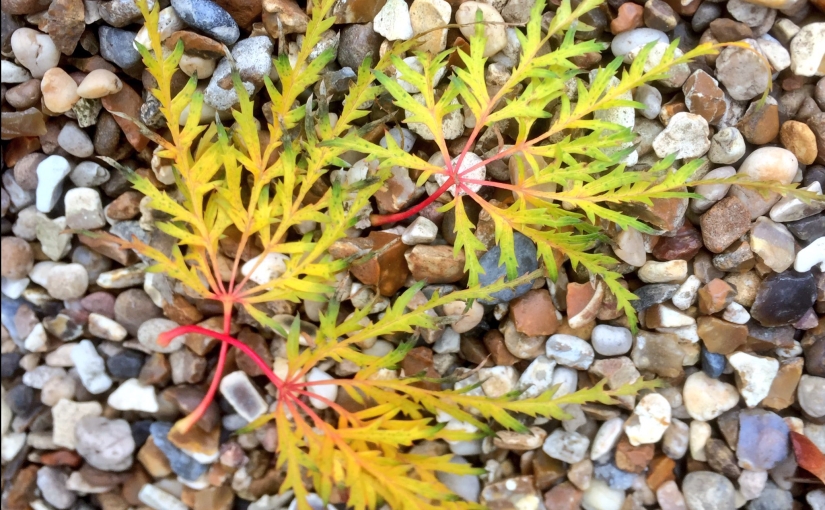
Acer palmatum ‘Omureyama’ starting to colour in autumn

Correct watering is important. They need a good supply of moisture, and won’t tolerate either drought or water-logging well. They are quite shallow rooted, so make sure they are not crowded by other plants competing with them. Besides, they are best given space to show off their beautiful form.

Emerging foliage of Acer palmatum ‘Katsura’

Acers are perfectly hardy, but in pots their roots are more vulnerable to frost, so in colder area the pots should be wrapped in fleece or moved to a protected spot in winter. Acers come into leaf very early in the year and the new foliage can be caught by late frosts. This won’t kill them but will set them back, so protect with fleece when frosts are expected.

Acers don’t need much pruning – simply removed dead, damaged or diseased branches, and any that are crossing and rubbing. Prune when the tree is dormant, between November and February, and be sure to cut back to just above a bud. A long stub left above a cut can be an entry point for disease or dieback.
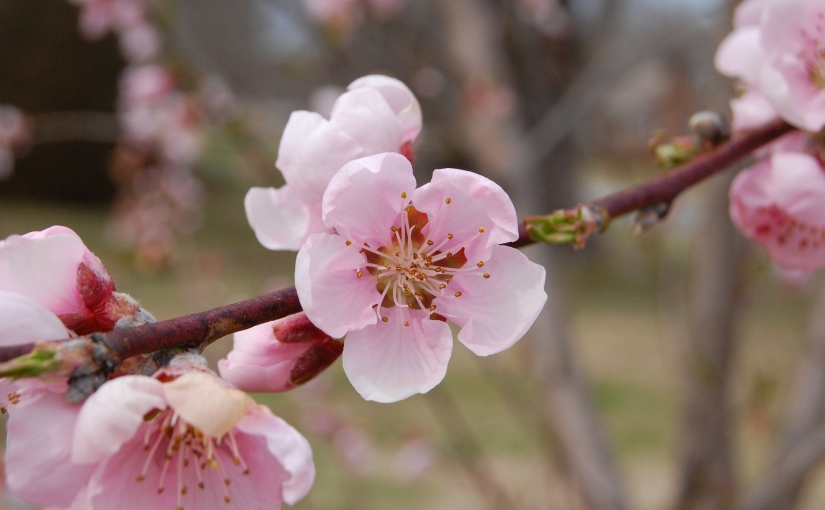
Love, Immortality and Utopia – The Symbolism of Peaches

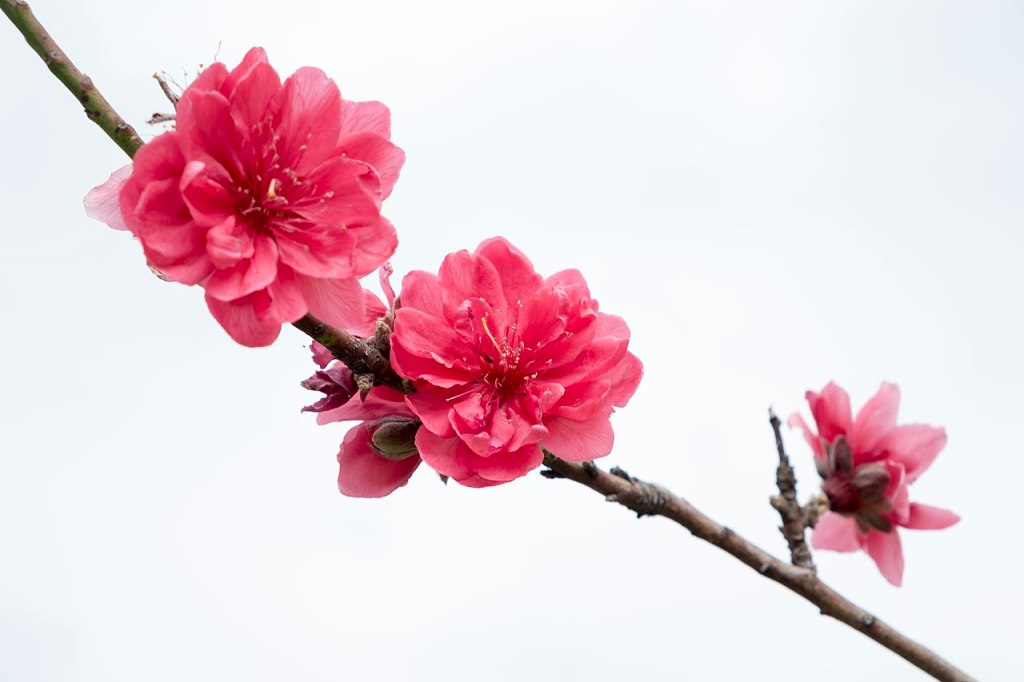
Peaches have been cultivated in China for about 3000 years, originally for food and medicinal purposes, and poems about the beauty of peach blossom date to 600BC, showing their early use as an ornamental. By the Song dynasty (960-1279AD), several varieties had been bred with double flowers in reds and whites as well as pinks.

Each part of the tree has its own symbolism. Peach blossom opens in spring, the season of romance, and is strongly associated with love, and with feminine beauty.

Within this gate on this same day last year,  
Cheeks and peach flowers out bloomed each other here.  
Her very cheeks can now be found no more.  
The peach flowers smile in spring wind as before 

Cui Hu (translated by Ma Hongjun).

This very well known poem from the Tang dynasty has formed the basis for many romantic stories and operas and given rise to a chengyu (Chinese idiom) 人面桃花 rén miàn táo huā, her face is like a peach blossom, to describe a woman’s beauty.

Today, peach blossom is one of the flowers used to decorate at Chinese New Year, and is especially popular with single people hoping for ‘peach blossom luck’ – luck in love.

The peach itself has long been a Taoist symbol of immortality. Xiwangmu, the Queen Mother of the West, lives on the mythical Mount Kunlun and grows peaches in her orchard. They produce fruit every three thousand years and confer immortality on anyone who eats them.

The wood of the peach tree is said to ward off demons. Swords carved from peach wood were used in Taoist exorcisms, and feature as magical weapons in martial arts legends.

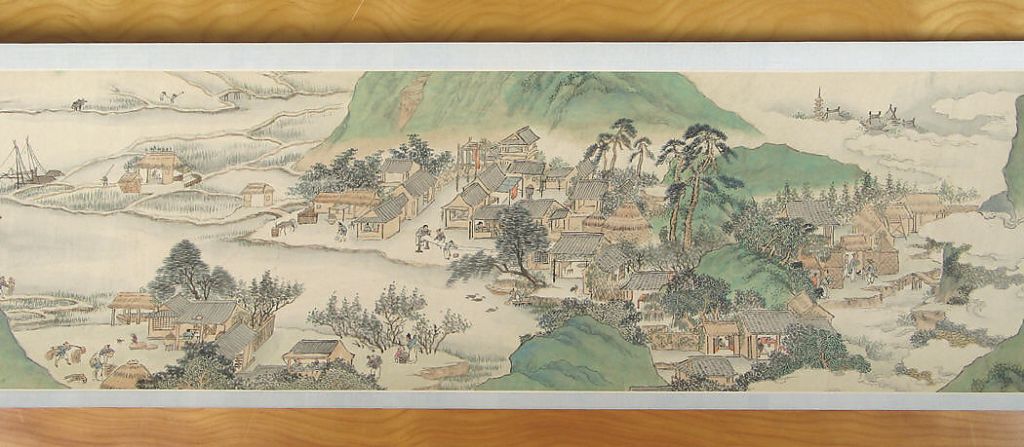
Peach Blossom Spring by Zhang Hong, Ming dynasty

One further literary association which was highly influential in the development of the Chinese garden was the story of ‘The Peach Blossom Spring’. Written in 421 AD by Tao Yuanming, it told of a fisherman who followed a stream through a forest of blossoming peach trees to a cave at its source. Squeezing through this cave he found a hidden village, surrounded by beautiful scenery and fertile fields, where people lived happy and tranquil lives, cut off from the world for many generations. He met with a warm welcome and stayed for a while, but then wanted to return home. He was warned that it was pointless to tell anyone else or to try to find his way back to the village later, and so it proved. The story inspired many paintings and poems, as well as influencing gardens, and gave rise to a chengyu – 世外桃源 shìwaì taóyuán, the Peach Spring beyond this world, which means a utopia.

How to grow Japanese Irises

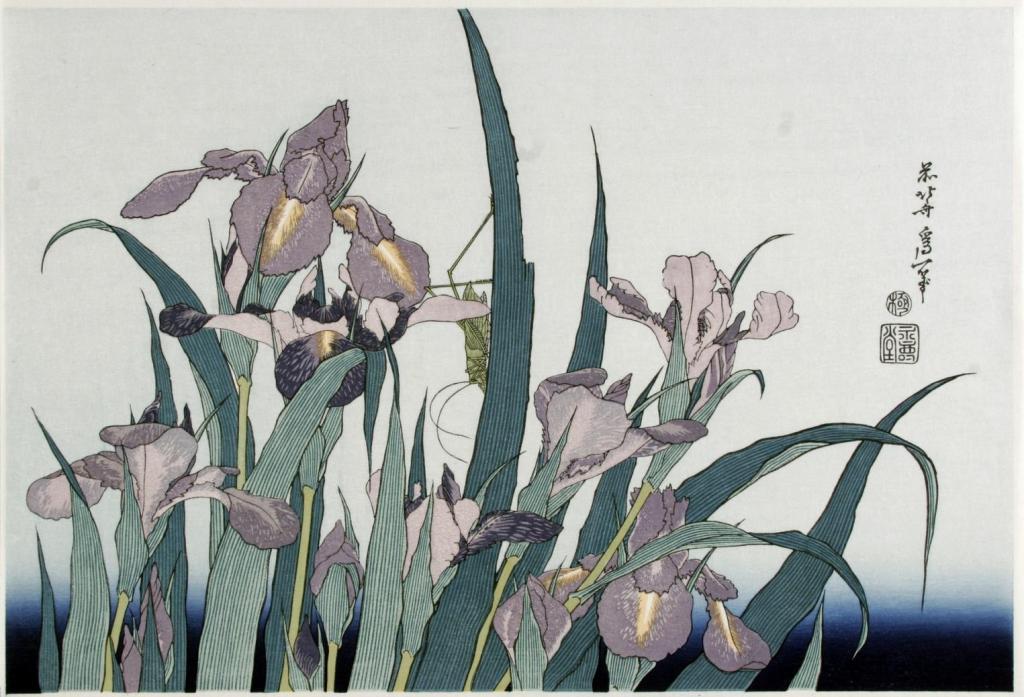
Iris ensata (syn. Iris kaempferi) is one of the archetypal plants of the Japanese garden. They are rhizomatous, beardless irises, native to East Asia. They have fans of strap shaped leaves and flowering stems 2-4ft tall. They flower in early summer, with two or three large, exotic-looking flowers on a stem, in shades of purple, blue, white, and pink.

They are extremely hardy, down to -20ºC, zone 4 in the US. They will grow in full sun to partial shade, as long as they get at least 6 hours of sun, and like a loose, slightly acidic damp soil with plenty of organic matter. It is especially important in the spring, in the run up to their early summer flowering, that they have plentiful moisture.

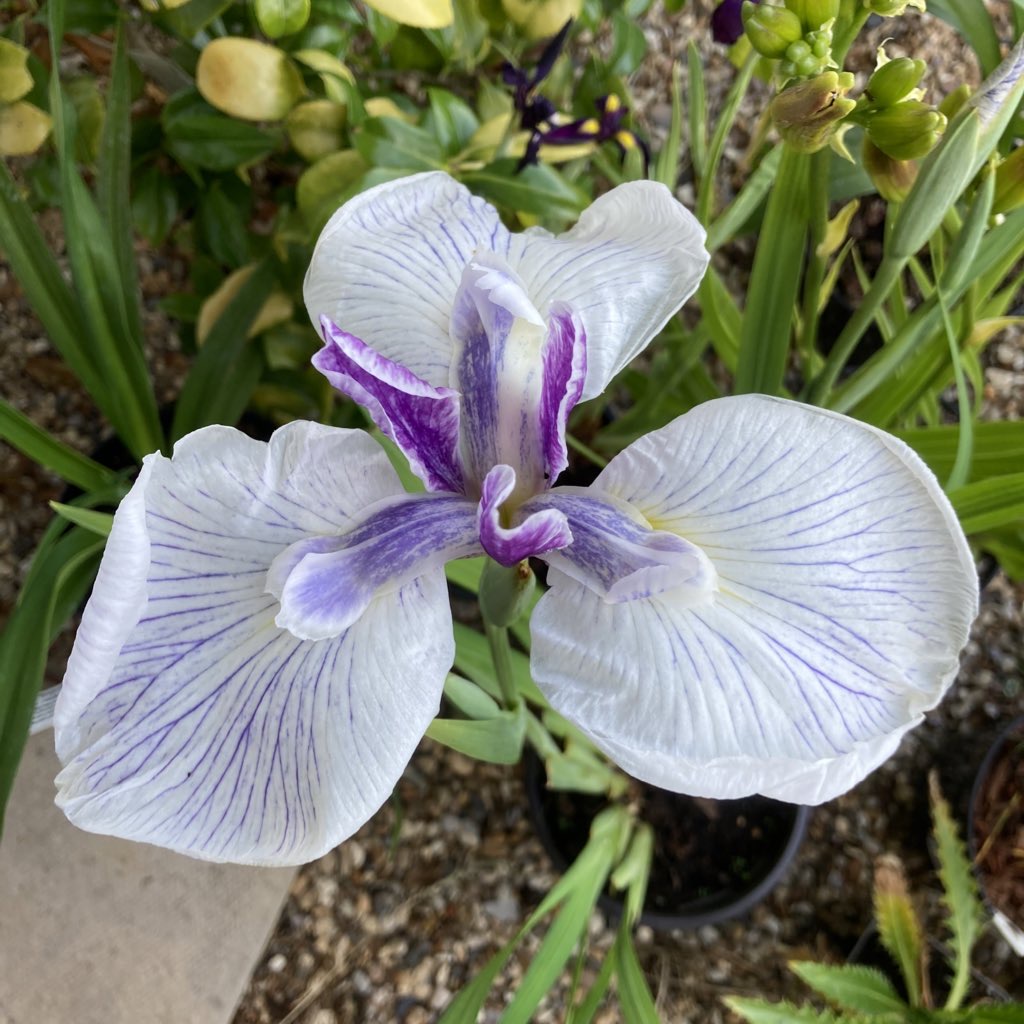
Iris ensata ‘Moonlight Waves’

They are sometimes sold as marginal plants, and are happy to be grown in shallow water, as long as the crown of the plant is not covered, during spring and summer. However, they need to be lifted out of the water over winter or they are likely to rot. The old foliage should be cut back to the ground in the winter, after it has been knocked back by the first frost.

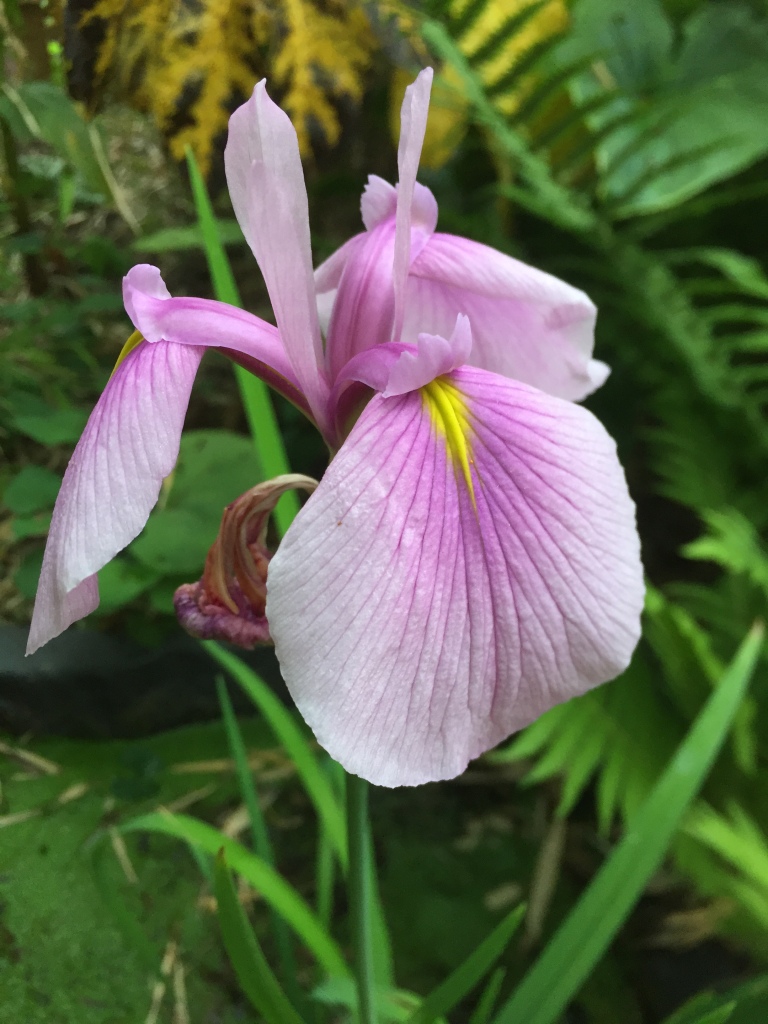
Iris ensata ‘Rose Queen’

Iris ensata are heavy feeders and will benefit from a generous feed of a balanced fertiliser for acid-loving plants in the early spring and again after flowering, and a good mulch to help retain moisture. It’s good to add plenty of organic matter to the soil when they are planted or divided, but don’t add fertiliser at this point. Bone meal should be avoided as it is actively harmful to Japanese irises.

Iris ensata ‘Grayswood Catrina’

It’s very important to divide and transplant Japanese Irises every three to four years to maintain vigour. New roots form above the old each year, so over time the crown of the plant rises above the soil, potentially causing it to fail. To divide, dig up the plant and divide it into individual sections or fans, or slightly larger sections of 2-4 fans each. The oldest roots and rhizomes – the lowest – should be removed, and the foliage cut back to about 1/3 of its length. The divisions should be planted 2-3 inches deep. in fresh soil where Iris ensata has not been grown for the previous three years, and kept well watered. It is best to divide Japanese Irises in spring or autumn, avoiding the heat of mid-summer, though in cooler areas they can be divided immediately after flowering.

Iris ensata ‘Oku Banri’

Iris ensata have been cultivated in Japan for at least five hundred years, and possibly much longer. Extensive Iris breeding began in the late Edo period, around the 1800s. Japanese Irises were introduced to the West by Carl Thunberg in 1794, and again by von Siebold in the 1850s (as Iris kaempferi). Many varieties have been bred in the United States as well. Some 2000 varieties are now available.

National Beauty and Heavenly Fragrance: the Chinese Peony

A symbol of wealth and honour, peonies are known as the King of Flowers and have been cultivated in China for millennia. Like many traditional plants of the Chinese garden, they were originally cultivated for medicinal purposes and are mentioned in the Shennong Bencao Jing, an ancient materia medica written circa 200-250 AD, recording oral traditions dating back much further. Some records indicate they were cultivated as far back as the Xia (the possibly mythical first dynasty, 2000-1766 BC).

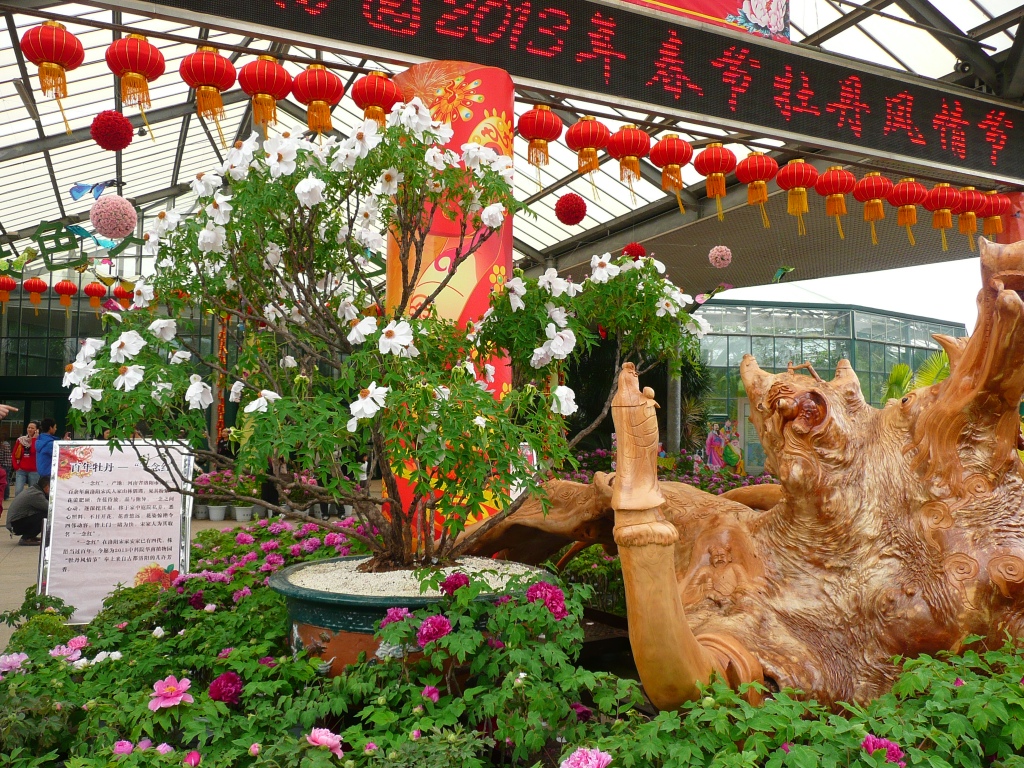
New Year peony festival at the South China Botanical Garden, Guangzhou

Before the Qin dynasty (221-206 BC) not much distinction was made between herbaceous peonies, shaoyao, and tree peonies, mudan, which were simply called tree shaoyao. Paintings from around 400 AD depict peonies in the background, showing that they have been cultivated as ornamentals for at least 1600 years. By the Sui dynasty, 581-618 AD, individual varieties were being recorded, and twenty boxes of peonies were sent as tribute to the Emperor from Hubei. In the early Tang dynasty, peonies were an imperial flower, only permitted to be grown in imperial gardens. They soon spread, however, and were planted in temple and monastery gardens. In the 8th century they were introduced to Japan by a Buddhist monk.

Peonies, by Yun Shouping, 17th century

There is a legend that the Tang Empress Wu Zetian visited a garden in the winter. Nothing was in flower, so she ordered all the plants to bloom. The next day, despite the snow, all the plants had obeyed the Empress and flowered, except the peony. Enraged, she banished it from the capital to Luoyang, where it bloomed profusely. Subject to the vicissitudes of war and changing dynasties, Luoyang has been the capital of China’s peony industry ever since.

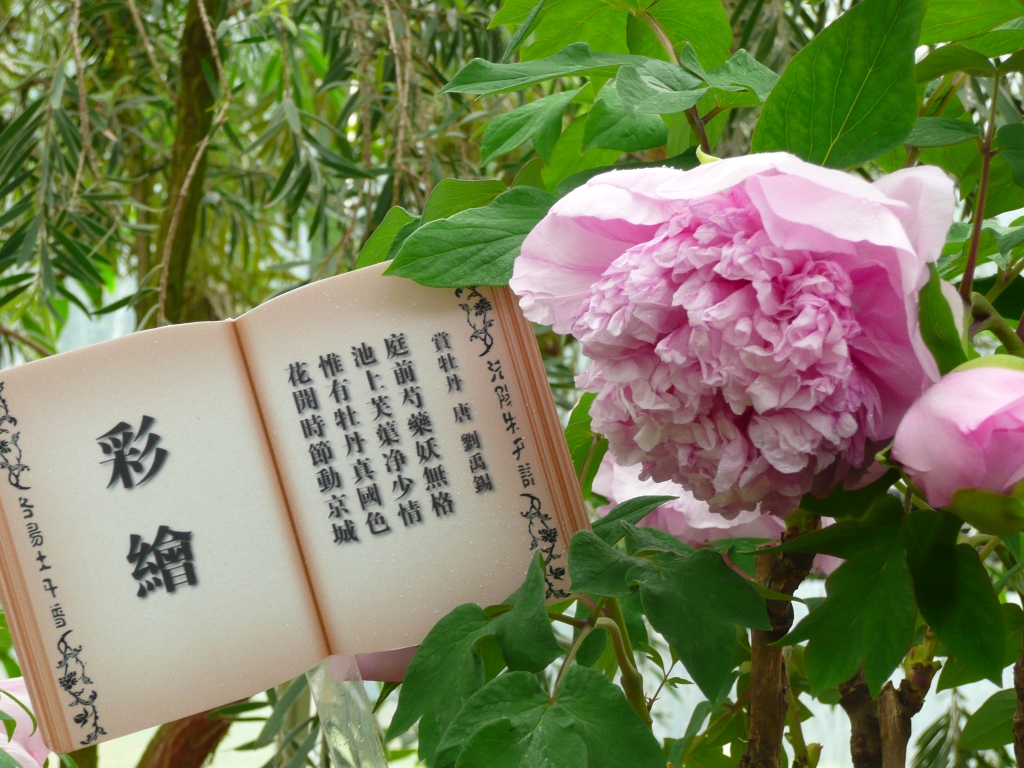
Paeonia x suffructicosa ‘Cai Hui’, Brightly Coloured Painting

The first monograph on peonies, written in 1034 AD, described 24 double and semi-double varieties. The large double ‘Thousand-Petalled’ varieties were the most popular, new varieties costing as much as a hundred bushels of rice. At least two of the varieties, Yao’s Yellow and Wei Purple, are still in cultivation. By the 1800s, a single plant could cost 1000 coins.

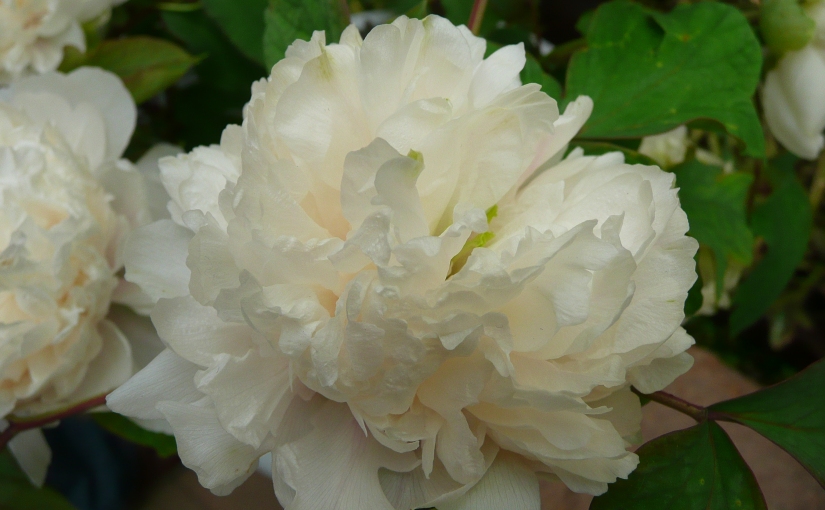
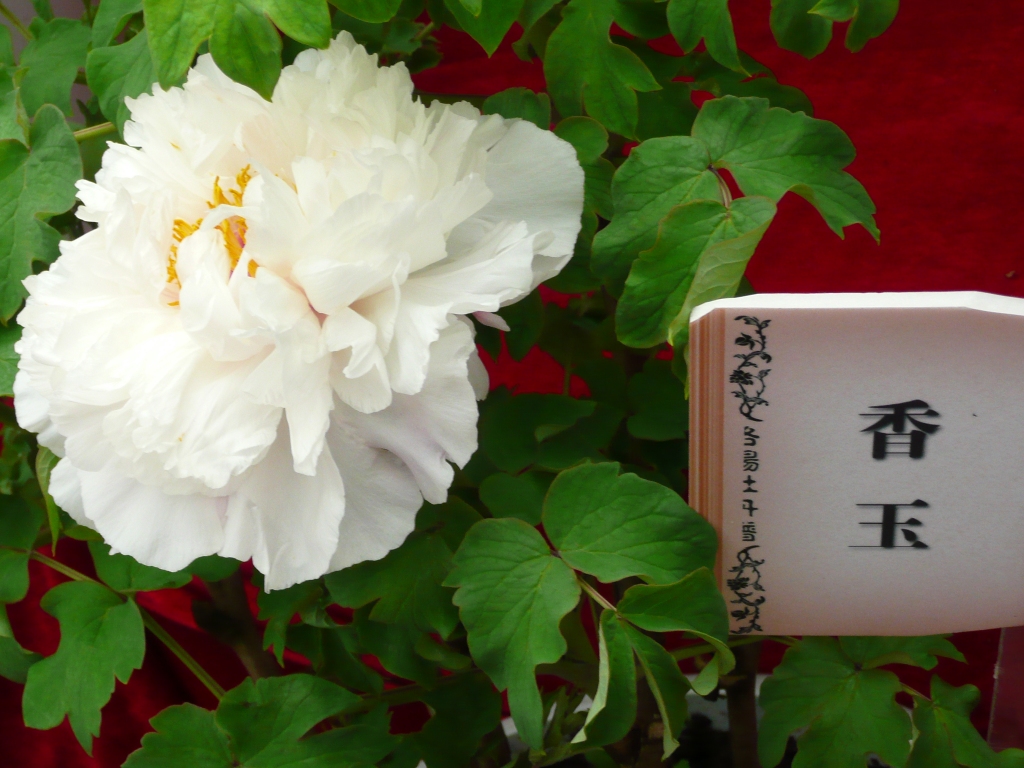
Paeonia x suffructicosa ‘Xiang Yu’, Fragrant Jade

In 1655, English visitors from the East India Company saw peonies in Beijing and sent accounts home. More than a hundred years later, in 1787, Joseph Banks asked the Company’s representative in China, Alexander Duncan, to send plants to Kew. The Kew plants have not survived but a plant from that first introduction was moved from Duncan’s own garden to the Edinburgh Botanical Gardens and can still be seen there.

Further introductions through the late 18th and early 19th century culminated in Robert Fortune’s third expedition, 1848-1851, when he obtained 30 of the best tree peonies available in Shanghai, as well as herbaceous peonies for grafting. The latter half of the 19th century saw hundreds of peony varieties offered for sale by nurseries across Europe. Kelways nursery in the U.K., famous for peonies, dates from this period.

The peony was the national flower of China until 1928, when the government of the Republic of China replaced it with the plum blossom instead, which was a symbol of resilience in hard times, and not as closely associated with China’s imperial past. The People’s Republic of China has no official national flower, though the peony consistently tops polls held to choose one, by a huge margin.

Willows in the Chinese garden

Willows by West Lake, Hangzhou

Willows are one of the plants most closely associated with Chinese gardens. In the West, they are inextricably linked with China through ‘Willow Pattern’ plates – though in fact the pattern originated in England, part of the 18th century craze for Chinoiserie.

Though the ‘Willow Pattern’ itself is inauthentic, willows are truly an essential plant in the Chinese garden.

The weeping willow, Salix babylonica, is native to northern China and probably made its way to Europe along the Silk Road. It was named by Linnaeus, and the specific epithet is due to the fact that, through a mistranslation, it was incorrectly believed to be the tree mentioned in the Bible as growing ‘by the rivers of Babylon’. Many of the weeping willows seen in the U.K. nowadays are hybrids between Salix babylonica and forms of our native willow, Salix alba, which are better suited to our climate.

Willows in Tongli water town, Jiangsu

In Chinese culture, willow has a number of symbolic meanings. It is associated with spring and rebirth. Its pliability suggests meekness and humility. It is associated with friendship, because of its intertwining branches, and also with parting from friends. Traditionally a willow branch was given as a parting gift, because its name in Chinese – 柳 liǔ – sounds like a word for ‘stay’. It was believed to have the power to repel evil spirits, and was used to sweep tombs on the Qingming festival. A branch might be fixed to the front door of a house to ward off harm.

Leifeng pagoda, West Lake, Hangzhou

Willow was also a symbol of female beauty, sometimes compared to the waist of a beautiful woman in poems. Its pliability also suggested frailty, however, and its combined associations with spring, the season of sexual desire, and femininity, meant it was also used as a symbol for prostitution. So the innocent sounding chengyu (Chinese idiom) 花街柳巷 Flower Street and Willow Lane actually means a red light district.

Willows by the pond in the Lingering garden, Suzhou

In the Chinese garden, willows are planted beside water. They are one of the few plants mentioned by name in Ji Chang’s The Craft of Gardens, where he always mentions planting them by water. The rectangular lattice work windows were known as willow leaf pattern.