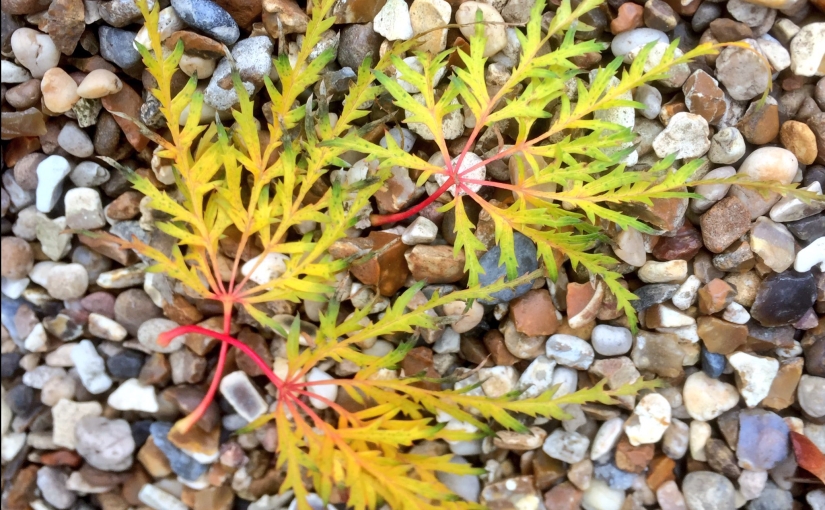

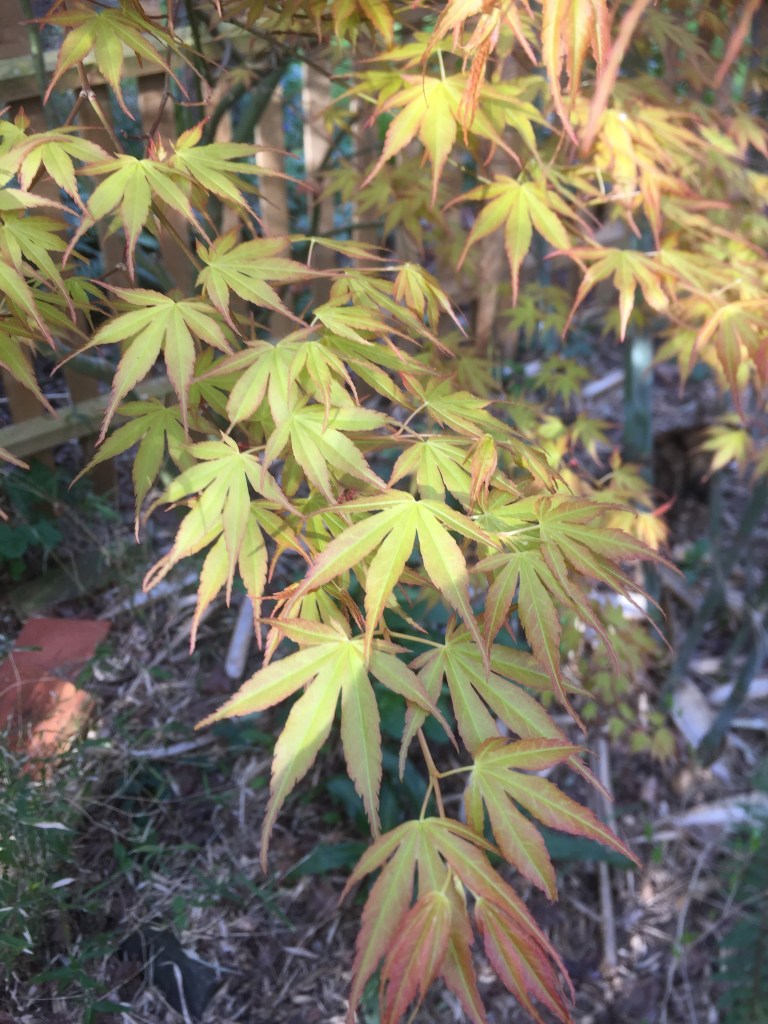
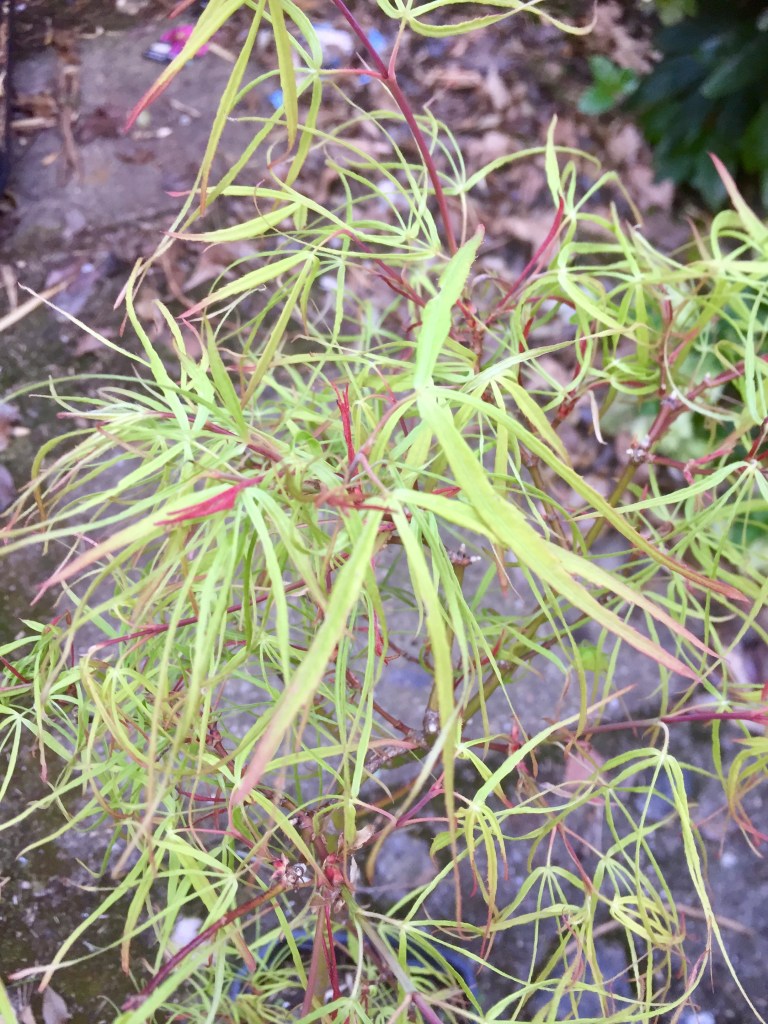
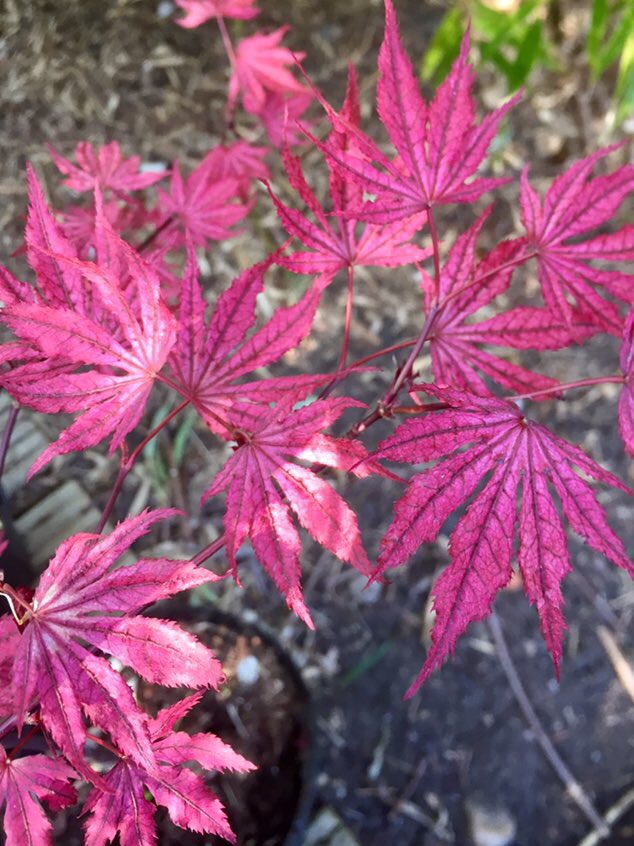
One of the most evocative of Japanese plants, Acer palmatum cultivars are easy to grow as long as they are sited correctly. Whether in the ground or in containers they need shelter from cold or drying winds. Cool dappled shade is the ideal position. Green cultivars, and some purples, tolerate sun best. Red leaved cultivars need some sun, or the colour will not develop properly, but don’t like full sun all day. Variegated or more delicate dissectum and linearilobum cultivars will need shade at least during the hottest part of the day to prevent scorching and some, like ‘Ukigumo’, can only be grown successfully in shade.

They do best in a moist but well-drained soil with plenty of organic matter, ideally slightly acidic. In a container, the standard advice is to use John Innes 2 or 3, mixed with an ericaceous compost, but it is better for the environment to use a good quality peat free ericaceous, such as those available from Sylvagrow or Dalefoot. Top pots with gravel to suppress weeds, or mulch well with compost or leafmould in the ground, but make sure the mulch doesn’t touch the trunk. Feed with a balanced fertiliser in spring before the leaves emerge.

Correct watering is important. They need a good supply of moisture, and won’t tolerate either drought or water-logging well. They are quite shallow rooted, so make sure they are not crowded by other plants competing with them. Besides, they are best given space to show off their beautiful form.

Acers are perfectly hardy, but in pots their roots are more vulnerable to frost, so in colder area the pots should be wrapped in fleece or moved to a protected spot in winter. Acers come into leaf very early in the year and the new foliage can be caught by late frosts. This won’t kill them but will set them back, so protect with fleece when frosts are expected.
Acers don’t need much pruning – simply removed dead, damaged or diseased branches, and any that are crossing and rubbing. Prune when the tree is dormant, between November and February, and be sure to cut back to just above a bud. A long stub left above a cut can be an entry point for disease or dieback.

 Japonica Plants Nursery