A new National Collection of Heloniopsis and Ypsilandra

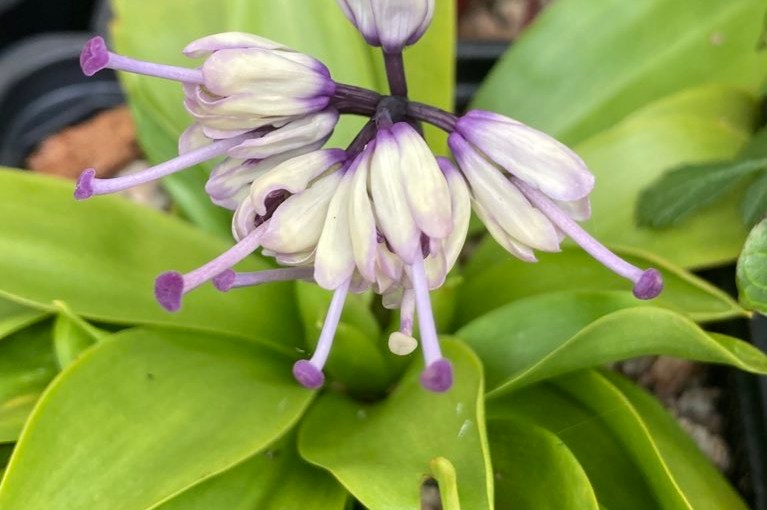
Heloniopsis tubiflora

I was delighted to be awarded a new National Collection of Heloniopsis and Ypsilandra in November 2023. The collection contains eleven species plus five cultivars and forms – all that are currently available in the U.K. (There is a variegated form of Heloniopsis orientalis, not available here at present, which I would love to get my hands on!) They are all in propagation and I hope to be able to offer small numbers of most forms for sale in the next few years.

Heloniopsis and Ypsilandra are two very closely related genera of evergreen woodland perennials from East Asia – so closely related that some authorities place them in a single genus, Helonias. They belong to the Melanthiacaea family, together with more well-known plants such as Trillium and Paris.

Ypsilandra thibetica

Ypsilandra contains about 5 species and Heloniopsis about 7. They are quite uncommon and not all species are in cultivation in the U.K. The most commonly available is Ypsilandra thibetica. They all have low rosettes of strap-like leaves and produce flower spikes of nodding, tubular flowers in shades of white, pink, and lilac, in late winter into early spring.
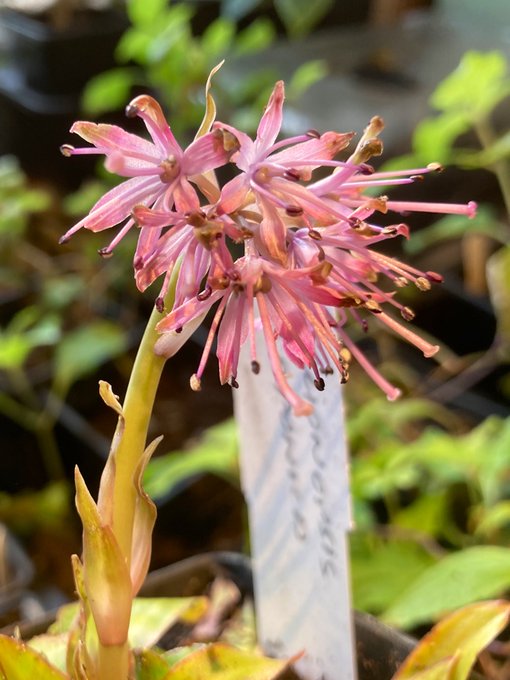
Heloniopsis orientalis (syn. H. japonica)

Heloniopsis are native to China, Japan, Taiwan, and Korea. Their common name is Oriental Swamp Pink or Japanese Hyacinth, and their name in Japanese is Shoujou Hakama (Shoujou is a red-haired, sake-drinking spirit, and Hakama are the traditional Japanese wide trousers). They require a reliably moist, humus rich soil in at least partial shade. It is a good idea to plant the rosette at a slight angle to allow water to run off and avoid rotting.
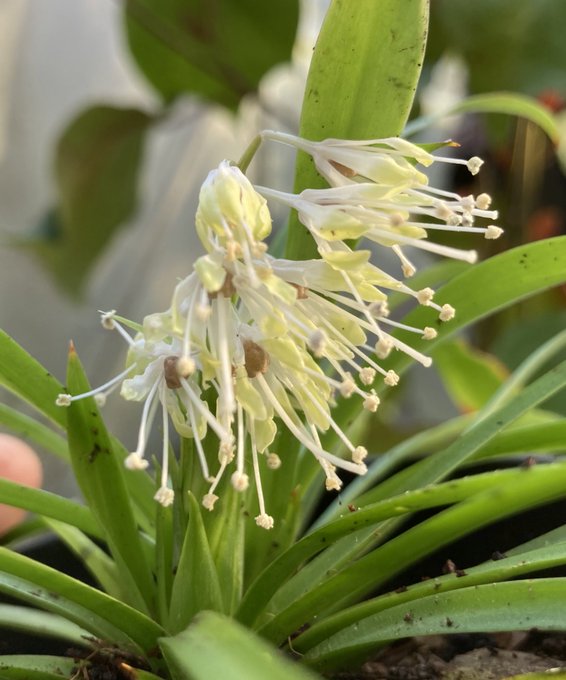
Ypsilandra yunnanensis var. fansipanensis

Ypsilandra are native to China, Myanmar and Thailand. They require similar growing conditions to Heloniopsis but will tolerate slightly drier conditions, which Heloniopsis absolutely will not. They flower very early – often in February – and have lightly scented white flowers with unusual pale blue anthers. The flowers fade to a coppery pink as they age. They are used in Chinese medicine to stop bleeding.

Heloniopsis orientalis producing plantlets at the leaf tips.

Both Ypsilandra and Heloniopsis can be rather reluctant to produce many seeds, but can be propagated, carefully, by division in spring. However, they can be propagated more reliably by leaf cuttings. Last year’s leaves are detached and placed in trays with both ends of the leaf inserted in a slightly damp growing medium. The trays are then placed in indirect light and kept warm. Plantlets may be produced at either end, and sometimes along the central vein. They take three years or so to reach flowering size. Heloniopsis orientalis naturally produces these plantlets where the tips of its leaves touch the soil, and in fact this is its main method of reproduction in its native habitat.

Heloniopsis tubiflora ‘Temple Blue

Though uncommon, they are great garden plants and worth seeking out, providing delicate colour at a time of year when every flower is especially valuable. I particularly recommend Ypsilandra thibetica, Heloniopsis orientalis, and Heloniopsis tubiflora ‘Temple Blue’.
Plant Profile: Asimitellaria

Asimitellaria is a recently recognised genus of plants in the Saxifrage family, previously included in the genus Mitella, and related to Tiarella, Heuchera, and Tellima (which is an anagram of Mitella). There are 11 species, 10 endemic to Japan and one to Taiwan. Asimitellaria are woodland plants, preferring a humus rich soil, not too dry, in partial to full shade. They are mostly small, evergreen, clump-forming or gently creeping perennials, grown for their attractive lobed foliage, which is sometimes patterned in reds and purples. The spikes of tiny cap shaped flowers in spring give the plant its common name of Mitrewort or Bishop’s Cap. They usually produce plentiful seed which germinates readily when fresh and kept moist.

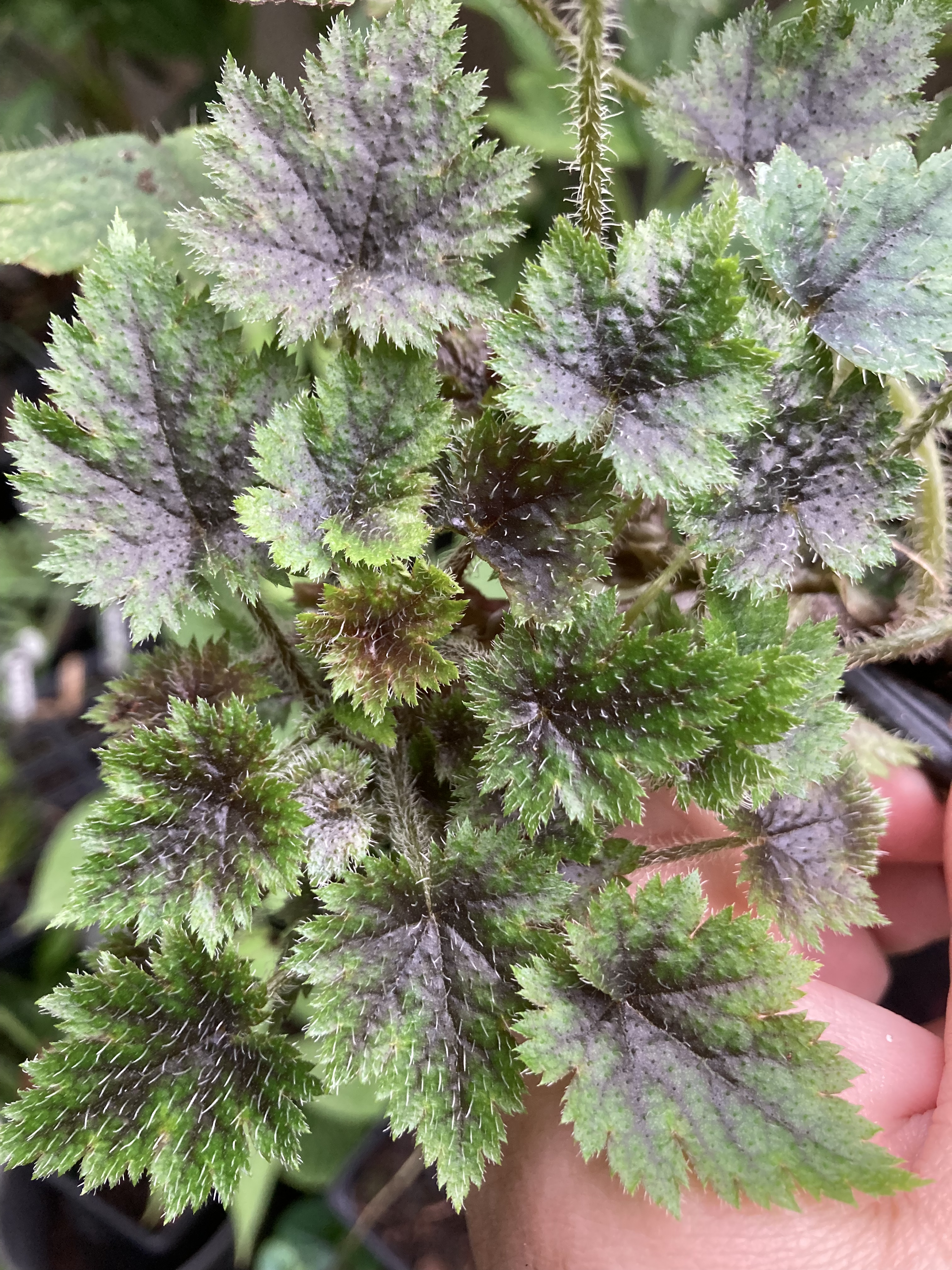
Asimitellaria makinoi

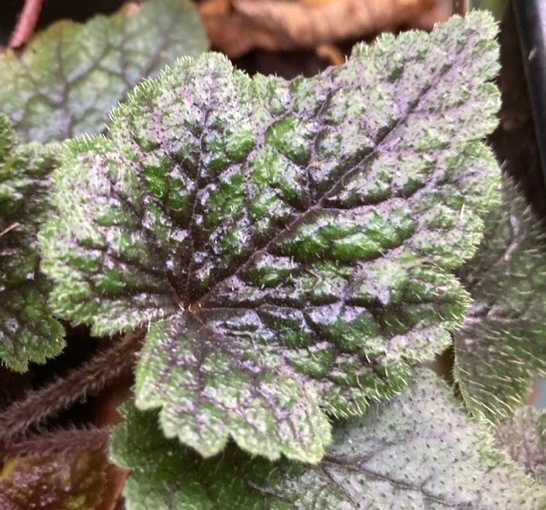
Asimitellaria makinoi is a diminutive species – only around 10cm tall- from Japan, introduced by Crûg Farm. The leaves are delightfully patterned in purple with silvery patches, and the flowers and flowering spikes are red.

Asimitellaria acerina

Asimitellaria acerina is rather larger, growing up to 40 cm in height, with leaves up to 10 cm. The glossy green palmate leaves give it its Japanese name of Maple-leaved Mitella. The delicate spikes of little flowers are greenish-pink.

Asimitellaria kiusiana

Asimitellaria kiusiana is another low-growing plant, to only 20 cm or so. The green leaves have variable red patterning along the veins, and the flower spikes are pale green.

Why you should grow bamboo – and why you shouldn’t

Bamboos are beautiful plants that add height, structure and movement to a garden. They come in an astonishing range of culm colours: black, green, yellow, blue, olive, grey, purple, white, brown, red, blotched with brown, yellow with green stripes, green with yellow stripes, green with a black sulcus, and green with multi-coloured stripes. The culms may be grooved, zig-zag, bulbous, or just ridiculously large. The leaves can be tiny and delicate or huge and tropical.

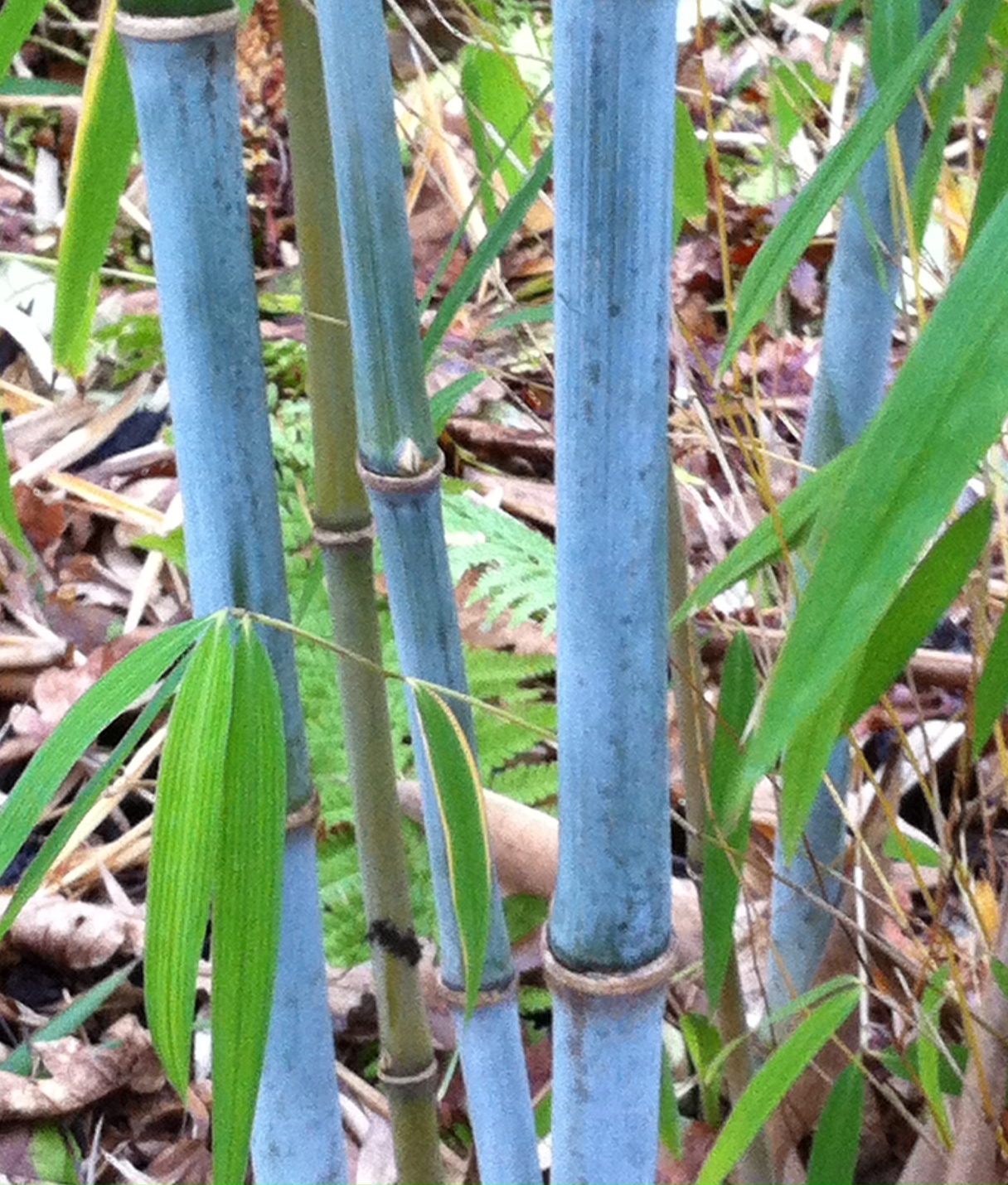
Blue bloom on culms of Borinda papyrifera

Evergreen plants, bamboos add interest to the garden year round. The shooting season begins in early spring with some Fargesia species and continues at least until August with the late shooting Phyllostachys bambusoides cultivars. The shoots themselves are often interesting, even grotesque, rather than ornamental but it is fascinating to watch the speed at which they grow. Some species attain their full height of 40ft in six weeks!

Congested internodes on a culm of Phyllostachys aurea 'Koi'
Congested internodes on a culm of Phyllostachys aurea ‘Koi’

Once established in the ground, bamboos are very resilient, low-maintenance plants. They are unfussy as to soil and most are very hardy. They can be grown in situations ranging from full sun to full shade, and are practically pest and disease free in the UK. They appreciate feeding and supplementary water but don’t need them, and established plants can survive periods of drought or flooding. Similarly, although they benefit from occasional tidying, they don’t require pruning.

photo 4
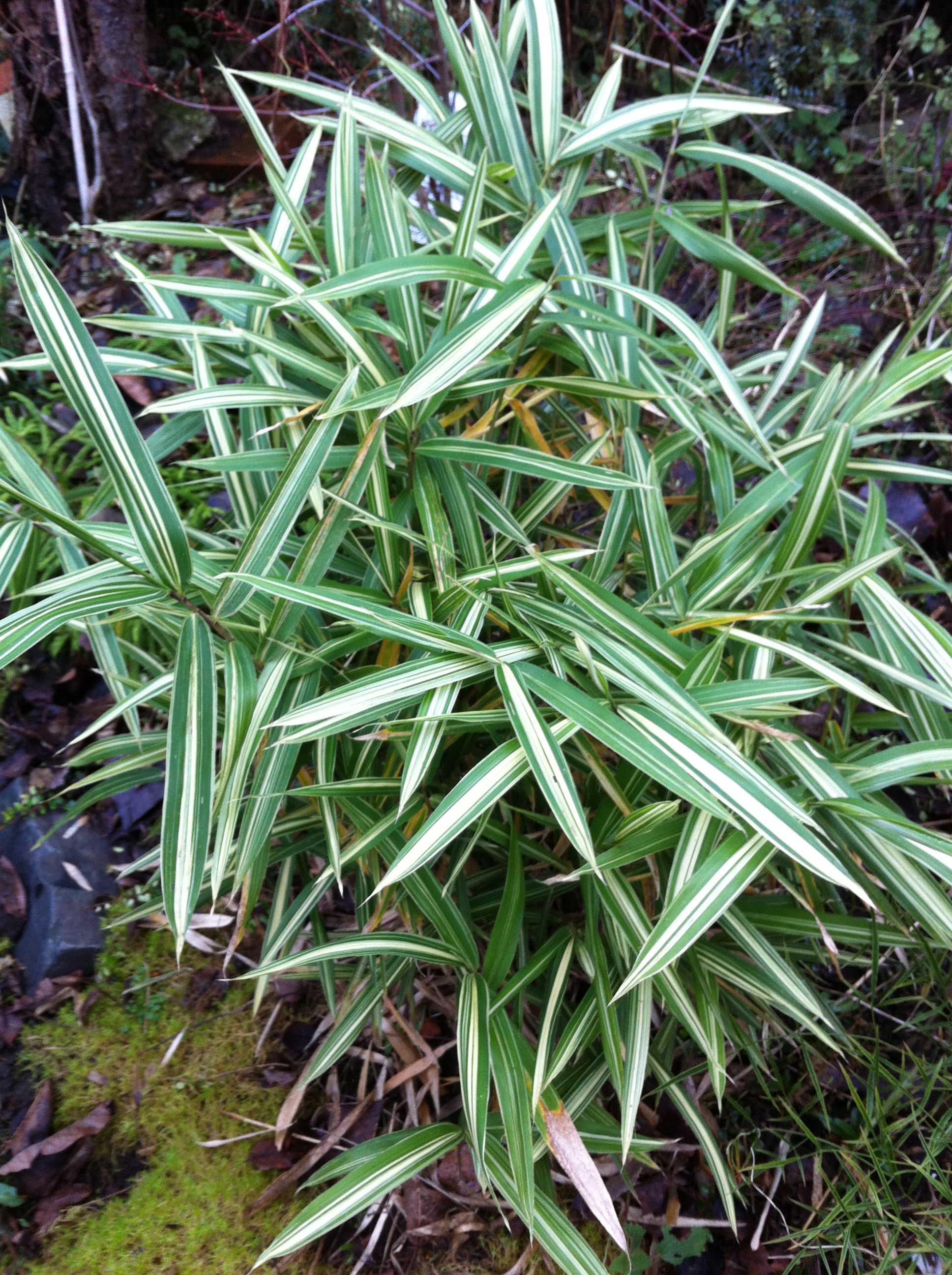
Variegated foliage of Pleiblastus fortunei

Hopefully some of this has persuaded you to think about growing bamboos. However, there is no denying that some people have come to regret planting them, so it’s important to consider the possible drawbacks.

Bamboos are big plants, often bigger than people expect them to be. This is not helped by the tendency of garden makeover programmes to put 8ft specimen bamboos into a small space in people’s gardens as if they are going to stay that size. In fact they can gain height and width very rapidly. When a bamboo reaches maturity, it can send up culms twice as thick as the previous year’s and half as tall again. If you have a big garden it can be very exciting to see new, larger culms coming through. In a small garden, however, a running bamboo can quickly become a problem and whilst it is a myth that all bamboos eventually run, even a clump former can get too big for its space.

Which leads on to the second potential drawback. No one who has ever dug up an established bamboo has any wish to repeat the experience. Removing a running bamboo that has got out of control can be an expensive and time-consuming process, leaving aside the potential problems with angry neighbours.

Sasa kurilensis 'Shimofuri'
Sasa kurilensis ‘Shimofuri’

The best thing to do is to buy a bamboo from a specialist nursery who will have a far wider range than the average garden centre and should be able to give you useful advice based on experience of growing these wonderful plants. Choose the right bamboo and site it carefully, and you will have a fabulous plant that will enhance any garden, and possibly the beginnings of a lifelong obsession.