Tortoiseshell and Crow Leaf: Japanese Variegation Patterns

The Japanese horticultural tradition is very different to ours here in the U.K. Whilst British nurseries and botanical gardens sent plant hunters around the world in search of novelties, Japanese horticulturists focused on collecting their own, astonishingly rich, native flora, and creating almost infinite varieties by selection and, to a lesser extent, by hybridization. (Read more about Koten Engei here.)

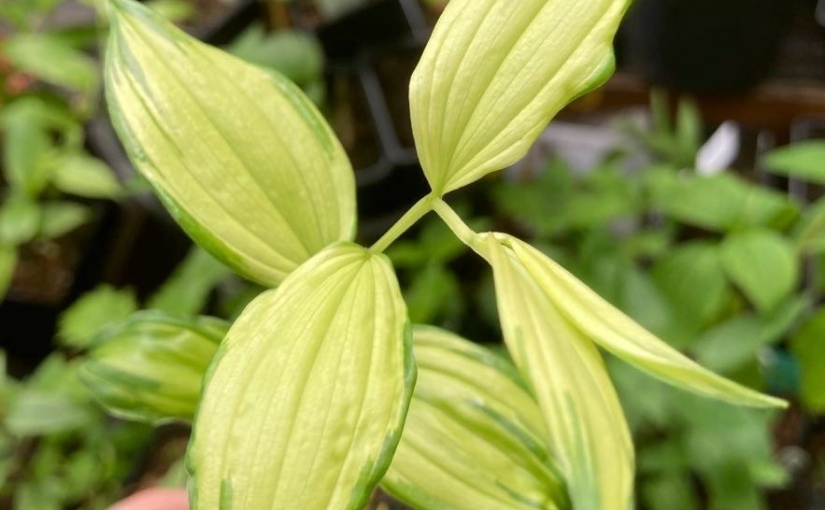
Syneilesis palmata ‘Kikkou Fu

One of the most valued characteristics is variegation, of which, again, there are innumerable forms. Some of the many names for Japanese variegation patterns are listed below, ranging from the straightforwardly descriptive to the distinctly poetic.
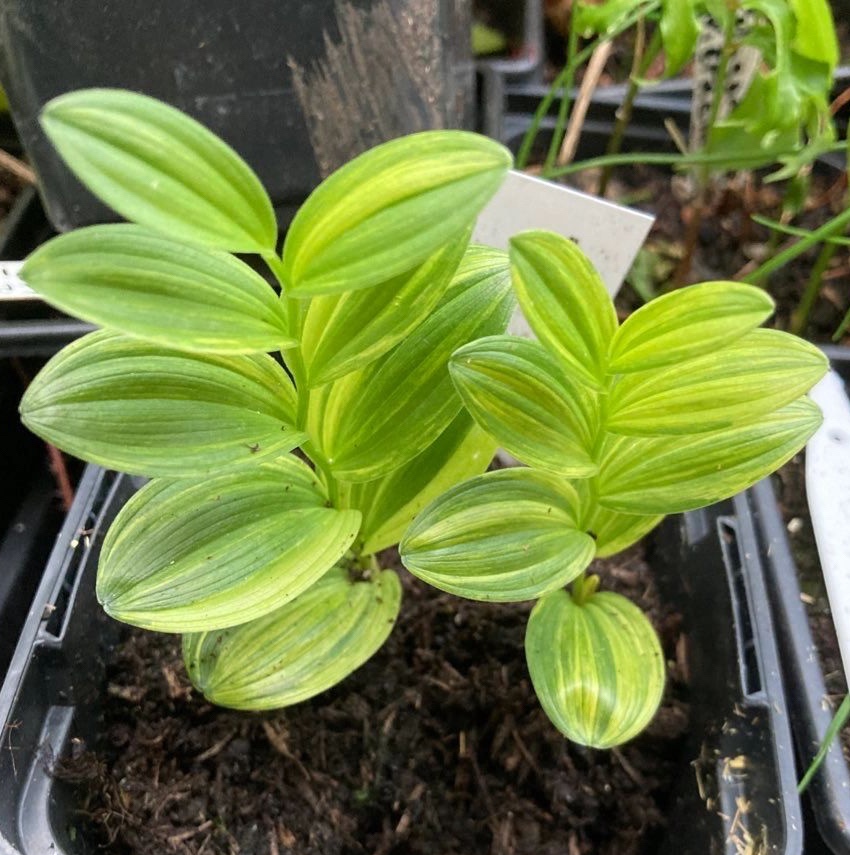
Polygonatum humile ‘Shiro shima’

Fuiri means ‘variegation’ and pattern names often end with -fu.

Disporum smilacinum ‘Ki Naka Fu’
  • Shiro fu – white variegation
  • Aka fu – red variegation
  • Ou sai – yellow
  • Ogon – gold
  • Shima fu – striped variegation e.g. ki shima fu – yellow striped variegation
  • Chiri fu – mottled variegation
  • Sunago fu – scattered sand variegation
  • Hakikomi fu – brush strokes / swept variegation
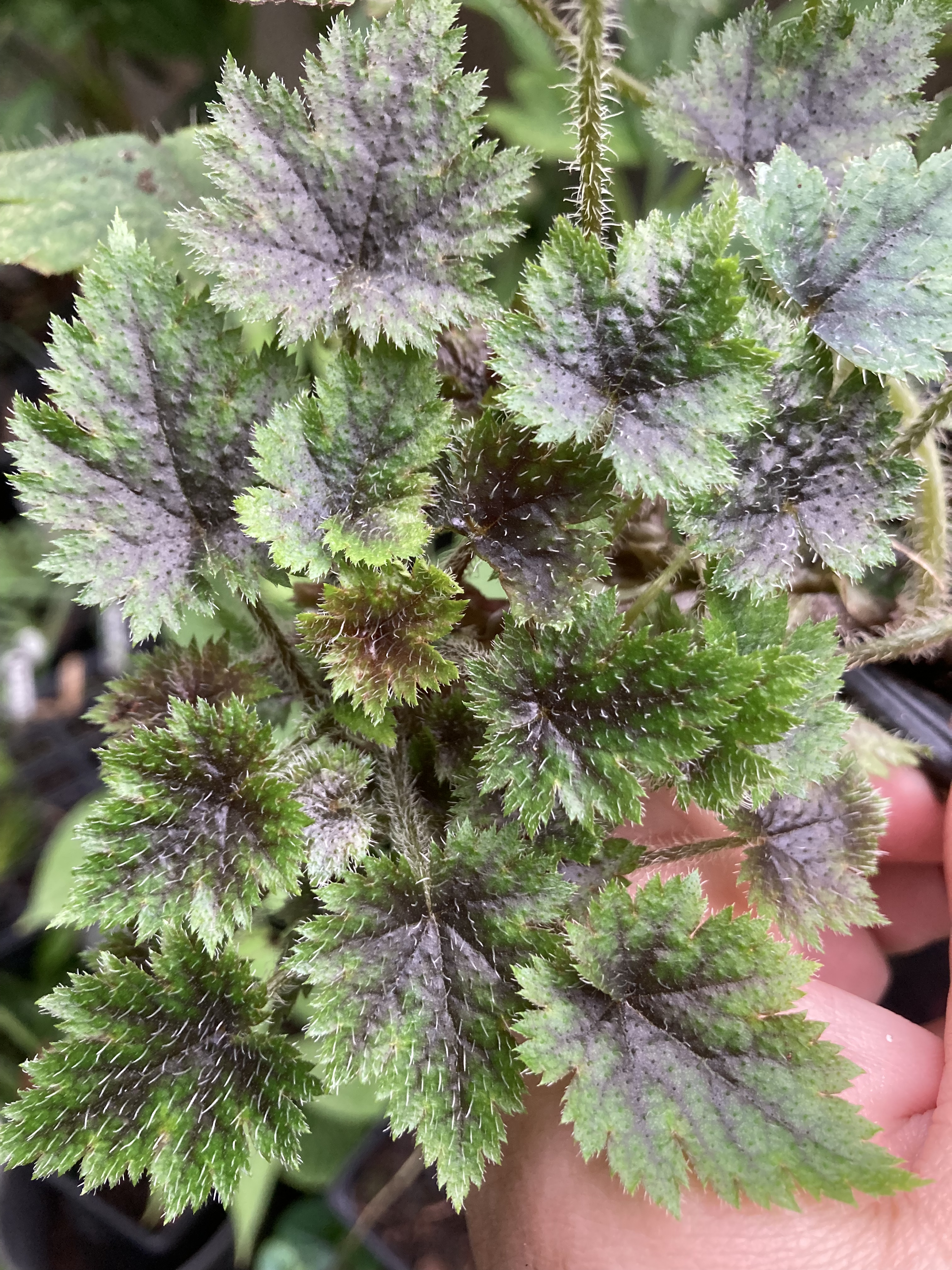
  • Kikkou fu – tortoiseshell pattern
  • Naka fu – central variegation (i.e. in the centre of the leaf)
  • Sankou naka fu – multicoloured / complex central variegation
  • Fukurin fu – bordered variegation , e.g Shiro fukurin fu – white bordered variegation
  • Fuka fukurin fu – wide-margined variegation
  • Ito fukurin – thread border
  • Tora fu – tiger variegation
Leucosceptrum japonicum ‘Hakikomi Fu’

Some of the more poetic names:

  • Akebono – Dawn
  • Gin getsu – Silver moon – very little green on white leaves
  • Ama no gawa- Milky Way
  • Zansetsu – Lingering snow
  • Awa no Tsuki – Moon of Awa
  • Koutei – Yellow Emperor
  • Reihou – Sacred mountain
  • Dai kouga – Great yellow river
  • Byakko – White tiger – mainly white leaves with green tips
  • Muhyou – Hoarfrost
  • Gin sekai – Snow covered scene
  • Chouyou – Sunrise
  • Kinkaku – Golden pavilion
  • Shunrai – Spring thunder – fine white lines on green leaves
  • Nagori yuki – Remaining snow
  • Sajin – Dust
  • Haku un – White clouds – actually a creamy yellow variegation
  • Senkou – Flash
  • Hagoromo – angels’ raiment, robe of feathers
  • Yuki no shita – Under the snow
  • Karasu ha – Crow leaf – almost black leaves
  • Oboro zuki – Hazy moon
  • Kichou – Yellow butterfly
  • Nishiki – brocade – beautifully multicoloured or complex variegation
  • Raijin – Thunder god
  • Suikou – Green light
  • Ryoku un – Green clouds
  • Ginga – Galaxy
Disporum sessile ‘Awa No Tsuki’

(Apologies for any errors – I speak very little Japanese at the moment and am therefore reliant on internet sources!)
Plant Profile: Asimitellaria

Asimitellaria is a recently recognised genus of plants in the Saxifrage family, previously included in the genus Mitella, and related to Tiarella, Heuchera, and Tellima (which is an anagram of Mitella). There are 11 species, 10 endemic to Japan and one to Taiwan. Asimitellaria are woodland plants, preferring a humus rich soil, not too dry, in partial to full shade. They are mostly small, evergreen, clump-forming or gently creeping perennials, grown for their attractive lobed foliage, which is sometimes patterned in reds and purples. The spikes of tiny cap shaped flowers in spring give the plant its common name of Mitrewort or Bishop’s Cap. They usually produce plentiful seed which germinates readily when fresh and kept moist.

Asimitellaria makinoi

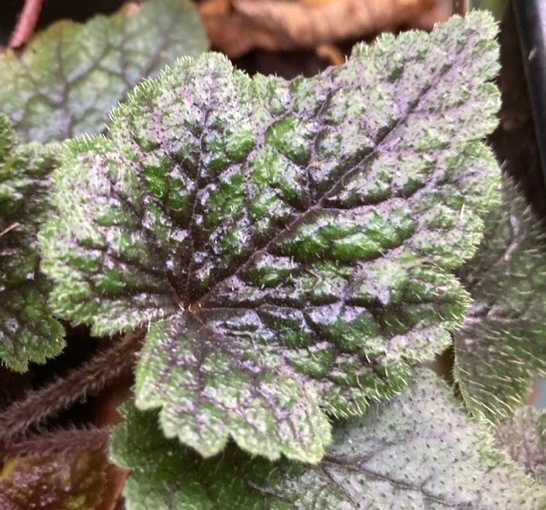
Asimitellaria makinoi is a diminutive species – only around 10cm tall- from Japan, introduced by Crûg Farm. The leaves are delightfully patterned in purple with silvery patches, and the flowers and flowering spikes are red.

Asimitellaria acerina

Asimitellaria acerina is rather larger, growing up to 40 cm in height, with leaves up to 10 cm. The glossy green palmate leaves give it its Japanese name of Maple-leaved Mitella. The delicate spikes of little flowers are greenish-pink.

Asimitellaria kiusiana

Asimitellaria kiusiana is another low-growing plant, to only 20 cm or so. The green leaves have variable red patterning along the veins, and the flower spikes are pale green.

Plant Profile: Deinanthe

Deinanthe is a small genus, of only two species, closely related to hydrangeas and rarely grown in U.K. gardens. Commonly known as false Hydrangeas, the botanical name comes from the Greek Deinos meaning extraordinary, and anthos meaning flower. They are herbaceous perennials, very hardy, slowly forming a clump about 15-18″, 40-50cm tall and wide. They are woodland plants and need partial to full shade and a humus rich soil. Summer moisture is essential – they will not tolerate drying out. Watering should be reduced as the growing season comes to an end.

Deinanthe bifida ‘Pink-Shi’

Deinanthe bifida is a Japanese endemic, introduced to the West by the Russian botanist C. J. Maximowicz in 1860. The flowers are white. A few varieties are available, such as ‘Pink Shi’ and ‘Pink-Kii’, which have pink buds opening to slightly pink-tinged flowers, and may occasionally produce a few sterile florets. It is slightly larger and easier to grow than Deinanthe caerulea. The hydrangea-like leaves are split at the end rather attractively.

Deinanthe caerulea

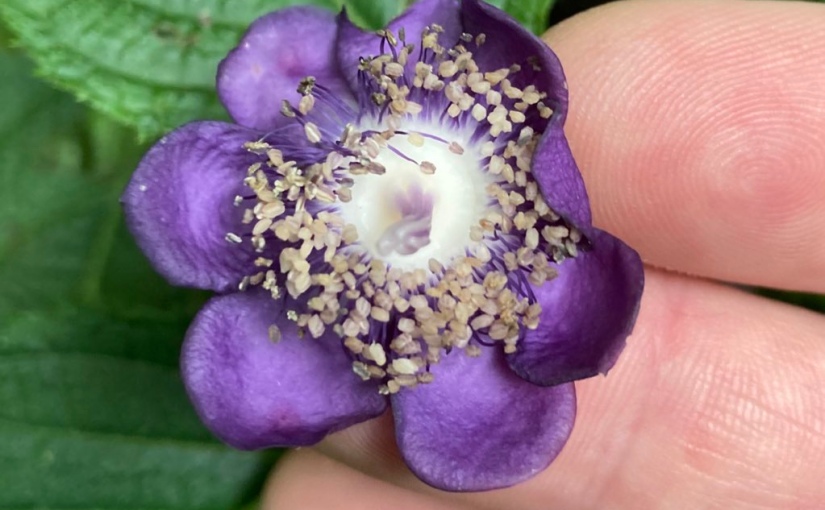
Deinanthe caerulea is a Chinese species, native to Hubei, introduced by E.H. Wilson in about 1911. Smaller and slower-growing than D. bifida, it is even less tolerant of summer drought. The flowers are a remarkable waxy purplish blue. It is sometimes sold under the trade name ‘Blue Wonder’. There is also a hybrid between the two species, sometimes known incorrectly as D. caerulea European Form, which has pale blue flowers.

Propagation is by seed, when produced, or more reliably by division in spring.

How to grow Japanese Irises

Iris ensata (syn. Iris kaempferi) is one of the archetypal plants of the Japanese garden. They are rhizomatous, beardless irises, native to East Asia. They have fans of strap shaped leaves and flowering stems 2-4ft tall. They flower in early summer, with two or three large, exotic-looking flowers on a stem, in shades of purple, blue, white, and pink.

They are extremely hardy, down to -20ºC, zone 4 in the US. They will grow in full sun to partial shade, as long as they get at least 6 hours of sun, and like a loose, slightly acidic damp soil with plenty of organic matter. It is especially important in the spring, in the run up to their early summer flowering, that they have plentiful moisture.

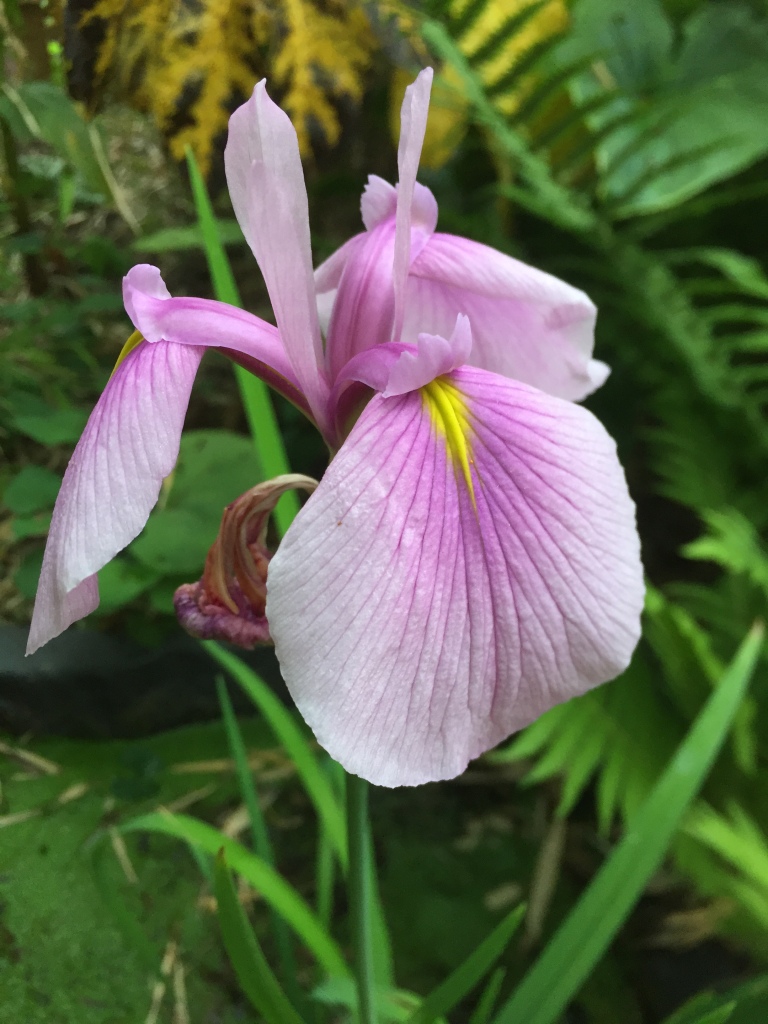
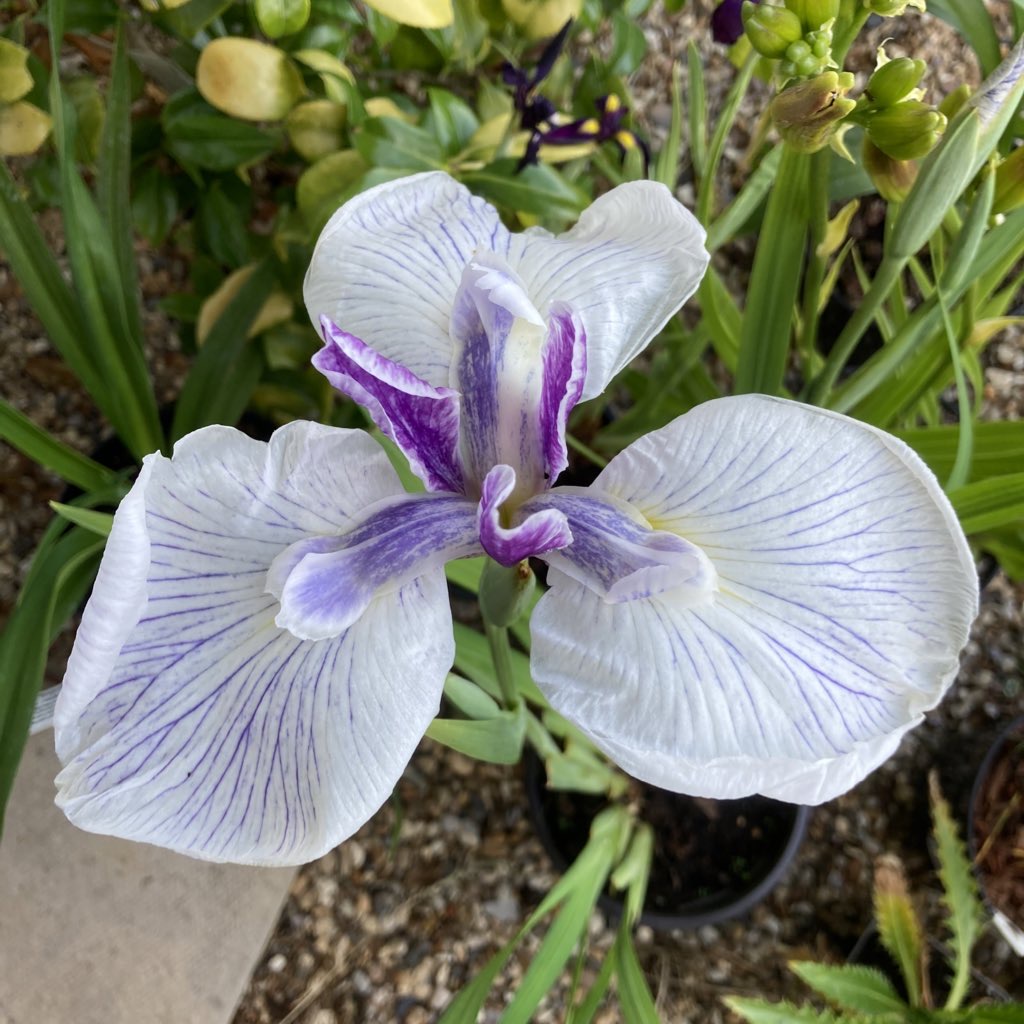
Iris ensata ‘Moonlight Waves’

They are sometimes sold as marginal plants, and are happy to be grown in shallow water, as long as the crown of the plant is not covered, during spring and summer. However, they need to be lifted out of the water over winter or they are likely to rot. The old foliage should be cut back to the ground in the winter, after it has been knocked back by the first frost.

Iris ensata ‘Rose Queen’

Iris ensata are heavy feeders and will benefit from a generous feed of a balanced fertiliser for acid-loving plants in the early spring and again after flowering, and a good mulch to help retain moisture. It’s good to add plenty of organic matter to the soil when they are planted or divided, but don’t add fertiliser at this point. Bone meal should be avoided as it is actively harmful to Japanese irises.

Iris ensata ‘Grayswood Catrina’

It’s very important to divide and transplant Japanese Irises every three to four years to maintain vigour. New roots form above the old each year, so over time the crown of the plant rises above the soil, potentially causing it to fail. To divide, dig up the plant and divide it into individual sections or fans, or slightly larger sections of 2-4 fans each. The oldest roots and rhizomes – the lowest – should be removed, and the foliage cut back to about 1/3 of its length. The divisions should be planted 2-3 inches deep. in fresh soil where Iris ensata has not been grown for the previous three years, and kept well watered. It is best to divide Japanese Irises in spring or autumn, avoiding the heat of mid-summer, though in cooler areas they can be divided immediately after flowering.

Iris ensata ‘Oku Banri’

Iris ensata have been cultivated in Japan for at least five hundred years, and possibly much longer. Extensive Iris breeding began in the late Edo period, around the 1800s. Japanese Irises were introduced to the West by Carl Thunberg in 1794, and again by von Siebold in the 1850s (as Iris kaempferi). Many varieties have been bred in the United States as well. Some 2000 varieties are now available.

Frogs’ hands and floating clouds – the names of Japanese Maples

One of the classic plants of the Japanese garden is the maple, Acer palmatum. The common Japanese names for maples are ‘momiji’ derived from ‘leaves turning red’ or ‘kaede’ derived originally from ‘frogs’ hands’. Autumn trips to the mountains to see the beauties of the changing leaf colours are called ‘momiji-gari’, maple leaf hunting.

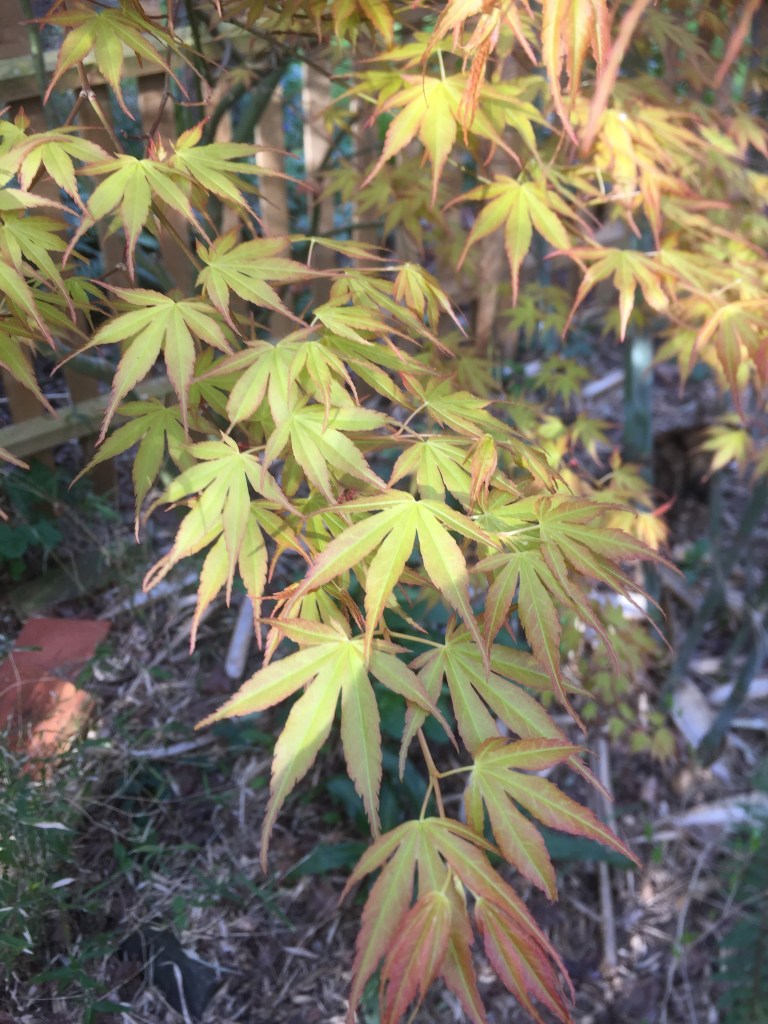
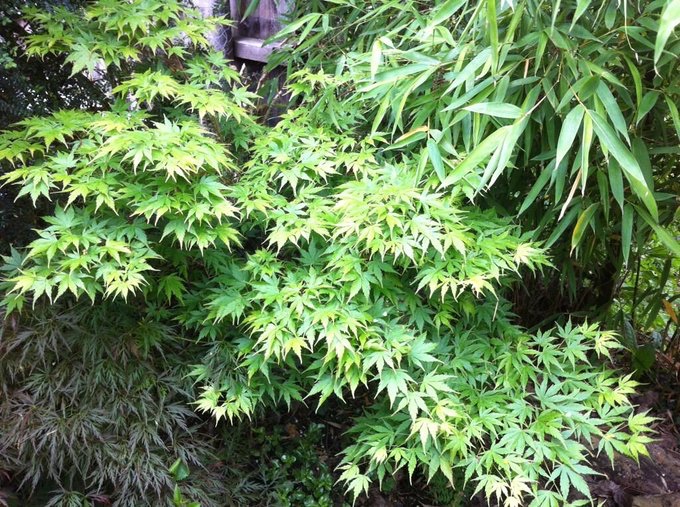
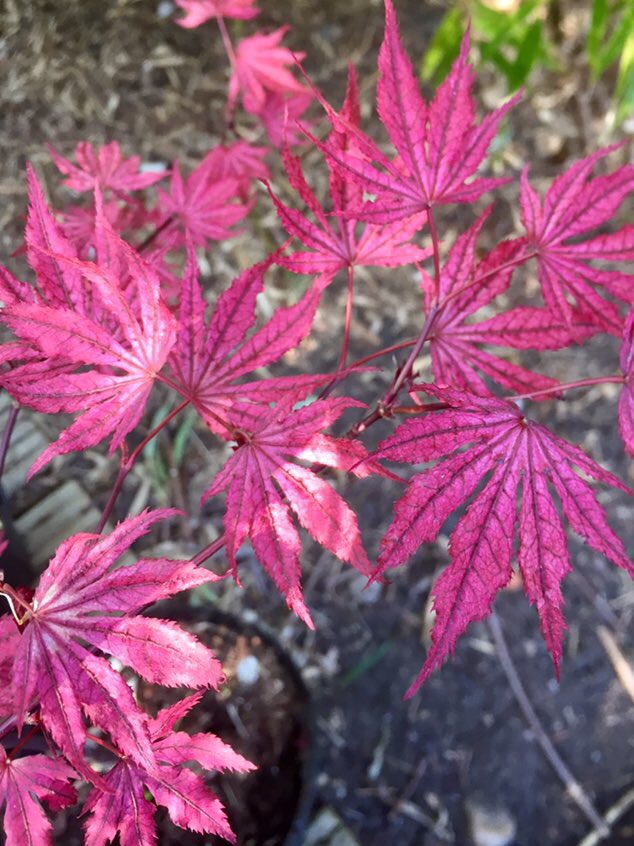
Spring foliage of Acer palmatum ‘Katsura’ (meaning ‘wig’)

There are thousands of cultivars, many with poetic and beautiful names. Here are some Japanese words used in the names of Japanese maple varieties.

Ao – blue-green

Ba – leaves

Beni – deep red

Fu – variegated

Gasa – umbrella

Hime – princess or little

Ito – fine thread

Kin – gold

Koto – a stringed instrument

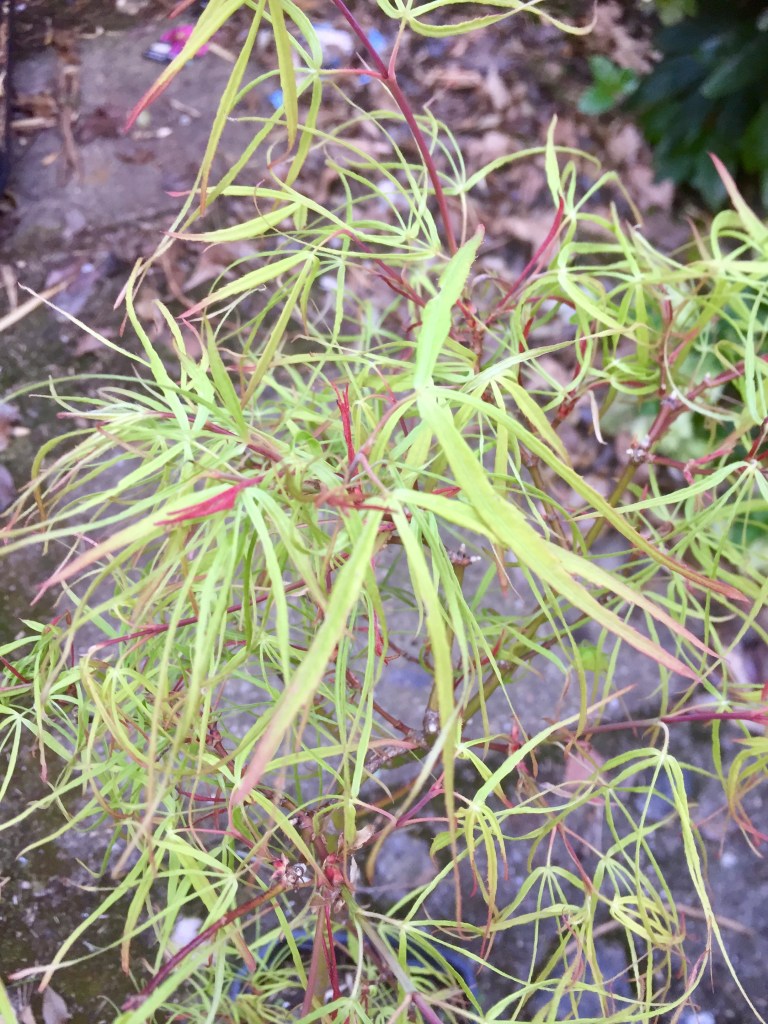
Acer palmatum ‘Koto-no-ito’

Maiko – dancing girl

Murasaki – purple

Nishiki – brocade, by extension variegated or textured

Niwa – garden

Ō – large

Ryū – dragon

Sango – coral

Acer palmatum ‘Sango kaku’

Sei – blue-green

Shidare – cascading

Shigure – soft rain

Acer palmatum ‘Amagi Shigure’

Ukigumo – floating clouds

Yae – double

Yama – mountain

Acer palmatum ‘Omure Yama’