The Mother Of Gardens

In 1899, the plant hunter Ernest Wilson set out on his first plant hunting expedition to China for James Veitch and Sons nursery. He was looking for Davidia involucrata, the fabled Dove Tree, discovered by Père Armand David in 1869. “Stick to the one thing you are after and don’t spend time and money wandering about. Probably every worthwhile plant in China has now been introduced to Europe,” he was advised by his employers. They could hardly have been more wrong. In his 1929 book “China, Mother of Gardens”, Wilson wrote about collecting some 3500 species in China alone, of which about 1800 were new introductions to the West.

China is second only to Brazil in the number of native plant species and its botanical diversity is unparalleled amongst temperate countries. With a similar land area to the USA, China has about twice as many plant species – 31000. About half of these are endemic. Where does this biodiversity come from? One important factor was the relative lack of glaciation in China during the last major ice age. Some species which would once have been found across the northern hemisphere were wiped out elsewhere, surviving only in China. This accounts for the ‘living fossils’ such as Metasequioa glyptostroboides, the Dawn Redwood, described as a species from fossils of the Mesozoic Era in 1941 and discovered as a living plant in China in the same year (although the connection was not made until 1946).

Metasequioa glyptostroboides

Similarly, Ginkgo biloba, the Maidenhair tree, is the last remaining species of a genus found in the fossil record around the world. By the end of the Pliocene, Ginkgo species were restricted to central China. Introduced to the West from Japan in the 17th century, having made its way there from China in the 14th century, Ginkgo biloba was long believed to be extinct in the wild. Some specimens planted by temples are said to be 1500 years old or more, with one perhaps 4000 years old. Such a long history of cultivation in China makes it hard to determine whether plant populations are wild or cultivated – small existing populations of Ginkgo in Zhejiang province have very little genetic diversity, suggesting they may have been planted, probably by monks, about 1000 years ago. Small populations recently studied in the Dalou mountains show much greater genetic diversity, suggesting they may be of wild origin.

This long history of cultivation may be another, though lesser, factor in China’s remarkable diversity of plant species. Many ornamental species were first cultivated in China for food and/or medicinal purposes, and a number of trees were grown for symbolic and religious reasons as far back as 5000 years ago. This may have preserved species now extinct in the wild. For example Trachycarpus fortunei, the Chusan or Windmill palm, though widely grown, may have no truly wild specimens in existence.

Trachycarpus fortunei

China is the centre of distribution for roses (93 out of 150 species); camellias (the number of species varies depending on the authority – the Flora of China counts about 120 species, 97 native to China with 76 endemic); maples (half of the 110 species are found in China); peonies (about 30 species, half native to China, 10 endemic), and many other plants, without which our gardens would be very much the poorer.
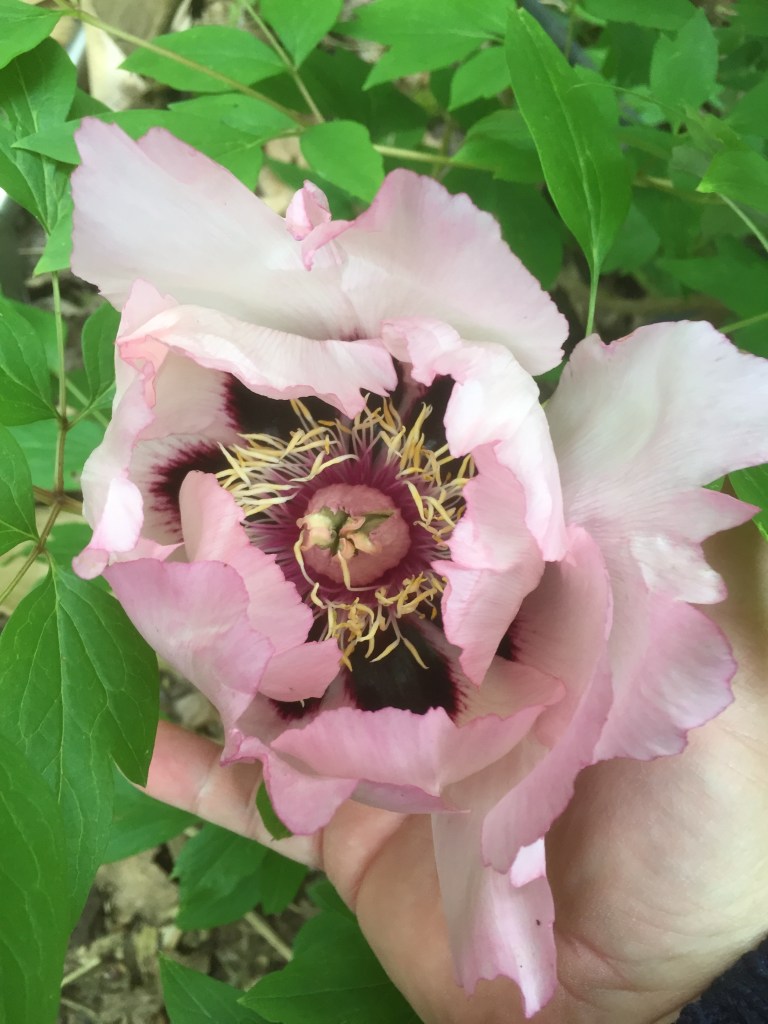
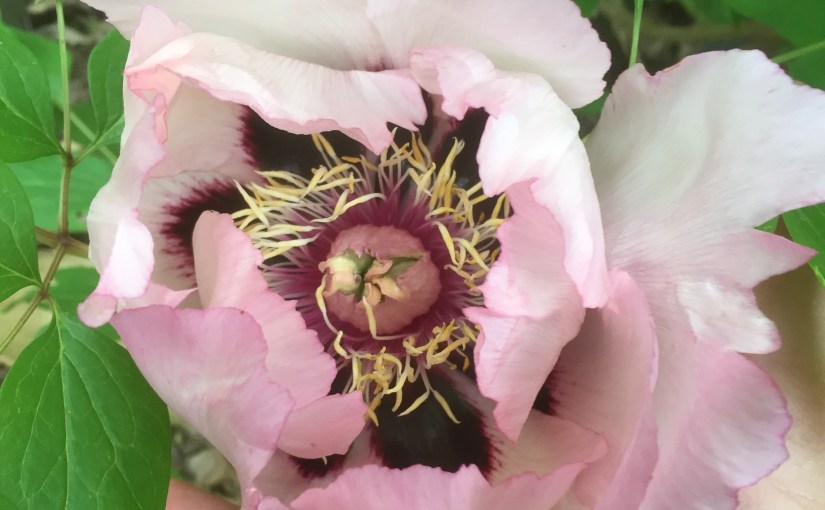
Paeonia rockii

Chinese Sayings about Plants

‘Orchid and Rock’, 1572, attributed to Ma Shouzhen. The central poem, by Xue Mingyi, refers to secluded orchids in an empty valley.

Four character sayings, called chengyu, are an interesting feature of the Chinese language, if rather a challenge for the learner. Some of them are quite easy to understand – like 好久不見 hao jiu bu jian, long time no see. Others require knowledge of the often ancient story they refer to. 塞翁失馬 Sai Weng shi ma, the old man from the border lost his horse, can mean either a blessing in disguise or bad luck disguised as good, and refers to a Daoist story from the second century BC.
Many chengyu refer to plants, particularly those with strong symbolic meanings in Chinese culture, such as orchids, willows, pines, and bamboo. Here are a selection.

柳暗花明 liǔ àn huā míng, willows make shade, flowers give light – hope at the darkest hour

柳烟花雾 liǔ yān huā wù, willow scent and flower mist – a scene full of the delights of spring

残花败柳 cán huā bài liǔ, broken flower, withered willow – a fallen woman (willow is often used to symbolise female frailty)

华而不实 huá ér bù shí, flower but no fruit – all show and no substance

红杏出墙 hóng xìng chū qiáng, the red apricot blossom leans over the garden wall – a wife having an affair

破竹之势 pò zhú zhī shì, a force to smash bamboo – an irresistible force

雨后春笋 yǔ hòu chūn sǔn, after rain, the spring bamboo – rapid new growth, or many new things in rapid succession

胸有成竹 xiōng yǒu chéng zhú, to have a finished bamboo in mind – to plan and prepare in advance

势如破竹 shì rú pò zhú, like splitting bamboo – when things are going your way, don’t stop.

出水芙蓉 chū shuǐ fú róng, a lotus flower breaking the surface – surpassingly beautiful (apparently this can refer to a young woman’s face or an old man’s calligraphy – offered without comment)

秋菊傲霜 qiū jú ào shuāng, the autumn chrysanthemum braves the frost – resilience in adversity

明日黄花 míng rì huáng huā, chrysanthemums after the Double Ninth festival – an out-dated or antiquated thing

春兰秋菊chūn lán qiū jú, spring orchids and autumn chrysanthemums – everyone/ thing has their own unique charm

采兰赠芍 cǎi lán zèng sháo, pick orchids and present peonies – presents between lovers

芝兰之室 zhī lán zhī shì, a room with irises and orchids – in wealthy and pleasant company

芝兰玉树 zhī lán yù shù, irises, orchids and jade trees – a child with splendid future prospects (irises and orchids symbolise a noble character and the jade tree is also called the scholar tree, a term which might be used to describe a fine son who would do well in the Imperial examinations)

兰艾同焚 lán ài tóng fén, burn orchids and stinking weeds together – to destroy noble and common indiscriminately, or the rain falls on the just and unjust alike

空谷幽兰 kōng gǔ yōu lán, secluded orchids in an empty valley – a noble character (Confucius often used the orchid as a symbol of virtue. Orchids still give out their perfume when there is no one to appreciate it, just as people of good character maintain their standards in poverty)

松柏后凋 sōng bǎi hòu diāo, the pine and the cypress are the last to wither – honesty and virtue will stand the test of time (again, this refers to the Analects of Confucius)

苍松翠柏 cāng sōng cuì bǎi, evergreen pine and cypress – steadfast nobility, similar to the previous phrase

瓜田李下 guā tián lǐ xià, in a melon patch or under a plum tree – suspicious circumstances (this is an abbreviated form of the saying “Don’t put on your shoes in a melon patch, don’t adjust your hat in a plum field,” as reaching up or down in those circumstances could be misconstrued as stealing fruit.)

Plant profile: Eomecon chionantha

Eomecon chionantha, the snow poppy or dawn poppy, is an uncommon perennial plant from China, and the only species in the genus. It has delicate white poppy-like flowers with yellow stamens sporadically through the summer and into autumn. The fleshy leaves, an attractive feature in their own right, are glaucous green, and kidney-shaped with scalloped edges. In a mild winter it is evergreen. It forms spreading clumps on long rhizomes when happy.

Eomecon chionantha

In its native habitat it grows on riverbanks and in moist woodlands in eastern China. In the garden it appreciates moist, humus rich soils in partial shade. It will take full sun but not drought. It is not prone to pests or diseases in general but may need protection from slugs.

The generic name derives from the Greek eos meaning dawn or the east and mekon meaning poppy (as in Meconopsis). The specific name chion meaning snow and anthos meaning flower give the plant its common name. It is also sometimes known as Chinese Bloodroot or Asian Bloodroot. It is related to Sanguinaria, the Bloodroot of North America, and like its relatives bleeds a reddish sap from cut rhizomes.

Plant Profile: Ypsilandra thibetica

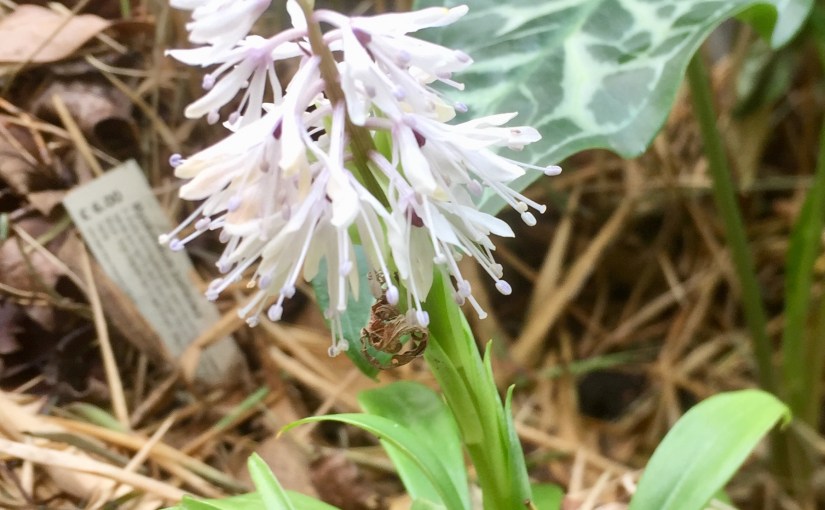
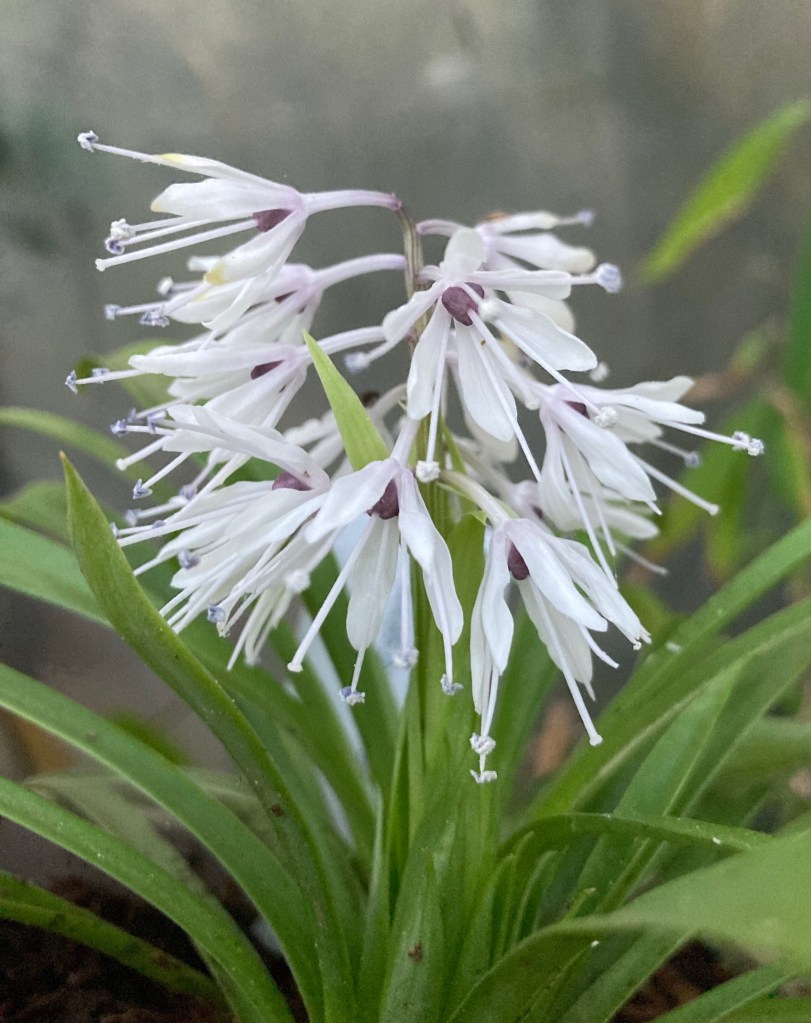
Ypsilandra thibetica is an attractive and unusual evergreen perennial, not common in the U.K., native to southwestern China and Taiwan. There are five other species in the genus, all from East Asia. It usually has white scented flowers which become slightly coppery or pink as they age, with pale blue anthers. Some forms have pink or pale lilac flowers, and the flowering stems reach about 30 centimetres tall. The leaves are strap-like and form rosettes, bulking up slowly to form a clump of multiple rosettes.

Ypsilandra needs at least partial shade, not too dry and not too hot in the summer. It likes a humus rich soil. In its natural habitat it grows on wooded slopes, and it is best to plant it with the rosette of foliage at a slight angle to allow water to run off and avoid the risk of rotting.

The generic name comes from the Greek ‘ypsilo’ (y-shaped) and andros (anthers). It is used in Traditional Chinese Medicine to stop bleeding amongst other things.

Disporopsis, Disporum, and Prosartes – a new National Collection for Suffolk

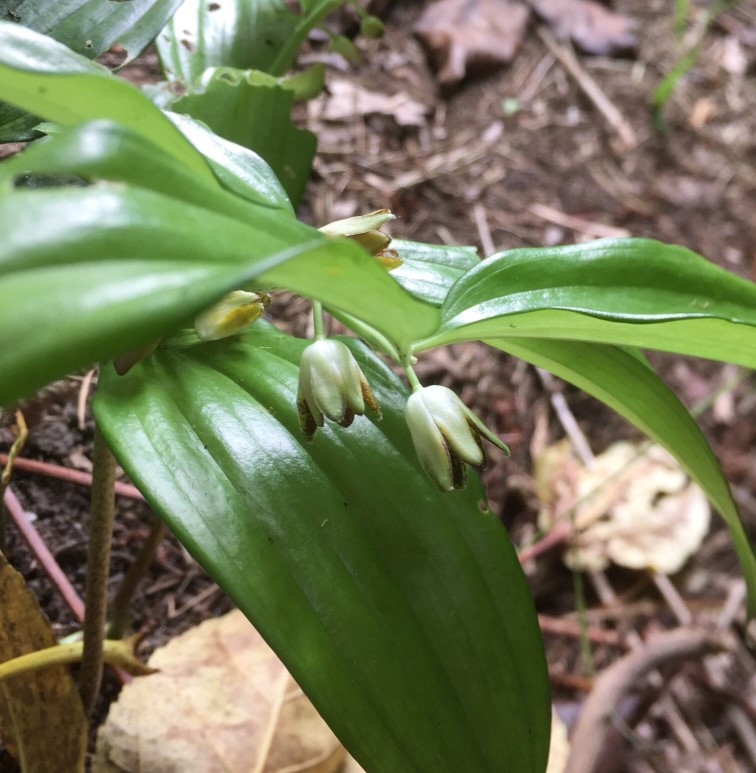
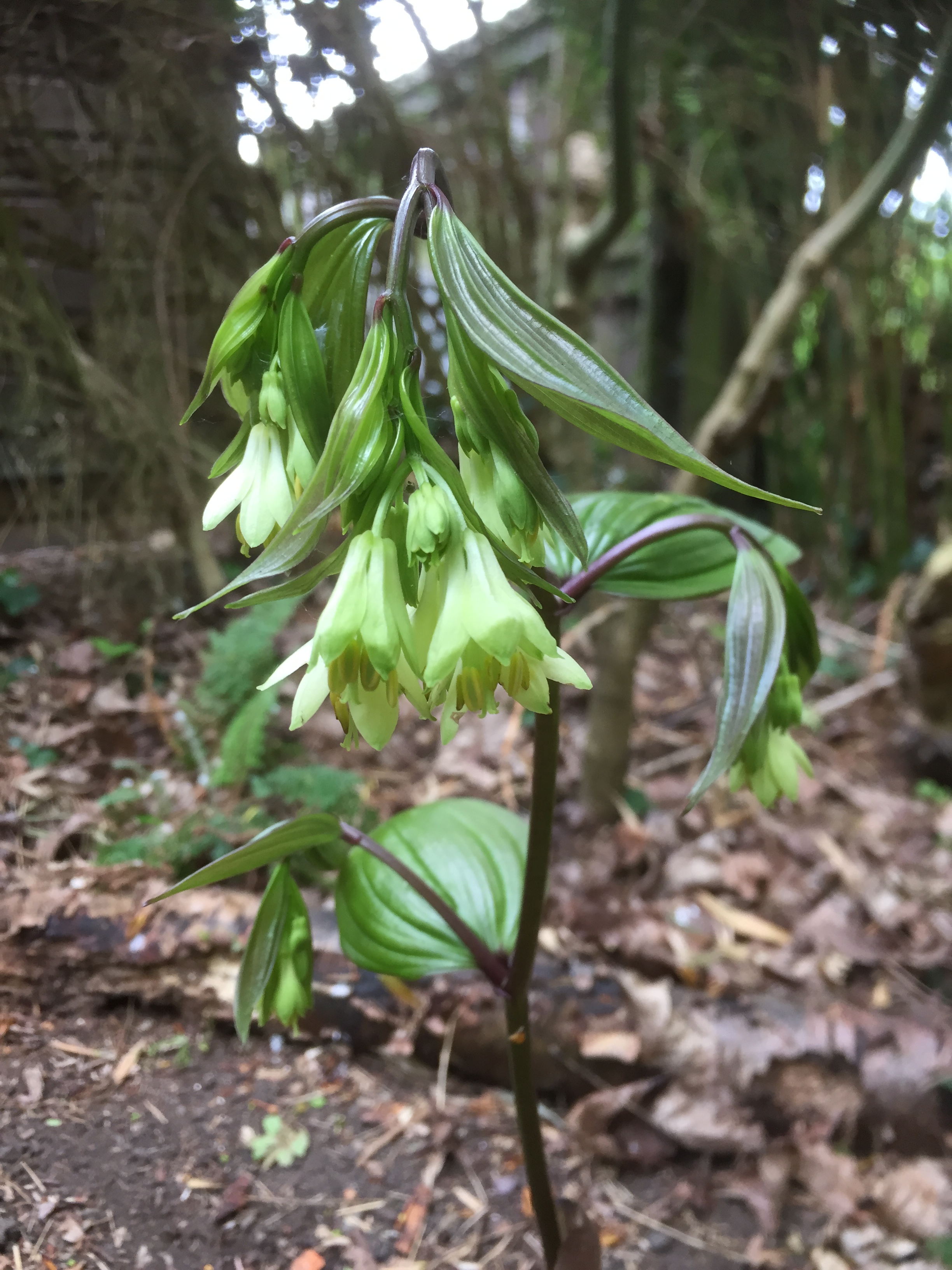
These three related genera contain some excellent perennials for shade and deserve to be more widely grown. The genus Disporopsis is closely related to Polygonatum and its common name is Evergreen Solomon’s Seal. The genus Disporum has had rather a convoluted taxonomic history, having at various times been included in the Convallariaceae (with Disporopsis), Liliaceae, Asparagaceae, and Uvulariaceae. More recent genetic research places it in the family Colchicaceae. Disporum and Disporopsis are native to temperate parts of Asia, especially China, Japan, Korea and Taiwan. The genus Prosartes contains the North American species which were previously included in Disporum.

Disporopsis aspersa

Disporopsis are quite tough little plants, with small white or cream, sometimes purple spotted, bell shaped flowers in spring. The flowers are usually lemon scented, and followed by purple berries. They form clumps from slowly spreading rhizomes, and although they prefer moist woodland conditions, will tolerate dry shade. Disporopsis pernyi, from China, is the most widely available of the eleven or so species. Besides being evergreen, Disporopsis species have the significant advantage over their herbaceous relatives of being untroubled by Solomon’s Seal Sawfly.

Disporum bodinieri

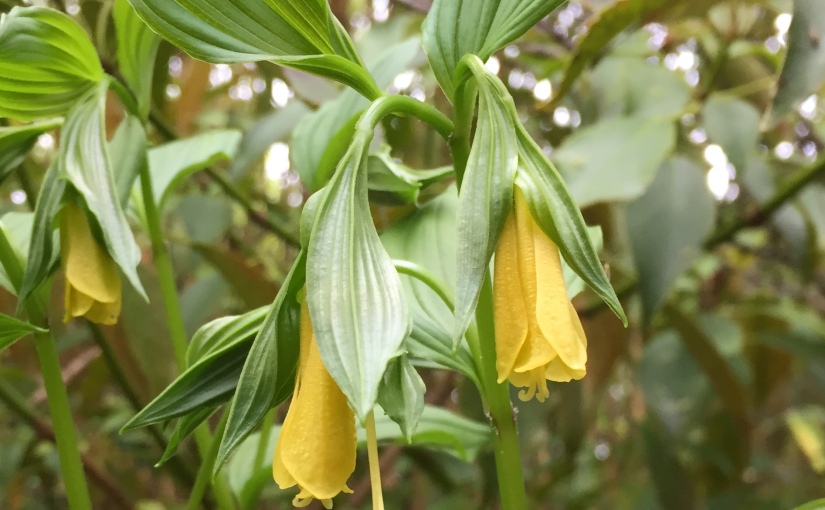
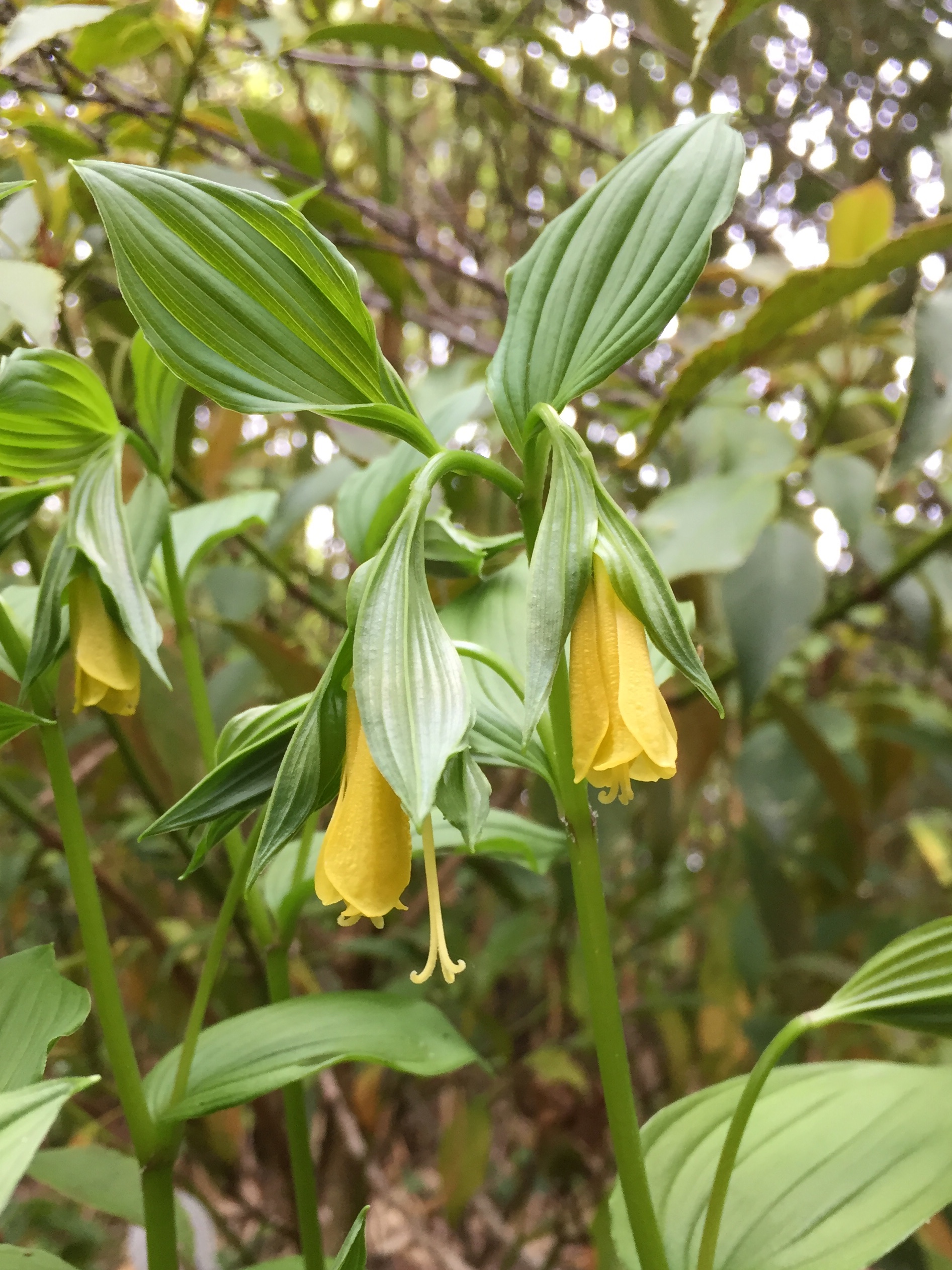
Disporum is a larger and more varied genus, with approximately twenty five species, and includes some striking architectural plants. It is probably the most ornamental of the three genera, but unfortunately a little fussier as to cultivation than Disporopsis. Disporum longistylum ‘Green Giant’ is a Dan Hinkley introduction from Sichuan, China, with bamboo like stems up to 8 feet tall, and delicate greenish white flowers. Disporum longistylum ‘Night Heron’ is a slightly shorter plant with amazing dark, chocolatey new foliage in spring. One of my personal favourites, Disporum bodinieri, is a more delicate plant at 2-3 feet tall, with pretty cream bell shaped flowers in May. Some forms of Disporum cantoniense have attractive purple flowers, whilst Disporum uniflorum has comparatively large yellow flowers. Disporum sessile is a shorter Japanese species, one foot to eighteen inches tall, of which there are many different variegated forms, showing the Japanese horticultural love of both variegation and finding infinite varieties of their native species. Disporum smilacinum is another species with many variegated forms cultivated in Japan, and also a pink flowered form. They all require at least partial shade, humus rich soil, and adequate moisture, being less tolerant of dry conditions than Disporopsis. Some species are evergreen or semi-evergreen, and most have black berries.

Disporum uniflorum

Finally, Prosartes, the North American genus, shares its common name of Fairy Bells with Disporum. There are currently six species. Most are shorter, to about 2 feet tall. The most commonly encountered are Prosartes hookeri, known as ‘Drops of Gold’ because of its protruding yellow anthers, and Prosartes smithii, also known as ‘Fairy Lanterns’. The flowers are generally followed by red berries, which are reputedly edible though not especially flavoursome. Unlike Disporum and Disporopsis, which are clearly quite tasty, the leaves of Prosartes species contain a compound which deters slugs and snails.  

Plant profile: Borinda papyrifera CS1046

There are well over 200 species and varieties of temperate bamboo, and more being introduced all the time, but if I could only have one, this would be it.

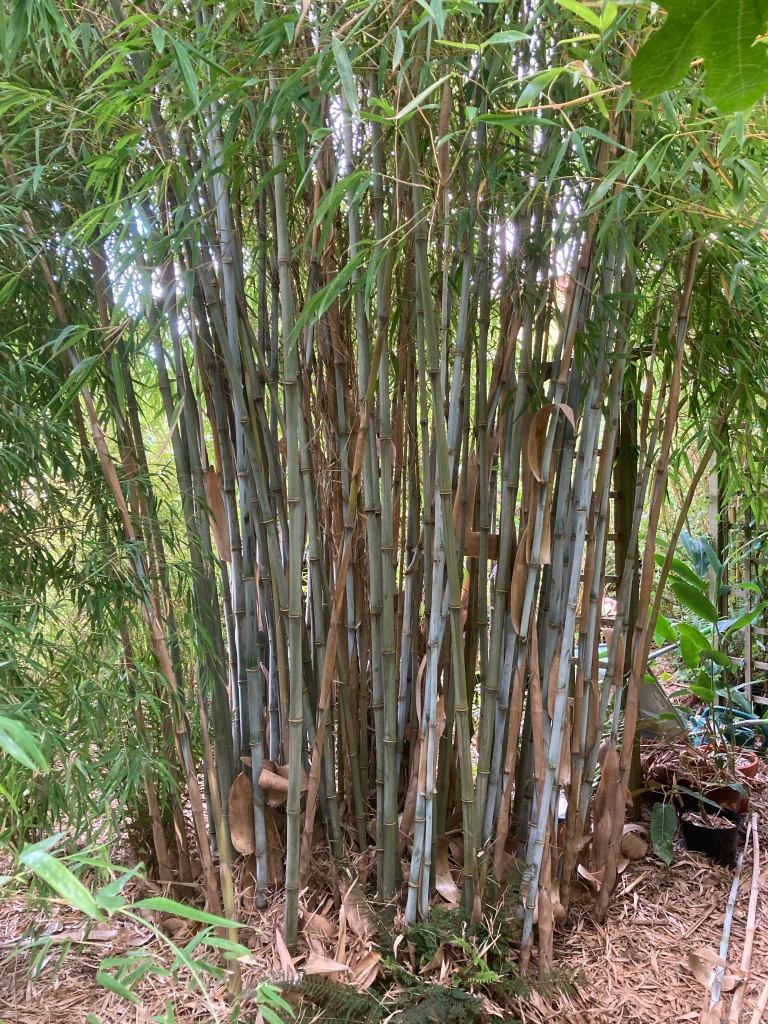
Borinda papyrifera CS1046

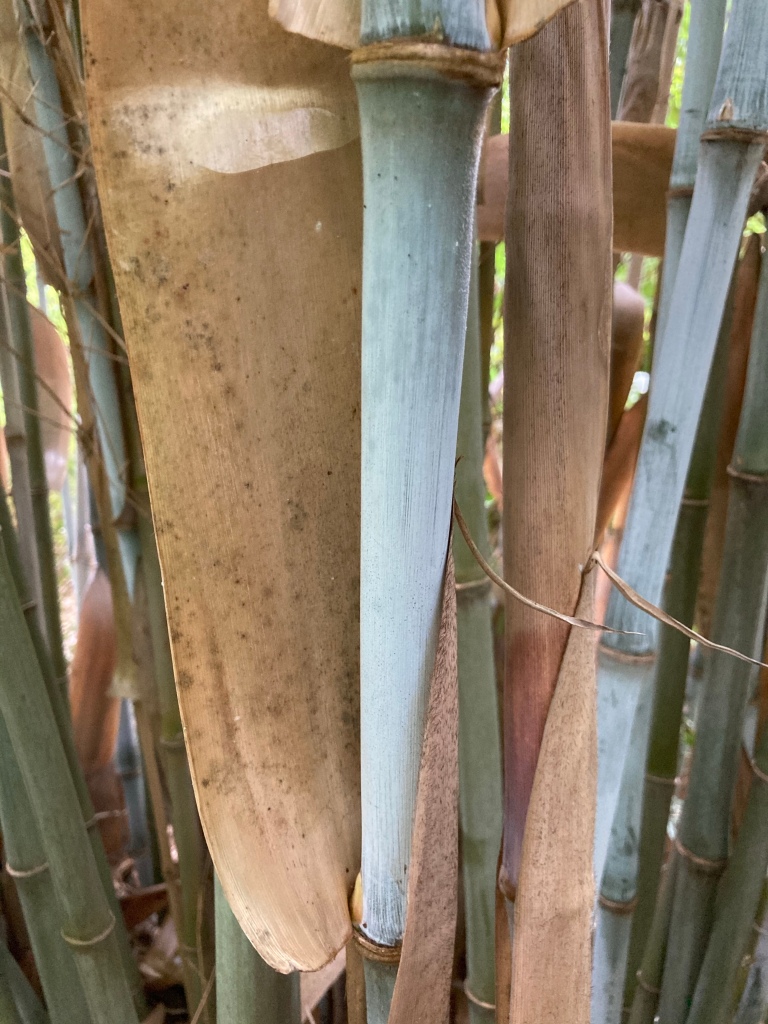
Borinda papyrifera CS1046 is a clump-forming bamboo collected from Yunnan in southwest China by Chris Stapleton (hence ‘CS’). The specific epithet ‘papyrifera’ refers to the large, papery sheaths which protect the emerging culms.

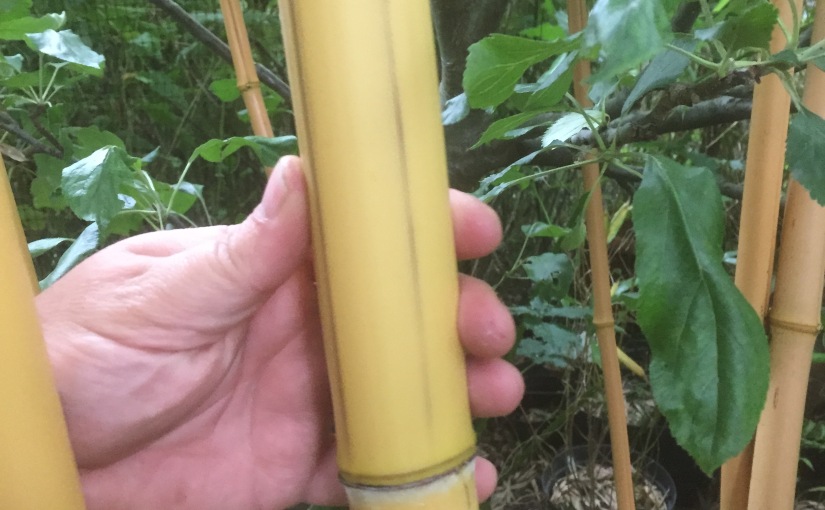
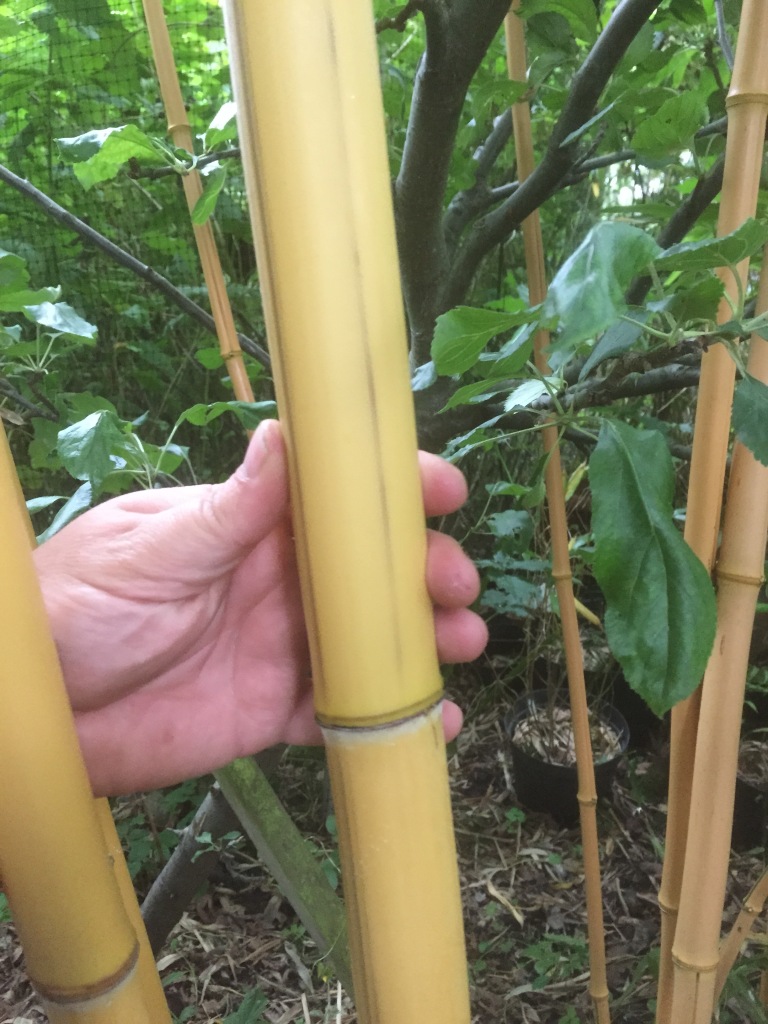
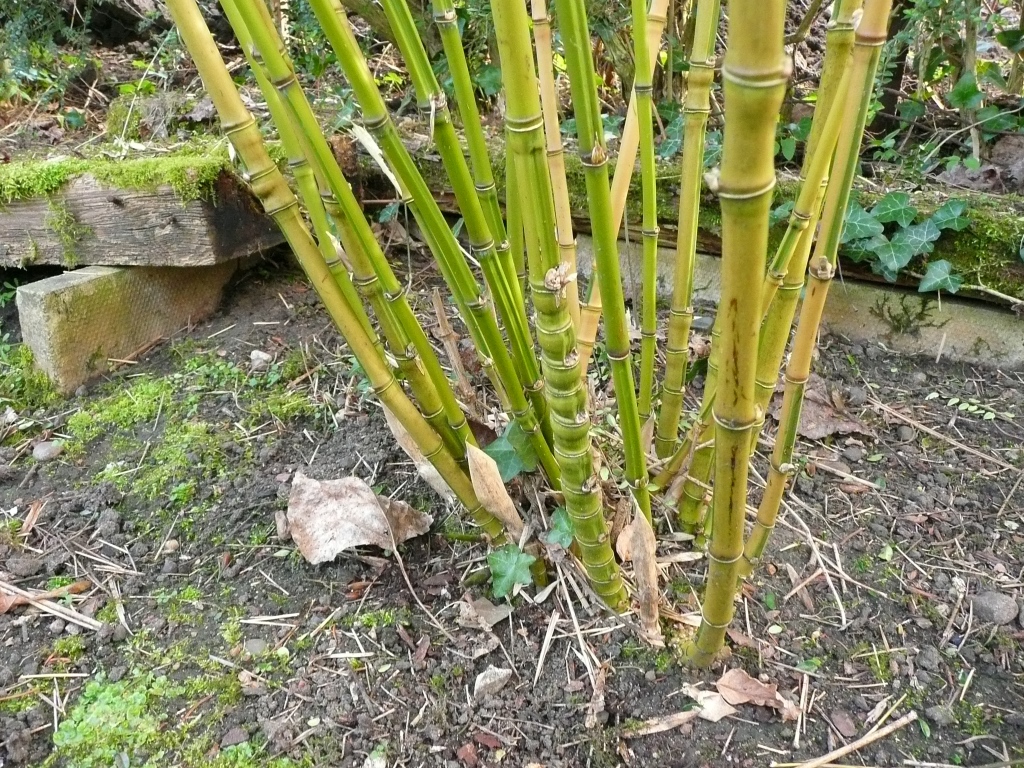
This year’s culm showing the pale colouration and the papery sheath that gives the plant its name.

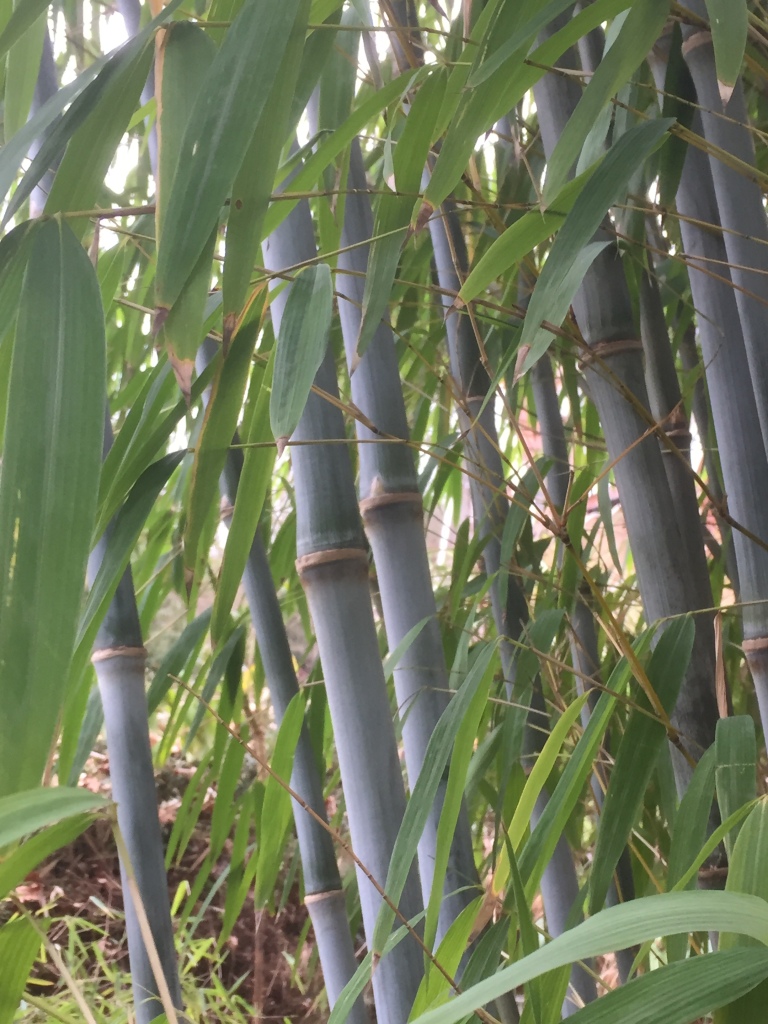
Its most striking and ornamental feature is the icy blue colour of its new culms. This colour is quite persistent, lasting a couple of years before fading to a more greenish shade. The culms are thick – about 2 inches in diameter on my 10 year old plant – and the leaves are quite large.

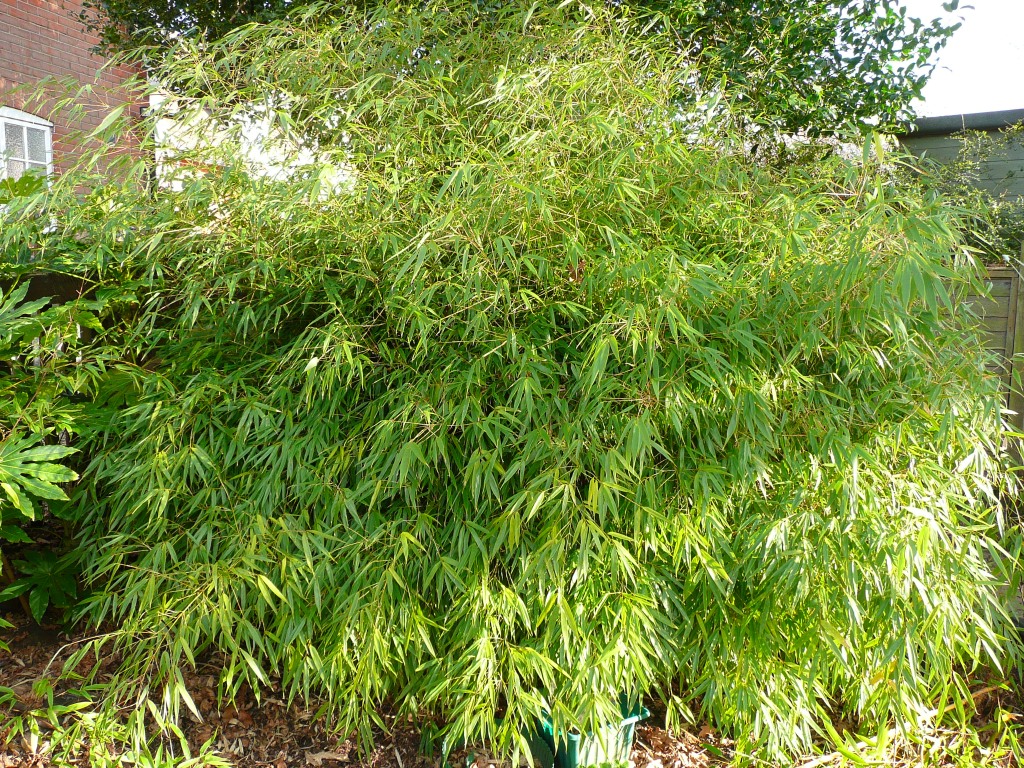
The 10 year old plant in my garden is now some 2.5m (8ft) across.

Though clump-forming it is by no means small. At 6m (20ft) plus with culms more widely spaced than many clumpers it is perhaps best described as statuesque. It would make an ideal specimen plant.

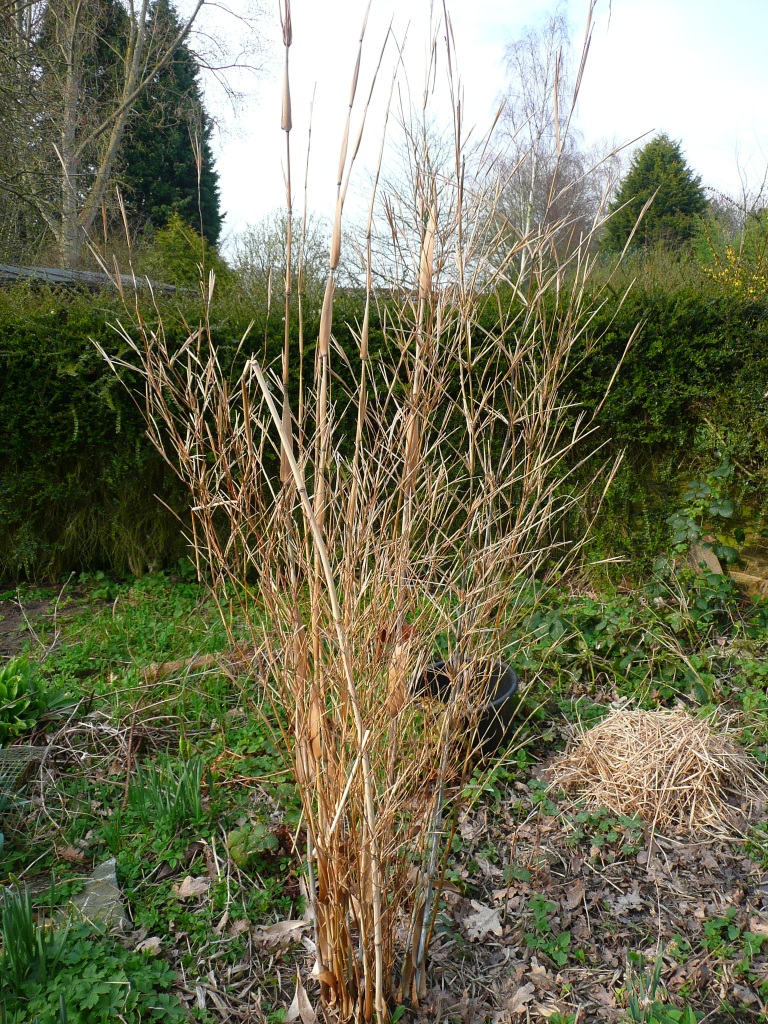
Borinda papyrifera CS1046 is not tremendously hardy as a young plant, but once established is much tougher. Mine was cut almost to the ground as a youngster in the hard winter of 2010, though it came back quite strongly, but didn’t lose a leaf in the ‘Beast from the East’ in 2018. Other clones of Borinda papyrifera are available, some of which were collected at higher altitudes and may prove hardier.

The same plant as above, after the winter of 2010.

It is reasonably tolerant of drought once established, but will tend to abort some culms in dry summers. My plant has attained its current size without extra watering until this year when I gave in to the realities of the changing climate and bought a hose. I also haven’t fed it, but always leave the shed leaves and sheaths in the base of the clump, which break down slowly and return their nutrients to the plant.

Unfortunately this very desirable bamboo is tricky to propagate, partly because it is quick to mature, which makes it hard to find and somewhat expensive. A variety called Fargesia ‘Blue Panda’ is being sold, which is apparently a micro-propagated form of Borinda papyrifera CS1046. If anything it seems to be more expensive than the original and, given what poor plants micro-propped Phyllostachys make, it would be wise to wait until more is known about its performance before buying it. Personally I would only buy a hand-propagated Borinda.

Using bamboo for screening

Bamboo is an extremely effective and decorative screen in the garden. Being evergreen, it blocks unsightly views all year round. The gentle sound of the foliage and its thickness means it is quite effective at filtering unwanted noise as well. Bamboo can also be used as a windbreak, although in exposed positions only the tougher species such as Pseudosasa japonica should be used. Pseudosasa japonica is also the best choice for screening salt winds, though measures must be taken to manage its spread. As always with bamboo, the most important thing is to choose the right variety in the first place.

Borinda papyrifera CS1046

The first thing to consider is height. If you want a really tall screen, over about 4m (16ft), you will need to go for a running bamboo. Clumpers don’t generally get above this height, and some are quite a bit shorter. Most Borinda species (clumpers) are exceptions to this, but are both expensive and hard to find. So if you wanted a tall but narrowish screen, where one plant would do, a Borinda would be a very attractive possibility. If you are looking at screening a longer length, a Phyllostachys species would be more economical. Phyllostachys aurea is widely available, tough, very hardy, and grows 5-8m (16-26ft) depending on conditions. It is a running bamboo, but generally quite well-behaved. (For more on clumping and running bamboos see here). For a taller screen still, Phyllostachys vivax or one of its forms would be a good choice. It can get over 8m (26ft) in the right conditions. It’s also quick to mature, with lovely thick culms, and several of the forms are very decorative, such as P. vivax f. aureocaulis which is a beautiful sunshine yellow with occasional fine green stripes. On the downside it doesn’t have much foliage low down on the culms, and is more vigorously spreading than P. aurea.


Phyllostachys vivax f. aureocaulis

The next thing to consider is the width of the planting. Generalising somewhat, running bamboos tend to be more upright, while clumpers tend to have a wide mushroom cloud of foliage over a narrower clump of culms. You should also consider the width of the planting area available. The taller you want your bamboo to be, the more growing space for the rhizomes you will need. So, for example, if you had a bed 30cm (1ft) wide, you couldn’t grow a bamboo to 8m (26ft) tall in that space. In fact only the smallest bamboos, such as Pleioblastus auricomus at 1-2m (3-6.5ft), could be grown in such a narrow space, and as it is quite invasive would need work to control it. The best option for such a small space would be to grow bamboos in containers.

Phyllostachys aurea ‘Koi’, with three sided concrete paver barrier visible behind it. This was one of the first bamboos I planted in my current garden about 12 years ago and it is still nowhere near needing that barrier though technically a runner!

The third factor to consider is how you will control the spread of your bamboo screen. If you are planting along a boundary I would always recommend using a barrier of some kind, even if you are planting clumpers. Though they will never send out runners, the clumps do expand in width every year and will eventually come up just the other side of the fence. There are a number of options you can use. I use a line of recycled concrete pavers on edge in the ground, overlapping an inch or so and also sticking up an inch or so above soil level. They are angled very slightly away from the bamboo, so that a runner meeting them is encouraged upwards. When it pokes over the barrier it is easy to see and trim. Bamboo rhizome barrier is available, but not cheap, and I know of one grower who swears by damp proof membrane! For a running bamboo you can encircle the entire planting area with a barrier, giving it the most space allowable, but after many years it will effectively become ‘potbound’ and will try to break through. I put a barrier along no more than three sides of a plant, so it can only spread out of bounds in one direction and I can cut and dig out rhizomes should it eventually become necessary.

Fourthly, and related to all the above factors, is whether to plant your screen of bamboos in the ground or grow them in pots. The advantage of growing in containers is that the spread is controlled and you can grow almost any species you like regardless of how invasive it would be in the ground. The disadvantages are that the plants will stay shorter than they would in the ground, and that you will have to water them. Bamboos established in the ground are pretty drought tolerant, but in pots will die if allowed to dry out completely. If you need height, P. vivax will still get to a decent height in pots, and the larger the container you can give it the taller it will get.

Fargesia rufa, a clumping bamboo which forms a mushroom of foliage.

The final thing to consider is the likelihood of flowering. Bamboos flower very infrequently, with gaps for many species upwards of thirty years. However, there is always a small chance, and clumpers in particular are likely to die if they flower completely (more on bamboo flowering here). If planting a long row of clumping bamboos it is a very good idea to choose a mix of species and varieties, so that if you are unlucky you only lose one or two plants and not the whole row. Fargesia nitida and its numerous forms have flowered since the 2000s so are unlikely to flower again soon. A number of hybrids between F. nitida and F. murielae have recently become available, show promising vigour (F. murielae itself is very slow to get going) and also should not flower for many years. F. robusta and its forms are among the taller clump formers at 4-5m (14-16ft). F. rufa is one of the shortest, topping out at 3m (10ft), but has a particularly wide cloud of foliage, is quick growing, and tough as old boots.

Love, Immortality and Utopia – The Symbolism of Peaches

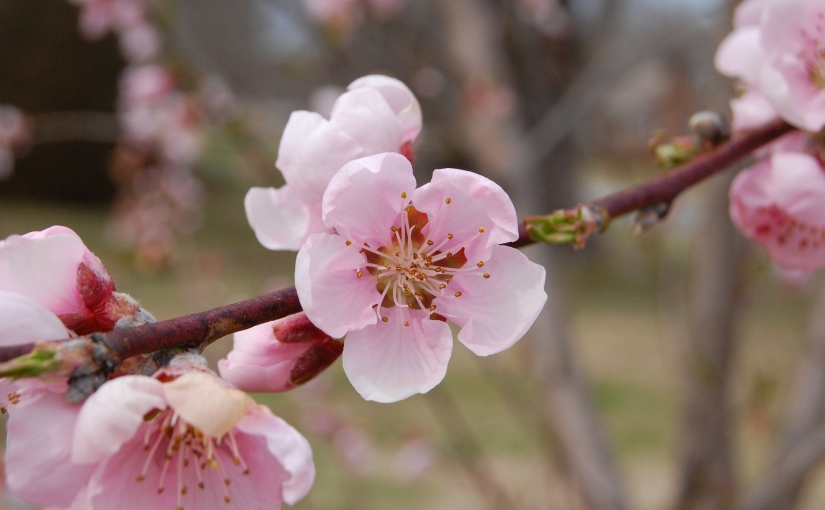
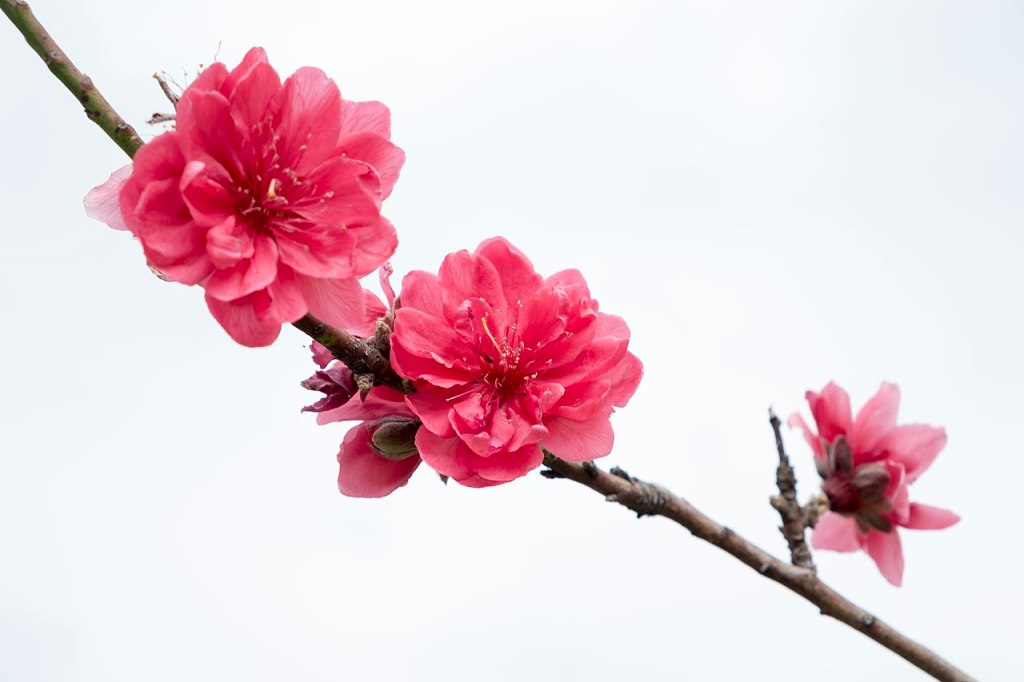
Peaches have been cultivated in China for about 3000 years, originally for food and medicinal purposes, and poems about the beauty of peach blossom date to 600BC, showing their early use as an ornamental. By the Song dynasty (960-1279AD), several varieties had been bred with double flowers in reds and whites as well as pinks.

Each part of the tree has its own symbolism. Peach blossom opens in spring, the season of romance, and is strongly associated with love, and with feminine beauty.

Within this gate on this same day last year,  
Cheeks and peach flowers out bloomed each other here.  
Her very cheeks can now be found no more.  
The peach flowers smile in spring wind as before 

Cui Hu (translated by Ma Hongjun).

This very well known poem from the Tang dynasty has formed the basis for many romantic stories and operas and given rise to a chengyu (Chinese idiom) 人面桃花 rén miàn táo huā, her face is like a peach blossom, to describe a woman’s beauty.

Today, peach blossom is one of the flowers used to decorate at Chinese New Year, and is especially popular with single people hoping for ‘peach blossom luck’ – luck in love.

The peach itself has long been a Taoist symbol of immortality. Xiwangmu, the Queen Mother of the West, lives on the mythical Mount Kunlun and grows peaches in her orchard. They produce fruit every three thousand years and confer immortality on anyone who eats them.

The wood of the peach tree is said to ward off demons. Swords carved from peach wood were used in Taoist exorcisms, and feature as magical weapons in martial arts legends.

Peach Blossom Spring by Zhang Hong, Ming dynasty

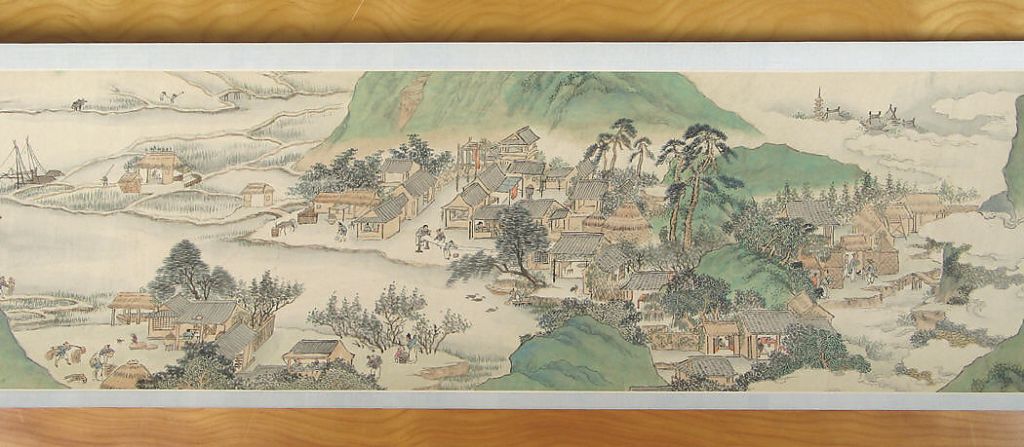
One further literary association which was highly influential in the development of the Chinese garden was the story of ‘The Peach Blossom Spring’. Written in 421 AD by Tao Yuanming, it told of a fisherman who followed a stream through a forest of blossoming peach trees to a cave at its source. Squeezing through this cave he found a hidden village, surrounded by beautiful scenery and fertile fields, where people lived happy and tranquil lives, cut off from the world for many generations. He met with a warm welcome and stayed for a while, but then wanted to return home. He was warned that it was pointless to tell anyone else or to try to find his way back to the village later, and so it proved. The story inspired many paintings and poems, as well as influencing gardens, and gave rise to a chengyu – 世外桃源 shìwaì taóyuán, the Peach Spring beyond this world, which means a utopia.

How to grow Japanese Irises

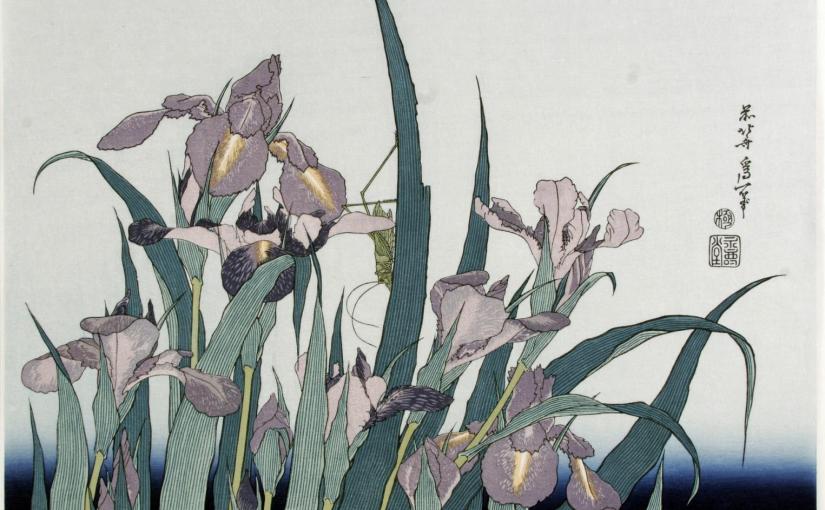
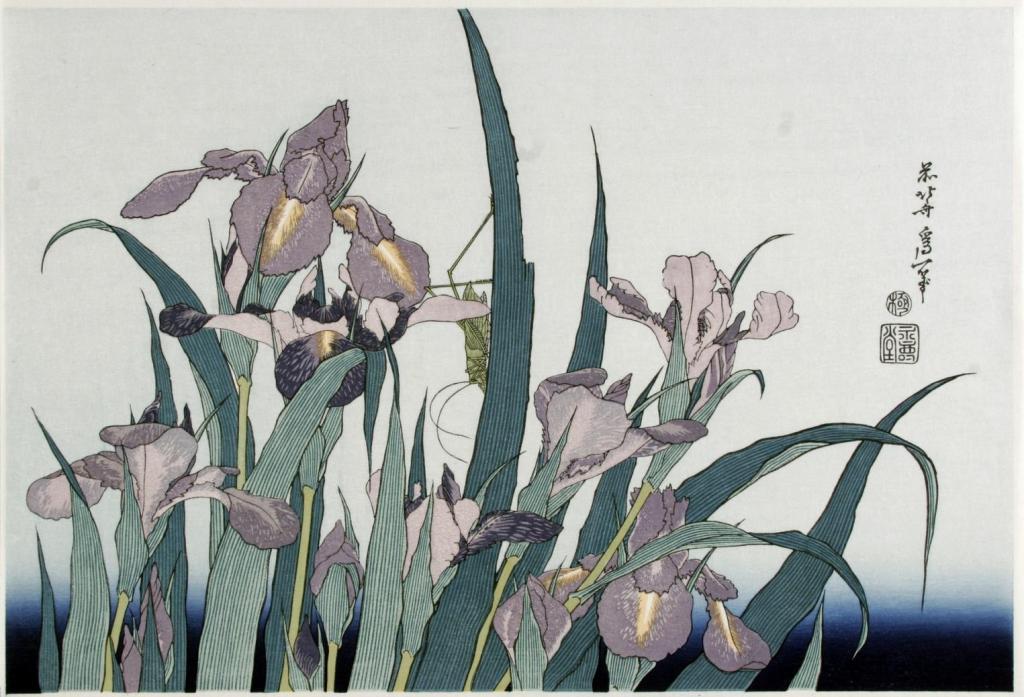
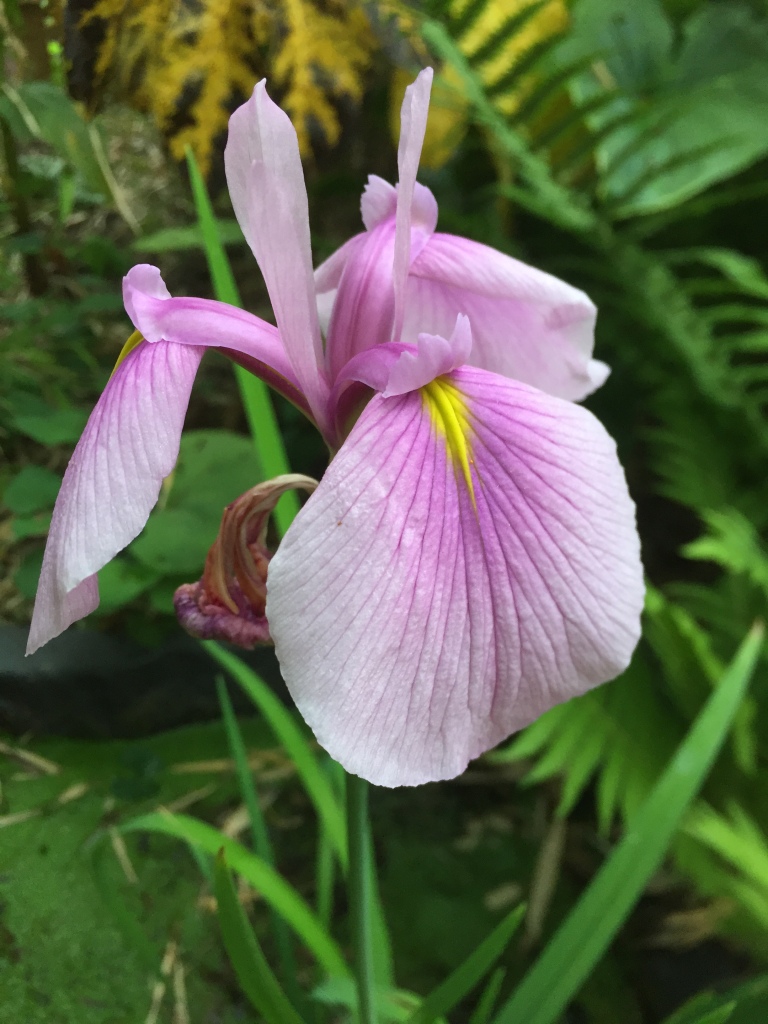
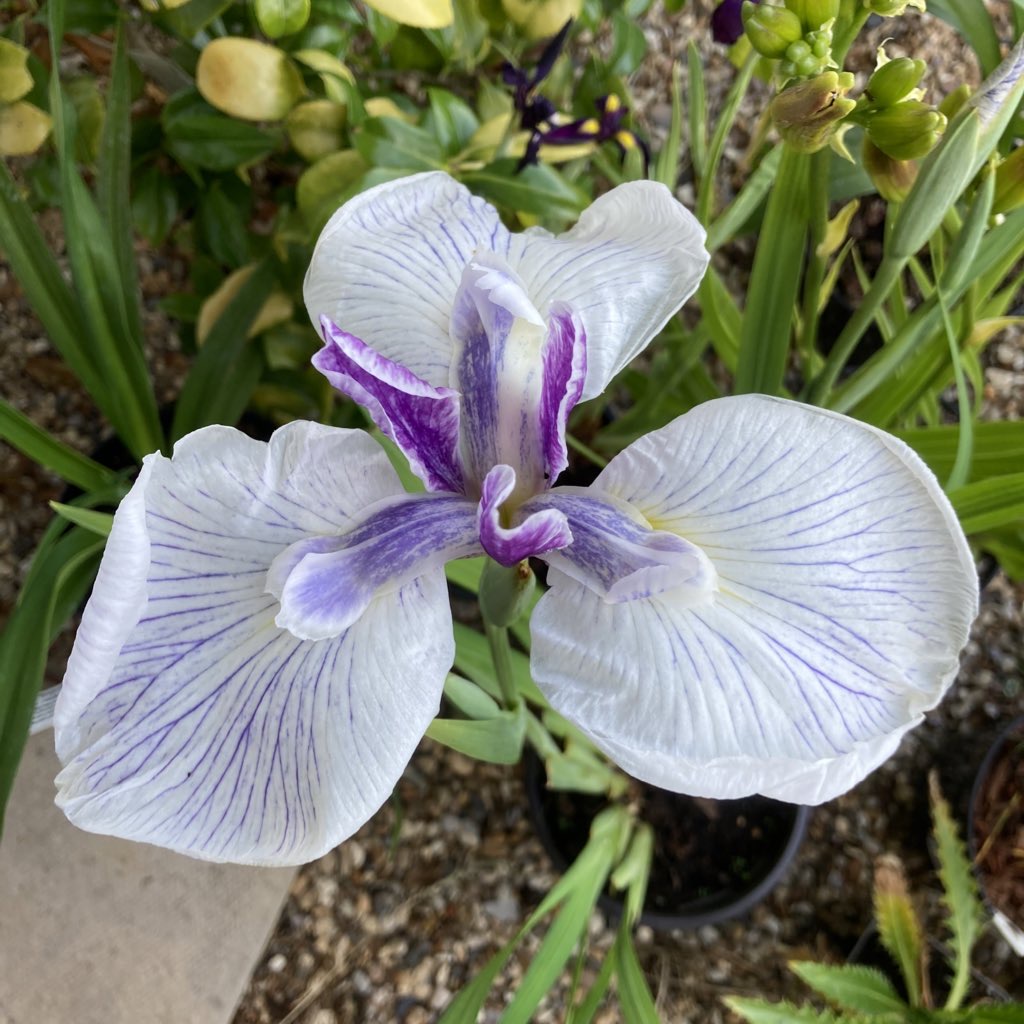
Iris ensata (syn. Iris kaempferi) is one of the archetypal plants of the Japanese garden. They are rhizomatous, beardless irises, native to East Asia. They have fans of strap shaped leaves and flowering stems 2-4ft tall. They flower in early summer, with two or three large, exotic-looking flowers on a stem, in shades of purple, blue, white, and pink.

They are extremely hardy, down to -20ºC, zone 4 in the US. They will grow in full sun to partial shade, as long as they get at least 6 hours of sun, and like a loose, slightly acidic damp soil with plenty of organic matter. It is especially important in the spring, in the run up to their early summer flowering, that they have plentiful moisture.

Iris ensata ‘Moonlight Waves’

They are sometimes sold as marginal plants, and are happy to be grown in shallow water, as long as the crown of the plant is not covered, during spring and summer. However, they need to be lifted out of the water over winter or they are likely to rot. The old foliage should be cut back to the ground in the winter, after it has been knocked back by the first frost.

Iris ensata ‘Rose Queen’

Iris ensata are heavy feeders and will benefit from a generous feed of a balanced fertiliser for acid-loving plants in the early spring and again after flowering, and a good mulch to help retain moisture. It’s good to add plenty of organic matter to the soil when they are planted or divided, but don’t add fertiliser at this point. Bone meal should be avoided as it is actively harmful to Japanese irises.

Iris ensata ‘Grayswood Catrina’

It’s very important to divide and transplant Japanese Irises every three to four years to maintain vigour. New roots form above the old each year, so over time the crown of the plant rises above the soil, potentially causing it to fail. To divide, dig up the plant and divide it into individual sections or fans, or slightly larger sections of 2-4 fans each. The oldest roots and rhizomes – the lowest – should be removed, and the foliage cut back to about 1/3 of its length. The divisions should be planted 2-3 inches deep. in fresh soil where Iris ensata has not been grown for the previous three years, and kept well watered. It is best to divide Japanese Irises in spring or autumn, avoiding the heat of mid-summer, though in cooler areas they can be divided immediately after flowering.

Iris ensata ‘Oku Banri’

Iris ensata have been cultivated in Japan for at least five hundred years, and possibly much longer. Extensive Iris breeding began in the late Edo period, around the 1800s. Japanese Irises were introduced to the West by Carl Thunberg in 1794, and again by von Siebold in the 1850s (as Iris kaempferi). Many varieties have been bred in the United States as well. Some 2000 varieties are now available.

National Beauty and Heavenly Fragrance: the Chinese Peony

A symbol of wealth and honour, peonies are known as the King of Flowers and have been cultivated in China for millennia. Like many traditional plants of the Chinese garden, they were originally cultivated for medicinal purposes and are mentioned in the Shennong Bencao Jing, an ancient materia medica written circa 200-250 AD, recording oral traditions dating back much further. Some records indicate they were cultivated as far back as the Xia (the possibly mythical first dynasty, 2000-1766 BC).

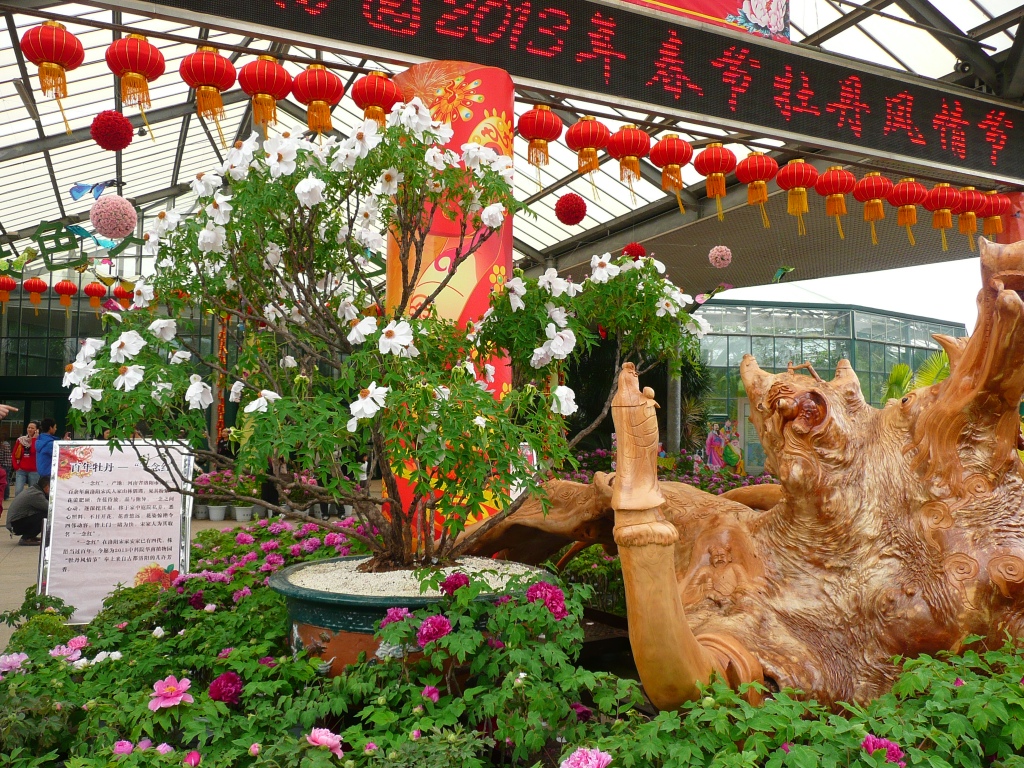
New Year peony festival at the South China Botanical Garden, Guangzhou

Before the Qin dynasty (221-206 BC) not much distinction was made between herbaceous peonies, shaoyao, and tree peonies, mudan, which were simply called tree shaoyao. Paintings from around 400 AD depict peonies in the background, showing that they have been cultivated as ornamentals for at least 1600 years. By the Sui dynasty, 581-618 AD, individual varieties were being recorded, and twenty boxes of peonies were sent as tribute to the Emperor from Hubei. In the early Tang dynasty, peonies were an imperial flower, only permitted to be grown in imperial gardens. They soon spread, however, and were planted in temple and monastery gardens. In the 8th century they were introduced to Japan by a Buddhist monk.

Peonies, by Yun Shouping, 17th century

There is a legend that the Tang Empress Wu Zetian visited a garden in the winter. Nothing was in flower, so she ordered all the plants to bloom. The next day, despite the snow, all the plants had obeyed the Empress and flowered, except the peony. Enraged, she banished it from the capital to Luoyang, where it bloomed profusely. Subject to the vicissitudes of war and changing dynasties, Luoyang has been the capital of China’s peony industry ever since.

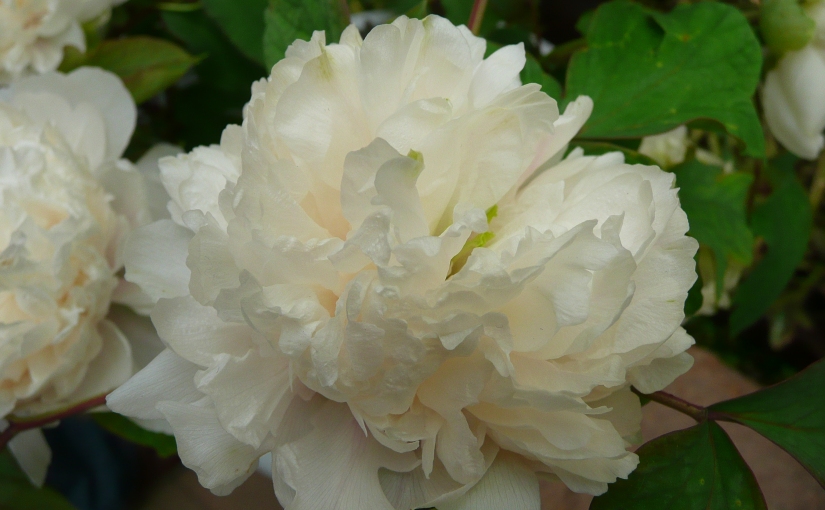
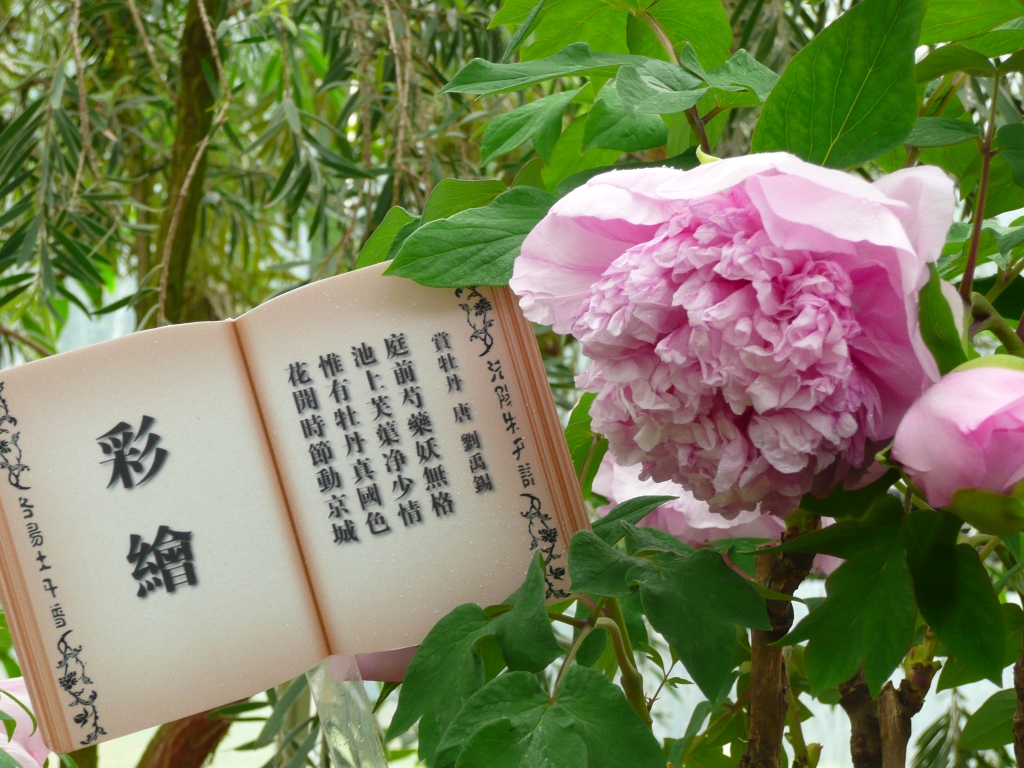
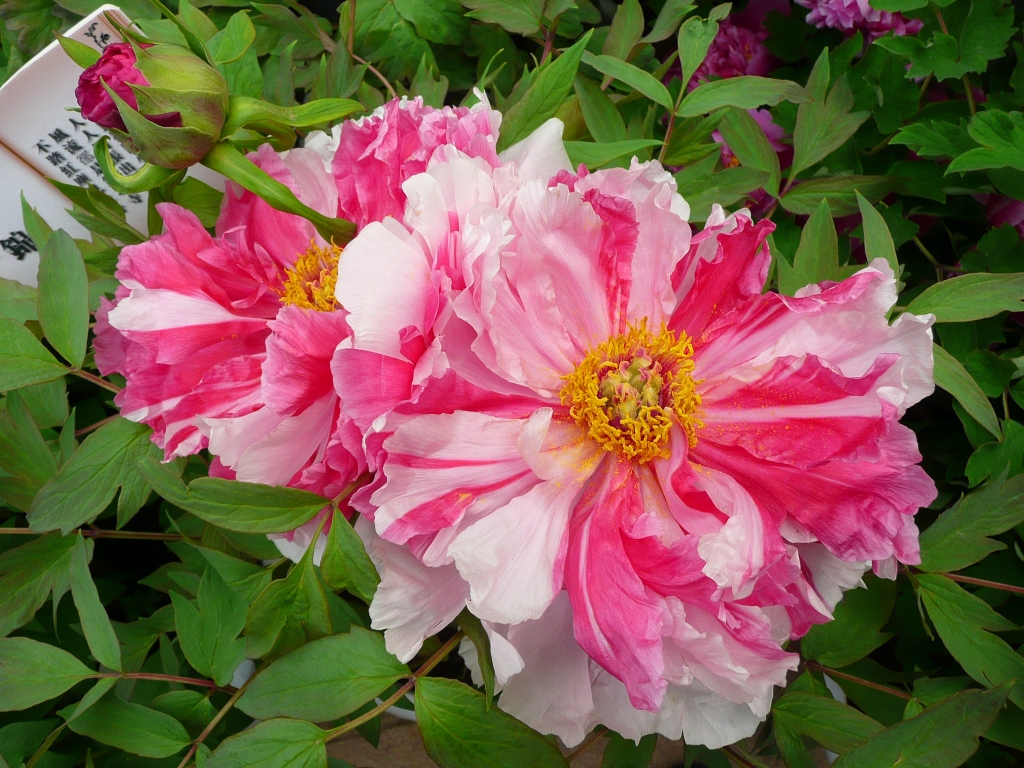
Paeonia x suffructicosa ‘Cai Hui’, Brightly Coloured Painting

The first monograph on peonies, written in 1034 AD, described 24 double and semi-double varieties. The large double ‘Thousand-Petalled’ varieties were the most popular, new varieties costing as much as a hundred bushels of rice. At least two of the varieties, Yao’s Yellow and Wei Purple, are still in cultivation. By the 1800s, a single plant could cost 1000 coins.

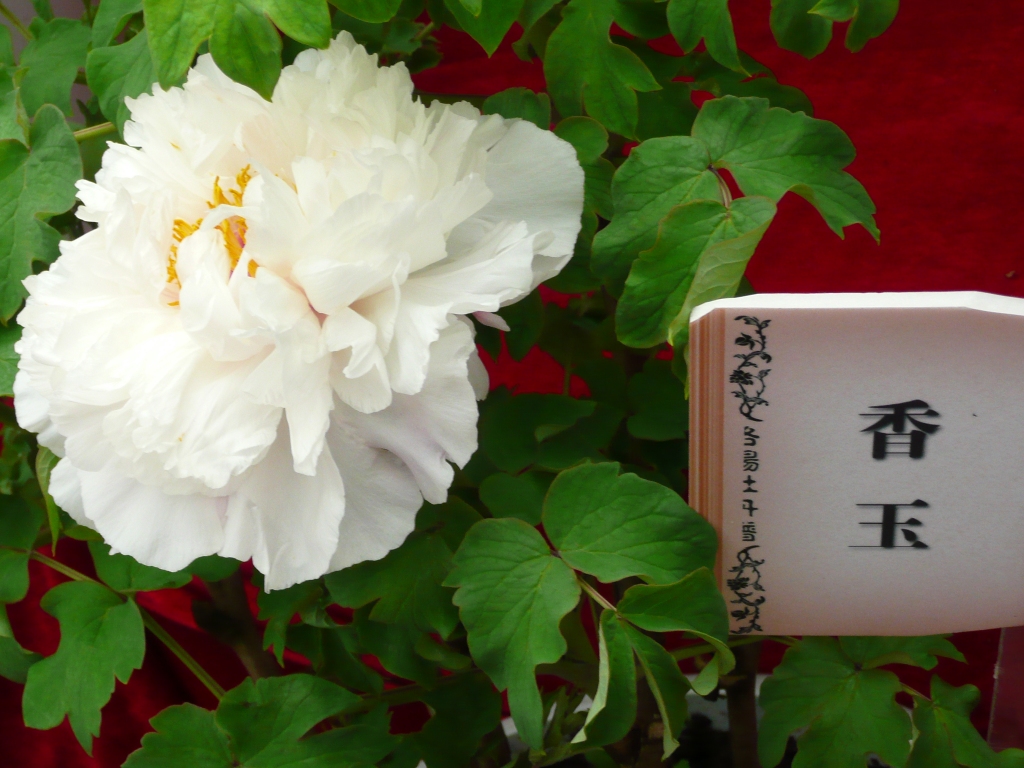
Paeonia x suffructicosa ‘Xiang Yu’, Fragrant Jade

In 1655, English visitors from the East India Company saw peonies in Beijing and sent accounts home. More than a hundred years later, in 1787, Joseph Banks asked the Company’s representative in China, Alexander Duncan, to send plants to Kew. The Kew plants have not survived but a plant from that first introduction was moved from Duncan’s own garden to the Edinburgh Botanical Gardens and can still be seen there.

Further introductions through the late 18th and early 19th century culminated in Robert Fortune’s third expedition, 1848-1851, when he obtained 30 of the best tree peonies available in Shanghai, as well as herbaceous peonies for grafting. The latter half of the 19th century saw hundreds of peony varieties offered for sale by nurseries across Europe. Kelways nursery in the U.K., famous for peonies, dates from this period.

The peony was the national flower of China until 1928, when the government of the Republic of China replaced it with the plum blossom instead, which was a symbol of resilience in hard times, and not as closely associated with China’s imperial past. The People’s Republic of China has no official national flower, though the peony consistently tops polls held to choose one, by a huge margin.