The Asian Garden U.K. Blog

Fortunately, Unfortunately – the story of the Dove Tree

Davidia involucrata, the dove or handkerchief tree

Wang Zhaojun was one of the ‘four great beauties’ of ancient China. A lady-in-waiting in the palace of the Han emperor, Han Yuandi, she seemed destined to pass her life in obscurity due to a tactical error. It was the custom for ladies entering the palace to have their portrait painted. It was also the custom to bribe the court painter generously, to encourage him to put forth his best efforts. Confident in her legendary beauty, charm, and intelligence, Wang Zhaojun did not do so, and the artist expressed his feelings by adding a large, unsightly mole to her portrait.

Some time later, as part of negotiations between the Han and the Xiongnu, a Xiongnu prince asked for the hand of a Han princess. Unwilling to marry his daughter to a barbarian, Han Yuandi ordered that the plainest girl in the palace should by presented as the royal bride.  When, based on her portrait, Wang Zhaojun was brought forward, the Emperor rather regretted his decision (and had the court painter executed) but the Xiongnu prince was delighted. Wang Zhaojun self-sacrificingly agreed to the marriage and went to live among the barbarians. Lonely and homesick on her journey, she wrote a letter home every day and sent it attached to a dove. The doves flew back and settled on a tree outside Wang’s family home. The name dove tree was given to Davidia involucrata as its large, drooping white bracts resembled the flock of white doves.
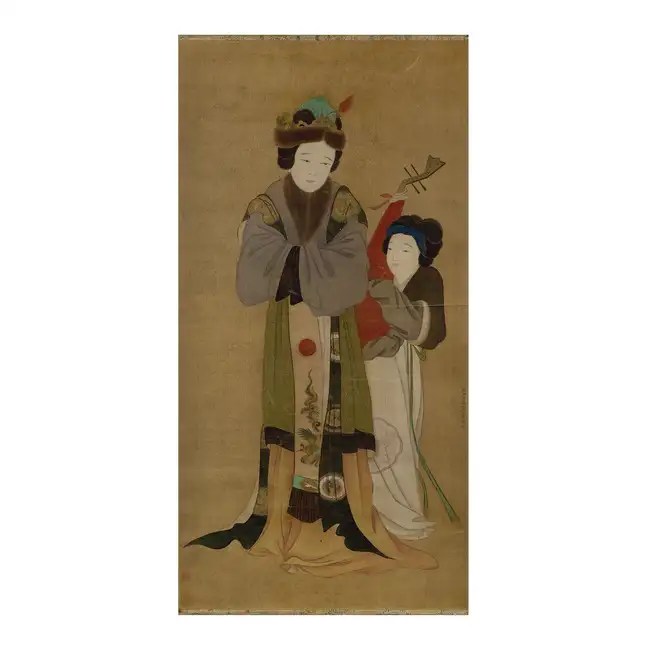
Wang Zhaojun with attendant, by Yan Hongzeng, Qing Dynasty

In 1869, Père Armand David, Catholic missionary, botanist, and zoologist, became the first westerner to see this tree near Moupin (now Baoxing) in Sichuan province. He sent specimens and seeds to the Jardin des Plantes in Paris, but the seeds were preserved along with herbarium specimens rather than sown. Previously unknown to western science, a new genus was created for it and named in honour of Père David. (The first description of it, based solely on the herbarium specimens, had the long white bracts pointing up instead of drooping down).

Nearly twenty years later, Augustine Henry, an Irish doctor who had developed an interest in natural history to alleviate the tedium of working for the British customs service in China, found another dove tree near Yichang in Hubei. Like Père David, he found only a single specimen on his expedition, and again, like David, the fruits he sent back to Kew in 1889 were preserved and not planted.

In 1899, Harry Veitch of Veitch’s nursery employed Ernest Wilson as a plant hunter, tasked with finding the dove tree. His first objective was to find Augustine Henry, then stationed in Yunnan, before Henry left the country to return home. Arriving in Hong Kong, Wilson found that an outbreak of bubonic plague meant he could not hire an interpreter. This made the journey, through what was then French Indochina and up into Yunnan, rather more difficult, as Wilson spoke neither French nor Chinese. There was also considerable anti-European feeling in the area, and Wilson was held up at the border for some weeks by outbreaks of serious violence. Fortunately, just as Wilson was considering writing to Veitch to call off the expedition, word came that it was safe to proceed. His onward journey further enlivened by the wreck of his riverboat in rapids, Wilson finally reached Henry in September 1899.

E.H. Wilson

The help that Henry was able to offer in finding the dove tree was rather limited, consisting of a sketch map, drawn on half a page torn from a notebook and covering an area of some 20,000 square miles, with a pencilled X marking the location of the tree. Undeterred, Wilson organised an expedition and set out for Yichang, an important town on the Yangtze which was to be his base for the next two years, arriving in February 1900. Again, there was a considerable risk of anti-European violence – the Boxer Rebellion in North China reached its peak in June of that year – but Wilson felt that in these more remote regions it should be safer. In April, he set out in search of the Davidia and, on reaching the house where Henry had stayed 12 years before, was delighted to find that the locals remembered both Henry and the tree in question. However, guided to the correct spot, Wilson was horrified to discover only a stump, with a house, recently built of the wood, standing beside it.

Wilson returned to his base in Yichang, intending to collect in the area for the rest of the year and then, the following year, travel a thousand miles west to search the area where Père David had originally found the tree. He collected a number of interesting plants around Yichang, including what is now known as the Kiwi fruit. Then, just a few weeks after his crushing disappointment, he found a Davidia in full flower. Luck now appearing to be on his side, he went on to find ten more trees in the region, which fruited heavily – by no means a given for this species. Wilson was able to collect and send back a considerable quantity of seeds. In later expeditions he also collected Davidia seeds but never again in such quantity.

The seeds arrived in Britain in 1901, and were planted in varying conditions at Veitch’s nursery. By the time Wilson returned early in 1902, despite the best efforts of Veitch’s propagators, not a single one had germinated. Fortunately, those seeds planted outside, exposed to the elements, began to germinate shortly after, and soon Veitch’s had 13,000 young seedlings. Harry Veitch, however, decided to destroy some of the stock in order to be able to charge a higher price. Several thousand were burnt before wiser counsels prevailed. Wilson was appalled.

Further disappointment was in store for Wilson. In 1893, the botanist Adrien Franchet of the Muséum d’Histoire Naturelle in Paris had asked the missionary Père Paul Farges, stationed in north western Sichuan, to collect seed of Davidia involucrata. Despite his best efforts, Farges was unable to collect any seed until October 1896, which he sent to Franchet and to the French nurseryman Maurice de Vilmorin. Only one germinated successfully, two years after planting, in 1899. Harry Veitch had become aware of this shortly after Wilson had left, but didn’t tell him so as not to lessen his enthusiasm. Wilson only found out that his introduction had been pre-empted when pictures of Farges’ plant were published in the Revue Horticole in 1902.

Two cuttings were taken from the French plant and a layer successfully rooted. One of the cuttings was sent to the Jardin des Plantes and one to Kew. The layer was sent to the Arnold Arboretum in Boston, where it is still growing.
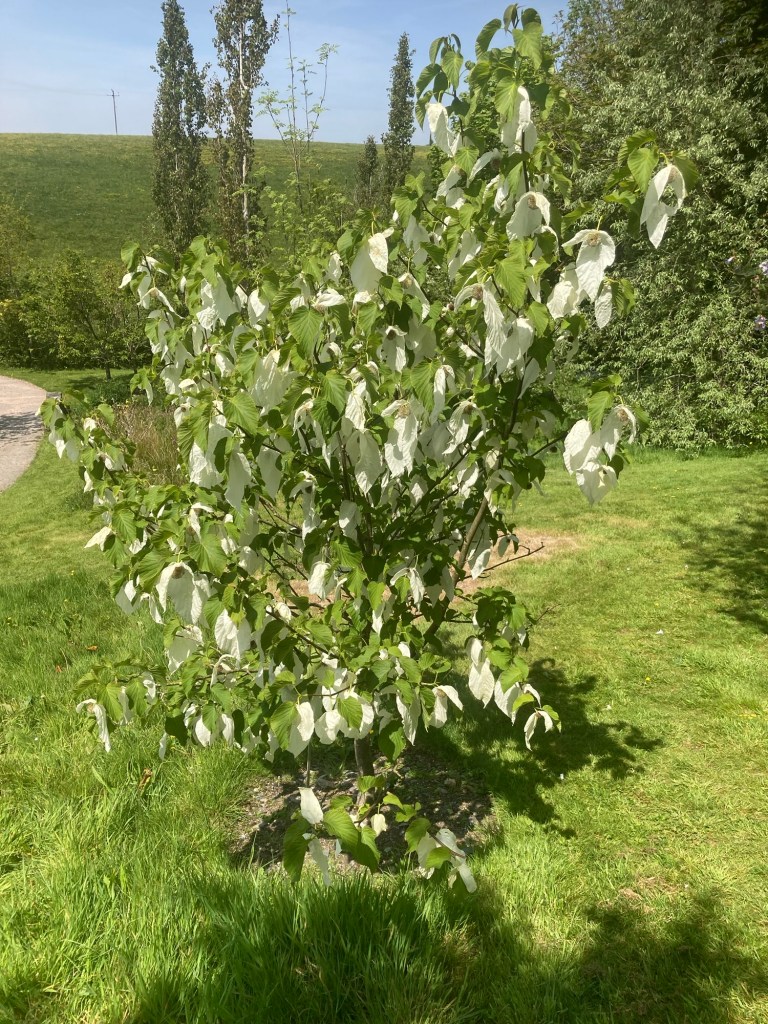
Davidia involucrata ‘Sonoma’, a Californian selection which flowers as a young tree.

Tinkling jade and pine waves – the sounds of the Chinese garden

In the classical Chinese garden, sound was an essential element. The garden is a representation of nature in miniature, and that includes the evocative sounds of the Chinese landscape. Borrowed scenery is an important concept in the Chinese garden and in The Craft of Gardens, Ji Cheng discusses it at length. Borrowed scenery refers not just to views of landscapes outside the garden, but to other elements which can be brought in, such as sounds, fragrances, and wildlife.

Planting flowers serves to invite butterflies, piling up rocks serves to invite clouds, planting pine trees serves to invite the wind… planting banana trees serves to invite the rain, and planting willow trees serves to invite cicadas.

Zhang Chao (1650-1707)

Plants, chosen for their symbolic meanings as well as aesthetic effect, were often used to create sounds. Bamboo is one of the essential plants of the Chinese garden, representing spring, and symbolising the virtues of the Confucian gentleman – such as humility, resilience, and uprightness. The sound of the wind blowing through bamboo leaves was known as ‘the sound of heaven’, and pavilions would be sited to take advantage of this effect. It was also compared to tinkling pieces of jade. There is a story that one of the Sui empresses could not sleep without the sound of bamboo, so the emperor order courtiers to hang jade pendants from the eaves to mimic the sound.

The Bamboo Garden, West Lake, Hangzhou

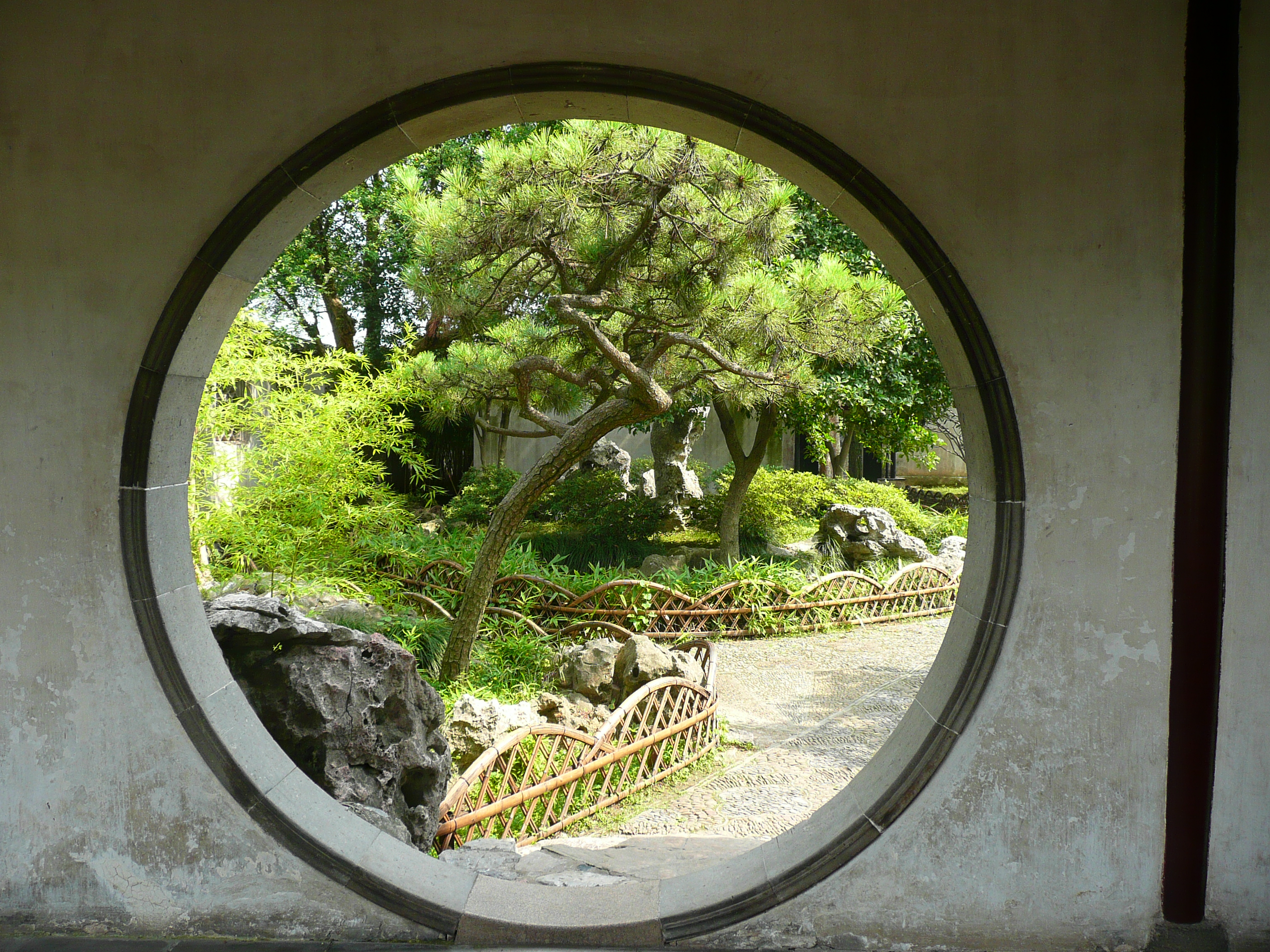
The effect of wind in the pines was called songtao 松涛, often translated as ‘pine wind’ but ‘pine waves’ or ‘pine surf’ might be better. Large areas of pines were planted where space allowed, at the Summer Palace in Chengde, for example. In smaller gardens a single pine could evoke this.

Pine in The Couple’s Retreat Garden, Suzhou

‘Wind through the pines’ is a phrase found in a number of poems and songs, and is also represented in paintings. Pine is another highly symbolic plant, associated with strength, resilience, and long life.

‘Listening to the wind in the pines’, Ma Lin

Large leaved plants such as banana and lotus were valued for the sound of rain falling on their leaves. Bamboo leaves are prone to being shredded by the wind, so to protect them they were often planted in clumps against a sheltering wall, against which their shadows moved. A pavilion would be built nearby with windows looking out onto the bananas to enjoy the aesthetic effect, both visual and auditory.

Bananas in the Humble Administrator’s Garden, Suzhou

The pattering of rain on withered lotus leaves was a theme often used in poetry to create a feeling of melancholy, and was particularly associated with autumn. The Listening-to-the-rain Pavilion in the Humble Administrator’s Garden, Suzhou, was placed to highlight the different sounds of rain on various types of leaves.

Lotuses, West Lake, Hangzhou

Other natural sounds were produced by birds, animals, and insects. The song of Orioles was particularly admired, and willows in particular were planted to attract them. This association was also used in paintings and poems, perhaps most notably this by the great Tang poet Du Fu.

Two golden orioles sing in the green willows,
A row of white egrets against the blue sky.
The window frames the western hills’ snow of a thousand autumns,
At the door is moored, from eastern Wu, a boat of ten thousand li.

Jueju (Two Golden orioles Sing in the Green Willows) by Du Fu, translation from chinese-poems.com

Willows were also associated with cicadas, one of the sounds of summer, and a symbol of rebirth and the cycle of life and death. As they were believed to live solely upon dew, cicadas also represented a pure and refined life.

Finally, sounds in the garden could be artificial – music, singing, nearby temple bells or prayers. Occasionally, elements of the garden would be built to produce sounds, although this is not as common as it is in Japanese gardens. One example of this is Winter Hill in Geyuan garden in Yangzhou, which has a wall with 24 round holes in it, through which the wind blows. This makes noises reminiscent of winter storms. (This section of the garden also faces north so it gets no direct sunlight and has white quartzite rocks to evoke the effect of snowy mountains).

Photo from: Wang, Wanlin. (2021). The Application of Soundscape in Environmental Art. 10.2991/assehr.k.210106.098.

As with everything else in the Chinese garden, sounds existed in balance and harmony with their opposite, silence.

The forest is more peaceful while cicadas are chirping. The mountain is more secluded while the birds are singing”

Wang Ji

A new National Collection of Heloniopsis and Ypsilandra

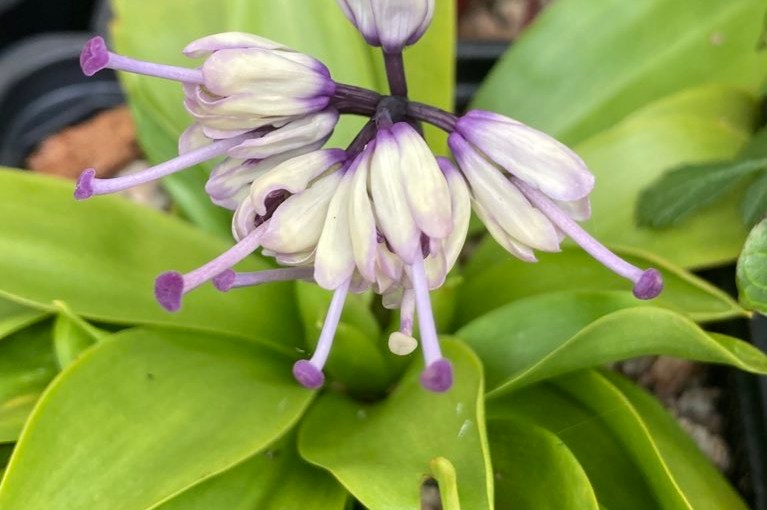
Heloniopsis tubiflora

I was delighted to be awarded a new National Collection of Heloniopsis and Ypsilandra in November 2023. The collection contains eleven species plus five cultivars and forms – all that are currently available in the U.K. (There is a variegated form of Heloniopsis orientalis, not available here at present, which I would love to get my hands on!) They are all in propagation and I hope to be able to offer small numbers of most forms for sale in the next few years.

Heloniopsis and Ypsilandra are two very closely related genera of evergreen woodland perennials from East Asia – so closely related that some authorities place them in a single genus, Helonias. They belong to the Melanthiacaea family, together with more well-known plants such as Trillium and Paris.

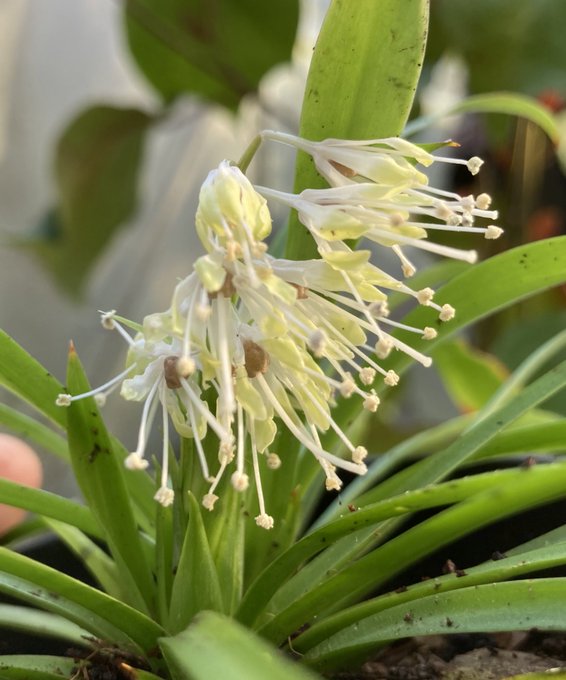
Ypsilandra thibetica

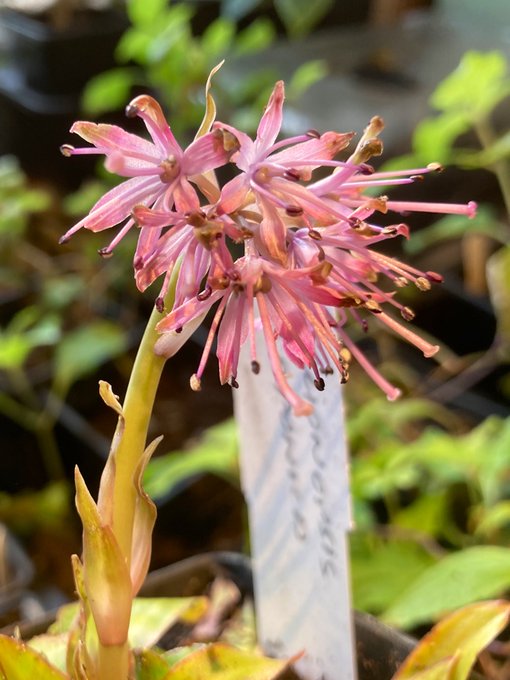
Ypsilandra contains about 5 species and Heloniopsis about 7. They are quite uncommon and not all species are in cultivation in the U.K. The most commonly available is Ypsilandra thibetica. They all have low rosettes of strap-like leaves and produce flower spikes of nodding, tubular flowers in shades of white, pink, and lilac, in late winter into early spring.

Heloniopsis orientalis (syn. H. japonica)

Heloniopsis are native to China, Japan, Taiwan, and Korea. Their common name is Oriental Swamp Pink or Japanese Hyacinth, and their name in Japanese is Shoujou Hakama (Shoujou is a red-haired, sake-drinking spirit, and Hakama are the traditional Japanese wide trousers). They require a reliably moist, humus rich soil in at least partial shade. It is a good idea to plant the rosette at a slight angle to allow water to run off and avoid rotting.

Ypsilandra yunnanensis var. fansipanensis
Ypsilandra are native to China, Myanmar and Thailand. They require similar growing conditions to Heloniopsis but will tolerate slightly drier conditions, which Heloniopsis absolutely will not. They flower very early – often in February – and have lightly scented white flowers with unusual pale blue anthers. The flowers fade to a coppery pink as they age. They are used in Chinese medicine to stop bleeding.

Heloniopsis orientalis producing plantlets at the leaf tips.

Both Ypsilandra and Heloniopsis can be rather reluctant to produce many seeds, but can be propagated, carefully, by division in spring. However, they can be propagated more reliably by leaf cuttings. Last year’s leaves are detached and placed in trays with both ends of the leaf inserted in a slightly damp growing medium. The trays are then placed in indirect light and kept warm. Plantlets may be produced at either end, and sometimes along the central vein. They take three years or so to reach flowering size. Heloniopsis orientalis naturally produces these plantlets where the tips of its leaves touch the soil, and in fact this is its main method of reproduction in its native habitat.

Heloniopsis tubiflora ‘Temple Blue

Though uncommon, they are great garden plants and worth seeking out, providing delicate colour at a time of year when every flower is especially valuable. I particularly recommend Ypsilandra thibetica, Heloniopsis orientalis, and Heloniopsis tubiflora ‘Temple Blue’.

Plant Profile: Hemiboea

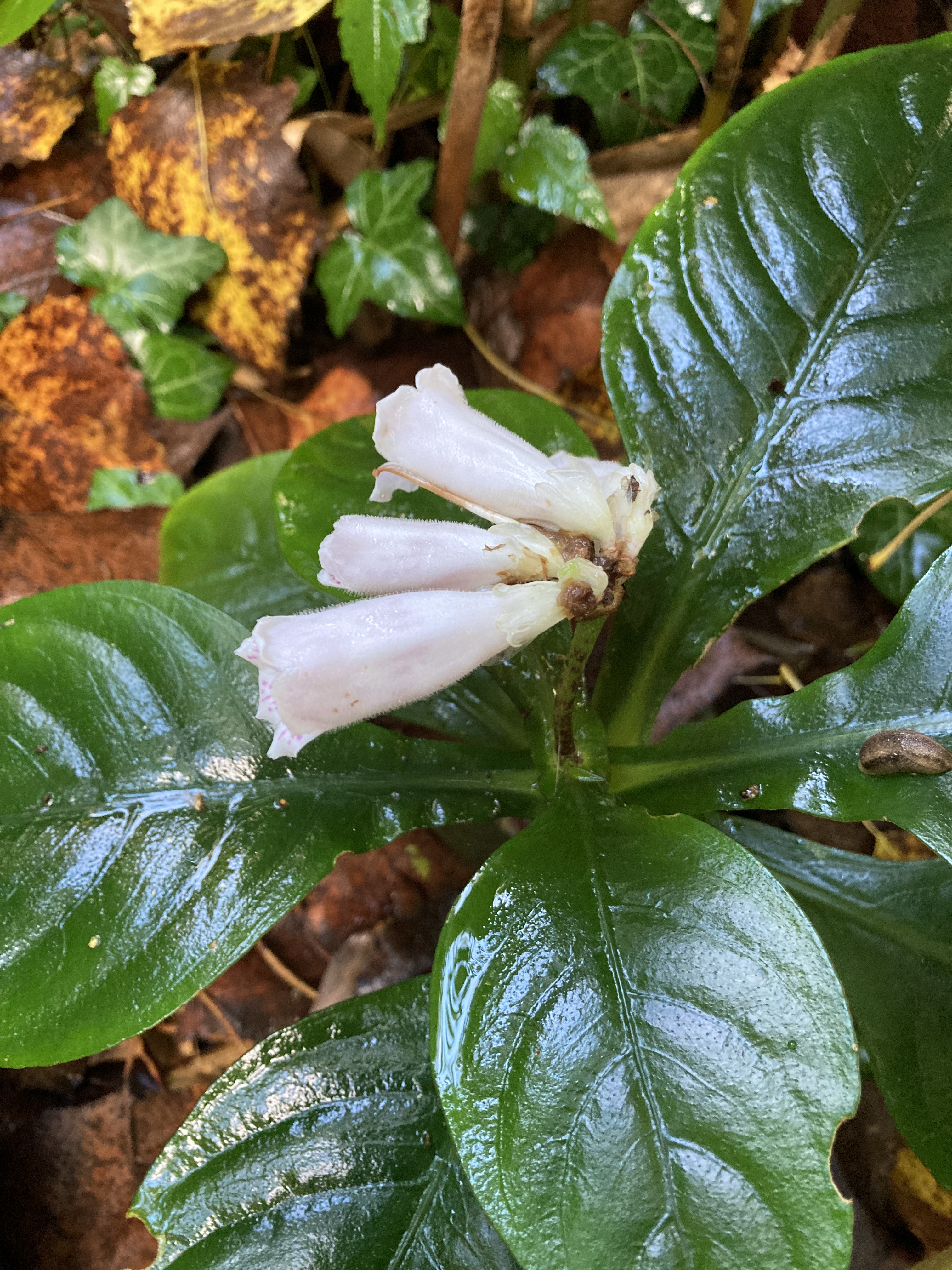
Hemiboea is a genus of attractive semi-evergreen woodland perennials originating from China, with a few also found in Vietnam, Taiwan, and the southernmost islands of Japan. There are more than forty species, but only three are currently in cultivation in the U.K., and these are rarely encountered. They are hardy and surprisingly tough members of the Gesneriad family, having come through the deep freeze, droughts, and torrential rain of the last year in the UK with surprising aplomb. They spread by stolons, have glossy green leaves which are very attractive in their own right, and flower in autumn. Their natural habitats are montane forests and the shaded banks of streams; in cultivation they like at least partial shade and a moist, humus rich soil. That said, they show a surprising tolerance for dry conditions, especially H. subcapitata.

Hemiboea strigosa

Hemiboea strigosa is probably the most widely available species in the U.K. With leaves slightly smaller and lighter in texture than H. subcapitata, it makes a spreading clump about 1′ to 18″ (30-50cm). The tubular pink flowers appear in September, and it flowers readily for me.

Hemiboea subcapitata

Hemiboea subcapitata has larger, broader, and darker green leaves than the other species. The white flowers, spotted pink and washed with yellow inside, appear very late, well into October. Apparently, the balloon-like flower buds shoot out a jet of water when squeezed. Unfortunately, I only heard this recently, so will have to wait till next year to try it!

Hemiboea subcapitata

The third species, Hemiboea bicornuta, is a Taiwanese species and very rare in the U.K. The leaves are somewhat thinner and less glossy. The white or pale pink flowers, spotted purple within, are very similar to the other species and also appear in September to October. It should prove to be the tallest of the three, reaching up to a metre in the wild. I have found it a rather shy flowerer.

Plant profile: Clerodendrum bungei

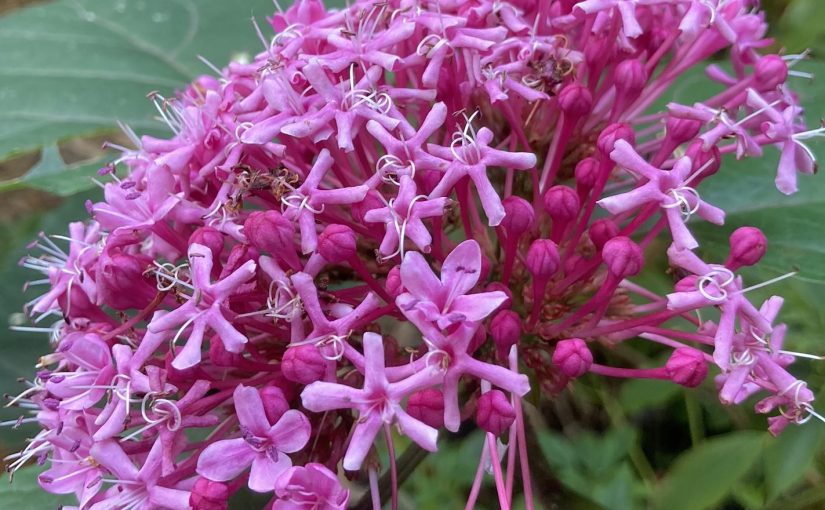
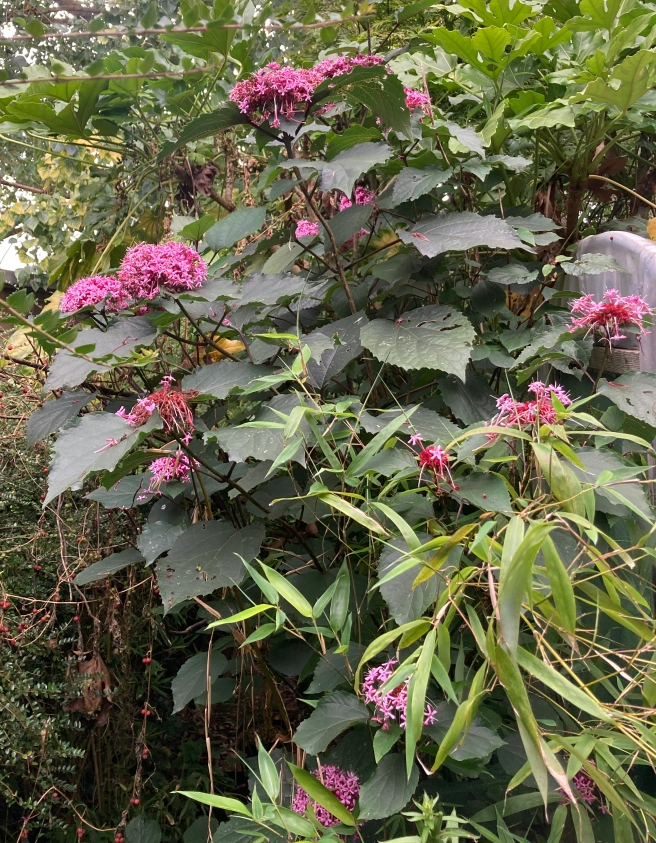
This exotic looking shrub, native to China and northern India, has a number of common names: Rose Glory Bower, Glory Flower, Kashmir Bouquet and Mexican Hydrangea. Rather more prosaically, it is known in China as Chou Mudan, stinky peony, and stinky safflower in Japan. Indeed it was originally introduced to the West under the name Clerodendrum foetidum. These names refer to the leaves, which smell quite unpleasant to some people, although to others the scent is reminiscent of peanut butter. Ironically, it is used medicinally in China to ‘dispel wind’, amongst other things. The large, showy, pink flowers, produced from late summer into autumn, are sweetly and strongly fragrant. The large ovate leaves, flushed dark red when young, are very attractive and give a distinctively exotic effect.

Clerodendrum bungei is hardy to zone 7, dying back to the ground in some parts of the U.K., although in my dry, shady, East Anglian garden it has yet to do so, even in the last winter (22/23). It gets to a good 6ft, 2m, in height, and once established in conditions it likes, can become invasive. It can spread quite a distance – up to 6 metres! – by suckers, and also self-seeds, though not prolifically. I find growing it in drier conditions keeps it reasonably well in check. It has become naturalised in several parts of the world and is an invasive weed in parts of the southern U.S. In its native China, it is a plant of mixed woodland slopes and waste ground, preferring shady, moist conditions and a humus rich soil.

There is also a variegated form, Clerodendum bungei ‘Pink Diamond’, which has attractive grey-green leaves with cream-variegated margins, and is slightly more compact than the straight species.

Plant profile: Anemonopsis macrophylla

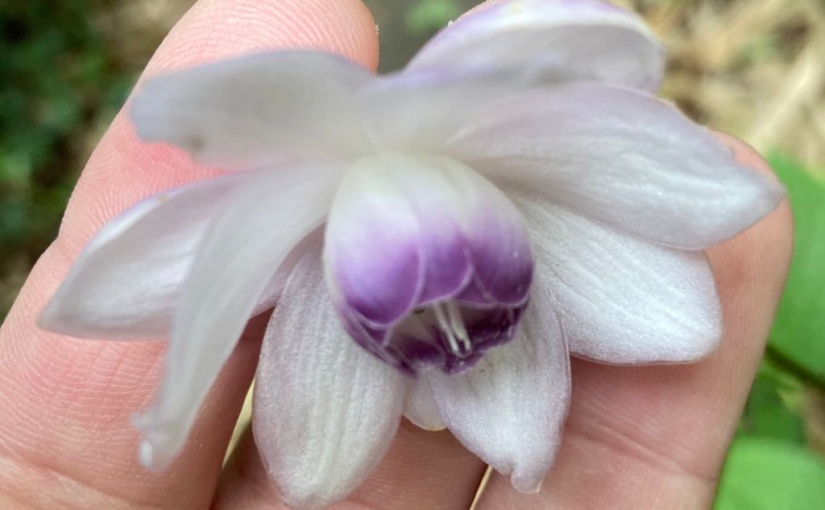
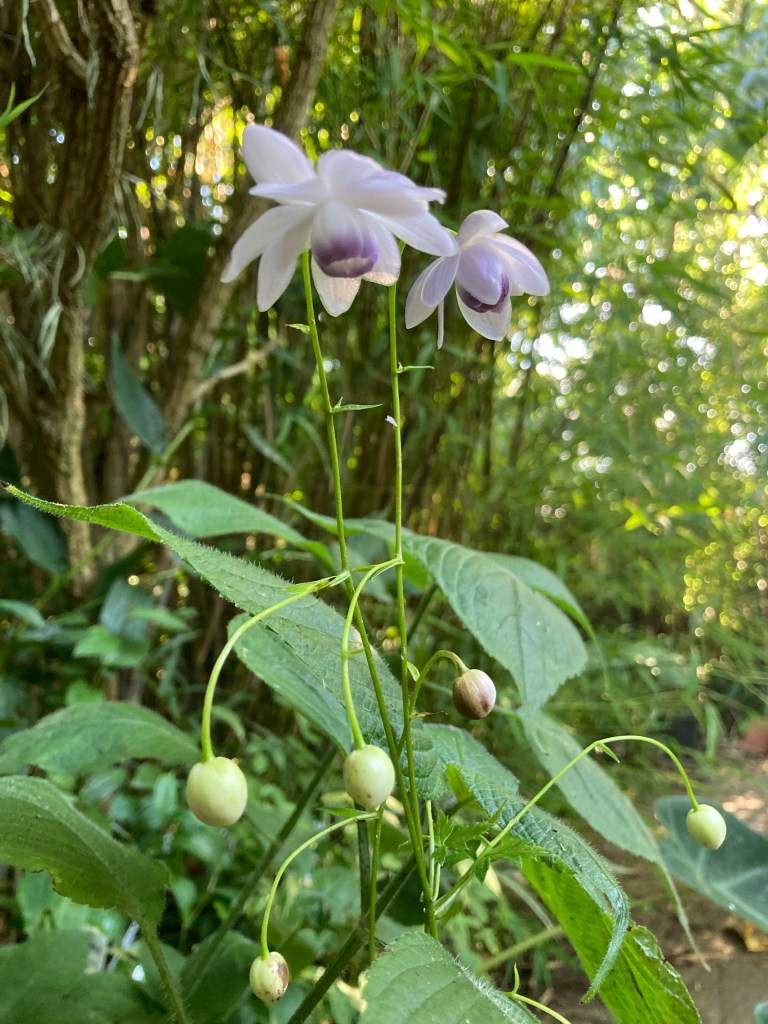
Anemonopsis macrophylla, the false anemone, is a herbaceous perennial in the Ranunculaceae family. It’s also one of the most exquisite flowers you can grow in the shade. In late summer, the nodding lilac and white flowers float above the clump of jagged-edged foliage like miniature upturned lotuses sculpted out of wax.

It is this resemblance which gives the plant its Japanese name, rengeshoma, lotus-flowered Actaea (shoma is Actaea, and renge is lotus). If you add ‘ki’, gold, you get another gorgeous Japanese endemic, Kirengeshoma palmata.

Anemonopsis macrophylla is found in the wild only in a few places on Honshu, the main island of Japan. It grows in the woodlands of the central mountains, and in the garden likes similar sheltered conditions. It needs shade and a good humus rich soil, and will not tolerate drying out. It’s also a good idea to protect it from slugs. ‘Slug Gone’ wool pellets work well for me and are non-toxic as well as good for the soil. Some authors suggest that it benefits from a slightly raised planting position. Overall, unless you are blessed with the exact conditions it prefers, sadly rare in the U.K., it is a plant that definitely requires a little extra effort to grow well.

Anemonopsis macrophylla ‘Flore Plena’

There is also a white form of Anemonopsis macrophylla, sometimes sold under the name ‘White Swan’, and a double form, ‘Flore plena’. Though lovely, sought-after, and according expensive, neither of these beat the elegance of the straight species, in my opinion. In Japan, there is also a form with variegated leaves and one with an unpigmented petiole (‘Aojiku’, a very desirable feature in Japanese horticulture). I have had, as yet, no success with these from imported seed.

Plant profile: Maianthemum japonicum

Maianthemum is a genus of rhizomatous perennials, widely distributed across Asia, Europe, North and Central America. Maianthemum japonicum, formerly Smilacina japonica, is native to Japan, China, Korea and the far east of Russia. Its common name is Japanese False Solomon’s Seal, as the genus is closely related to Polygonatum.

Maianthemum japonicum has arching stems to about 12-18”, 30-45cm, with a panicle of many tiny starlike white flowers at the tip of the stem in May and June. These are followed by shiny red berries in autumn. It prefers woodland conditions: humus rich soil in partial shade, not too dry. In its native habitat it grows in slightly damp montane forests. Propagation is by division of the creeping rhizomes in spring.

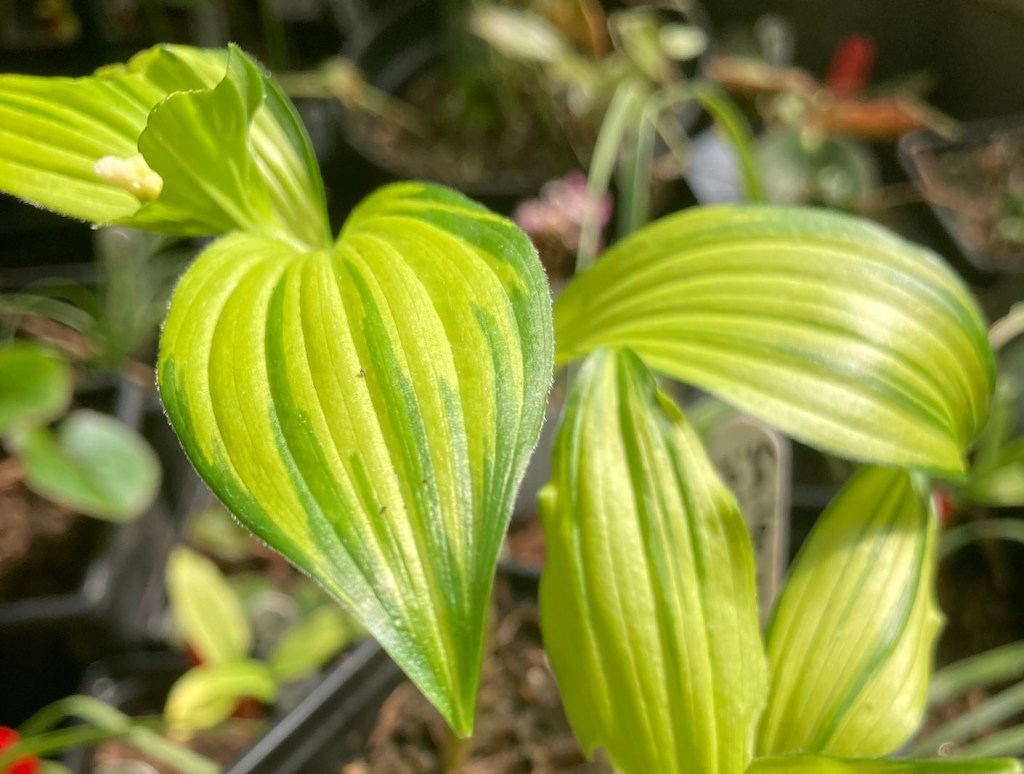
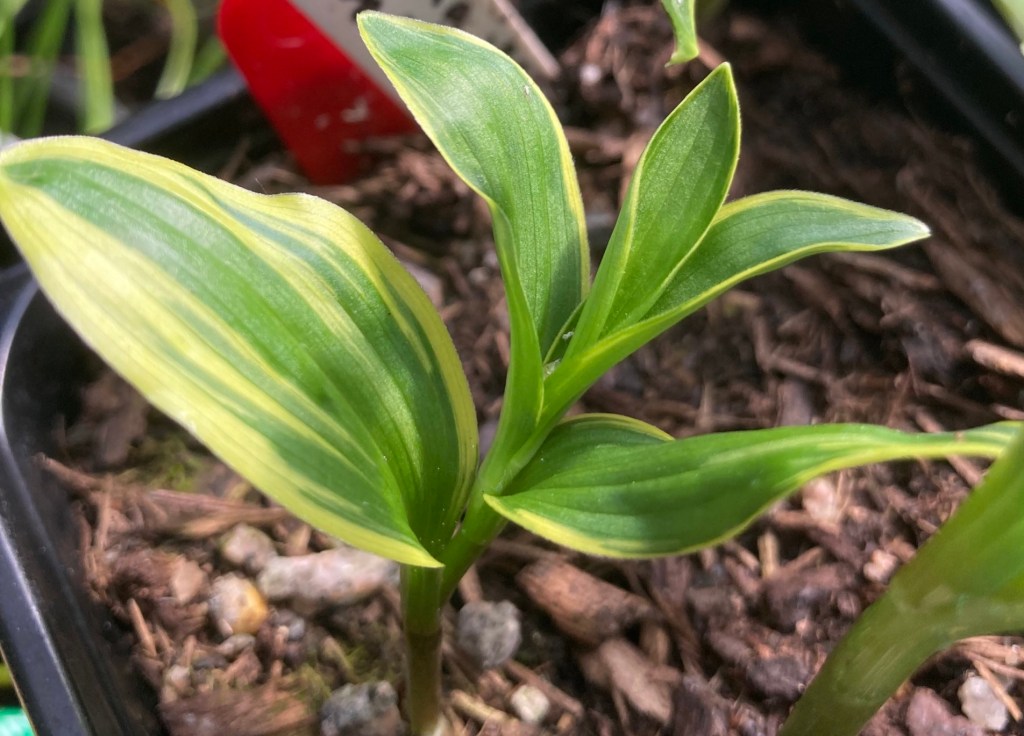
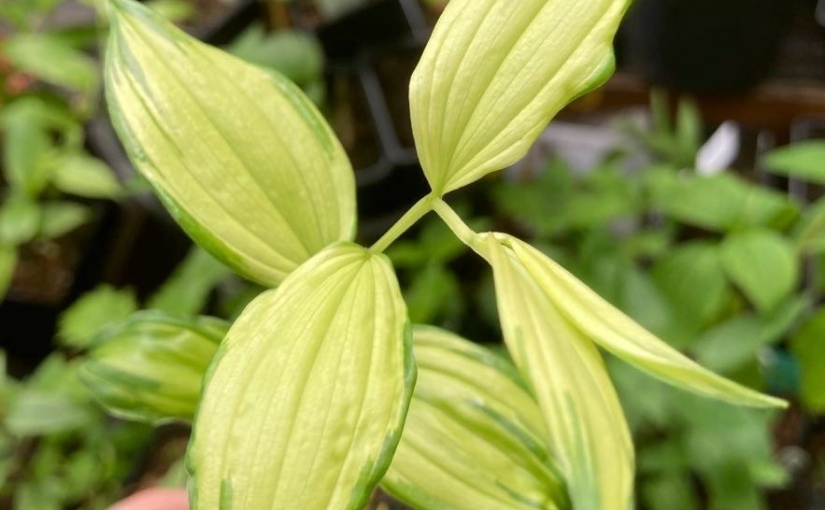
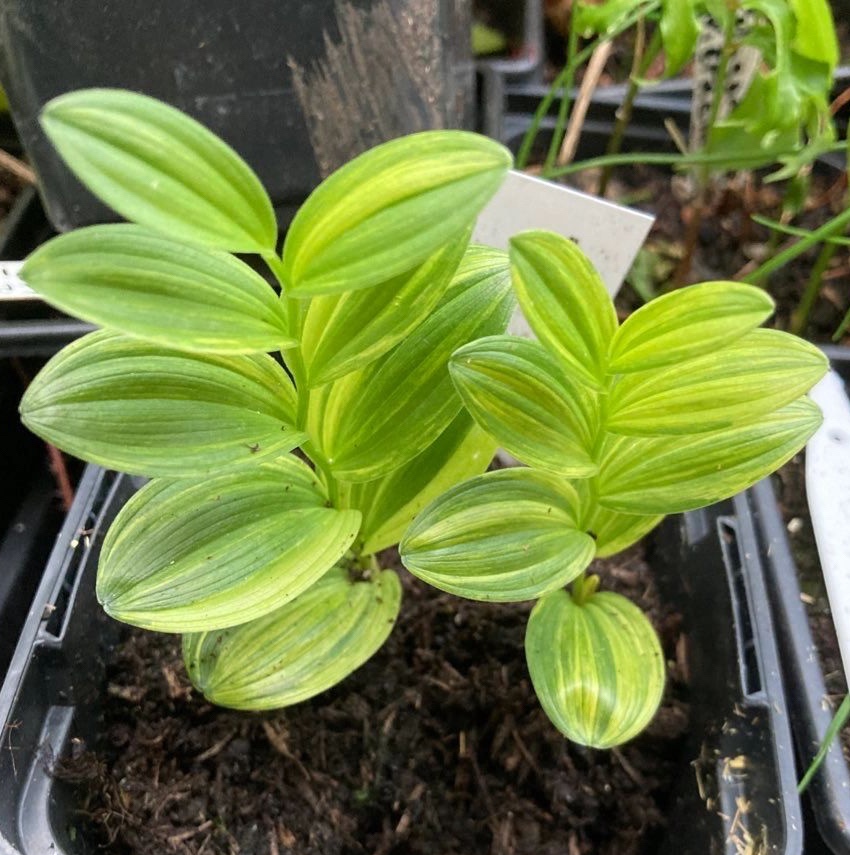
As with many native Japanese plants, a number of variegated varieties have been selected over the years.

Maianthemum japonicum ‘Senkou’

Maianthemum derives its name from the Greek for ‘May Flower’. The Japanese name, ユキザサ, literally ‘snow bamboo’ derives from the white flowers and leaves reminiscent of Sasa bamboo leaves. The new shoots are harvested and eaten as a wild vegetable in Japan, and when boiled are said to taste of adzuki beans, giving it the common name of ‘Red Bean Greens’.

Maianthemum japonicum ‘Ki Shiro Fukurin Fu’

Tortoiseshell and Crow Leaf: Japanese Variegation Patterns

The Japanese horticultural tradition is very different to ours here in the U.K. Whilst British nurseries and botanical gardens sent plant hunters around the world in search of novelties, Japanese horticulturists focused on collecting their own, astonishingly rich, native flora, and creating almost infinite varieties by selection and, to a lesser extent, by hybridization. (Read more about Koten Engei here.)

Syneilesis palmata ‘Kikkou Fu

One of the most valued characteristics is variegation, of which, again, there are innumerable forms. Some of the many names for Japanese variegation patterns are listed below, ranging from the straightforwardly descriptive to the distinctly poetic.

Polygonatum humile ‘Shiro shima’

Fuiri means ‘variegation’ and pattern names often end with -fu.

Disporum smilacinum ‘Ki Naka Fu’
  • Shiro fu – white variegation
  • Aka fu – red variegation
  • Ou sai – yellow
  • Ogon – gold
  • Shima fu – striped variegation e.g. ki shima fu – yellow striped variegation
  • Chiri fu – mottled variegation
  • Sunago fu – scattered sand variegation
  • Hakikomi fu – brush strokes / swept variegation
  • Kikkou fu – tortoiseshell pattern
  • Naka fu – central variegation (i.e. in the centre of the leaf)
  • Sankou naka fu – multicoloured / complex central variegation
  • Fukurin fu – bordered variegation , e.g Shiro fukurin fu – white bordered variegation
  • Fuka fukurin fu – wide-margined variegation
  • Ito fukurin – thread border
  • Tora fu – tiger variegation
Leucosceptrum japonicum ‘Hakikomi Fu’

Some of the more poetic names:

  • Akebono – Dawn
  • Gin getsu – Silver moon – very little green on white leaves
  • Ama no gawa- Milky Way
  • Zansetsu – Lingering snow
  • Awa no Tsuki – Moon of Awa
  • Koutei – Yellow Emperor
  • Reihou – Sacred mountain
  • Dai kouga – Great yellow river
  • Byakko – White tiger – mainly white leaves with green tips
  • Muhyou – Hoarfrost
  • Gin sekai – Snow covered scene
  • Chouyou – Sunrise
  • Kinkaku – Golden pavilion
  • Shunrai – Spring thunder – fine white lines on green leaves
  • Nagori yuki – Remaining snow
  • Sajin – Dust
  • Haku un – White clouds – actually a creamy yellow variegation
  • Senkou – Flash
  • Hagoromo – angels’ raiment, robe of feathers
  • Yuki no shita – Under the snow
  • Karasu ha – Crow leaf – almost black leaves
  • Oboro zuki – Hazy moon
  • Kichou – Yellow butterfly
  • Nishiki – brocade – beautifully multicoloured or complex variegation
  • Raijin – Thunder god
  • Suikou – Green light
  • Ryoku un – Green clouds
  • Ginga – Galaxy
Disporum sessile ‘Awa No Tsuki’

(Apologies for any errors – I speak very little Japanese at the moment and am therefore reliant on internet sources!)

Pines in the Chinese Garden

As with most plants used in the Chinese garden, pines are a hugely important symbol in Chinese culture, and have been grown for thousands of years. Originally associated with religion and funerary practices thousands of years BCE, they have long been essential plants in the Chinese garden.

Pine, bamboo and plum (Prunus mume) make up the Three Friends of Winter. Pine symbolises strength and endurance. Many Chinese sayings relate to this- for example, Confucius said that only in winter do we see that the pine and cypress are evergreen, meaning that only in adversity do we see a person’s true strength. Growing in isolated places and clinging to life on inhospitable rocky cliffs, they represent longevity, resilience, and the noble hermit of Chinese literary tradition.

Ma Lin, 1180-1256 靜聽松風圖 Listening Quietly to Soughing Pines

There are a number of ancient pine trees in China, often planted beside temples. Possibly the most famous is the Guest Greeting Pine on the sacred mountain of Huangshan. A specimen of Pinus hwangshanensis believed to be between 800 and 1000 years old, it has become a symbol of China and Chinese hospitality, and is so precious that it is guarded 24 hours a day, carefully protected from adverse weather, lightning, disease, animal damage, and over-enthusiastic tourists. It was represented in firework form in the opening ceremony of the Beijing Olympics, and is currently being digitised in a 5 year long 3D modelling project.

迎客松, Guest Greeting Pine, Huangshan

Like bamboo, pines are valued for the sound of the wind blowing through them. In ancient times, this was known as songtao, which translates roughly as pine waves or pine surf. The wind in the pines is a recurring motif in both Chinese poetry and landscape painting, and the music of the traditional instrument, the qin, has been likened to the sound of pines and vice versa.

Pine in the Couple’s Retreat Garden, Suzhou

Pines planted in the Chinese garden, like almost all the plants used, are local species intended to evoke the natural landscape of China. Pinus bungeana, the lacebark pine, is often used for its attractive scaly bark. Pinus tabuliformis, the Chinese red pine, is the most commonly used, along with Pinus massoniana and Pinus armandii, the Chinese white pine. Gnarled and misshapen specimens are particularly prized, suggesting trees growing on windswept mountains, or bringing to mind dragons with their scaly bark and twisted limbs.

Bark of Pinus bungeana

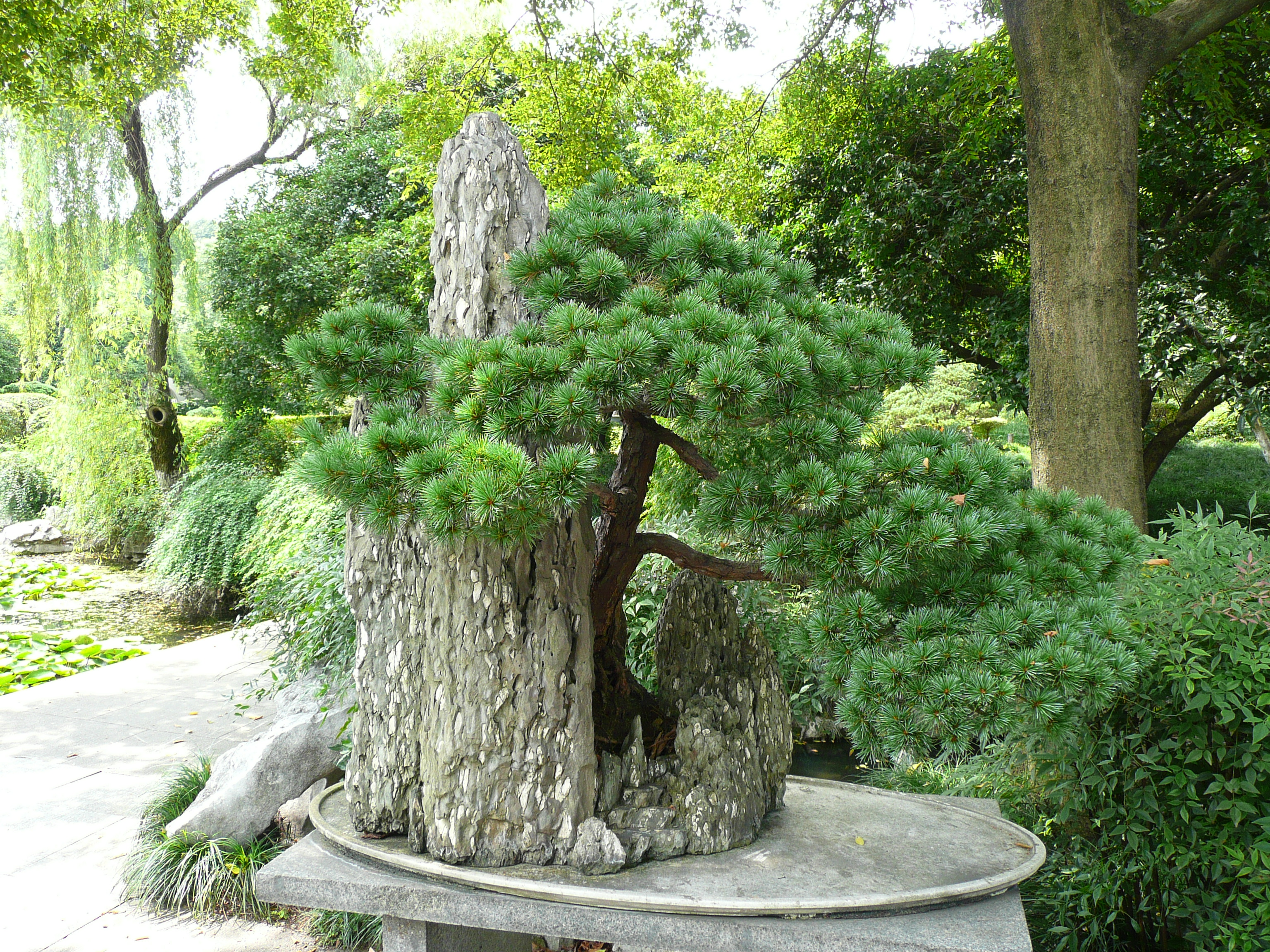
Pines are also very popular subjects for penjing, the miniature landscapes that were the ancestors of bonsai.

Pine penjing in the Bamboo Garden, West Lake, Hangzhou

Plant Profile: Asimitellaria

Asimitellaria is a recently recognised genus of plants in the Saxifrage family, previously included in the genus Mitella, and related to Tiarella, Heuchera, and Tellima (which is an anagram of Mitella). There are 11 species, 10 endemic to Japan and one to Taiwan. Asimitellaria are woodland plants, preferring a humus rich soil, not too dry, in partial to full shade. They are mostly small, evergreen, clump-forming or gently creeping perennials, grown for their attractive lobed foliage, which is sometimes patterned in reds and purples. The spikes of tiny cap shaped flowers in spring give the plant its common name of Mitrewort or Bishop’s Cap. They usually produce plentiful seed which germinates readily when fresh and kept moist.

Asimitellaria makinoi

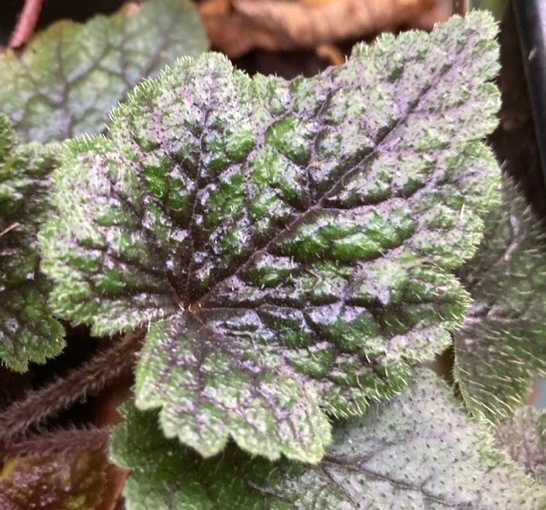
Asimitellaria makinoi is a diminutive species – only around 10cm tall- from Japan, introduced by Crûg Farm. The leaves are delightfully patterned in purple with silvery patches, and the flowers and flowering spikes are red.

Asimitellaria acerina

Asimitellaria acerina is rather larger, growing up to 40 cm in height, with leaves up to 10 cm. The glossy green palmate leaves give it its Japanese name of Maple-leaved Mitella. The delicate spikes of little flowers are greenish-pink.

Asimitellaria kiusiana

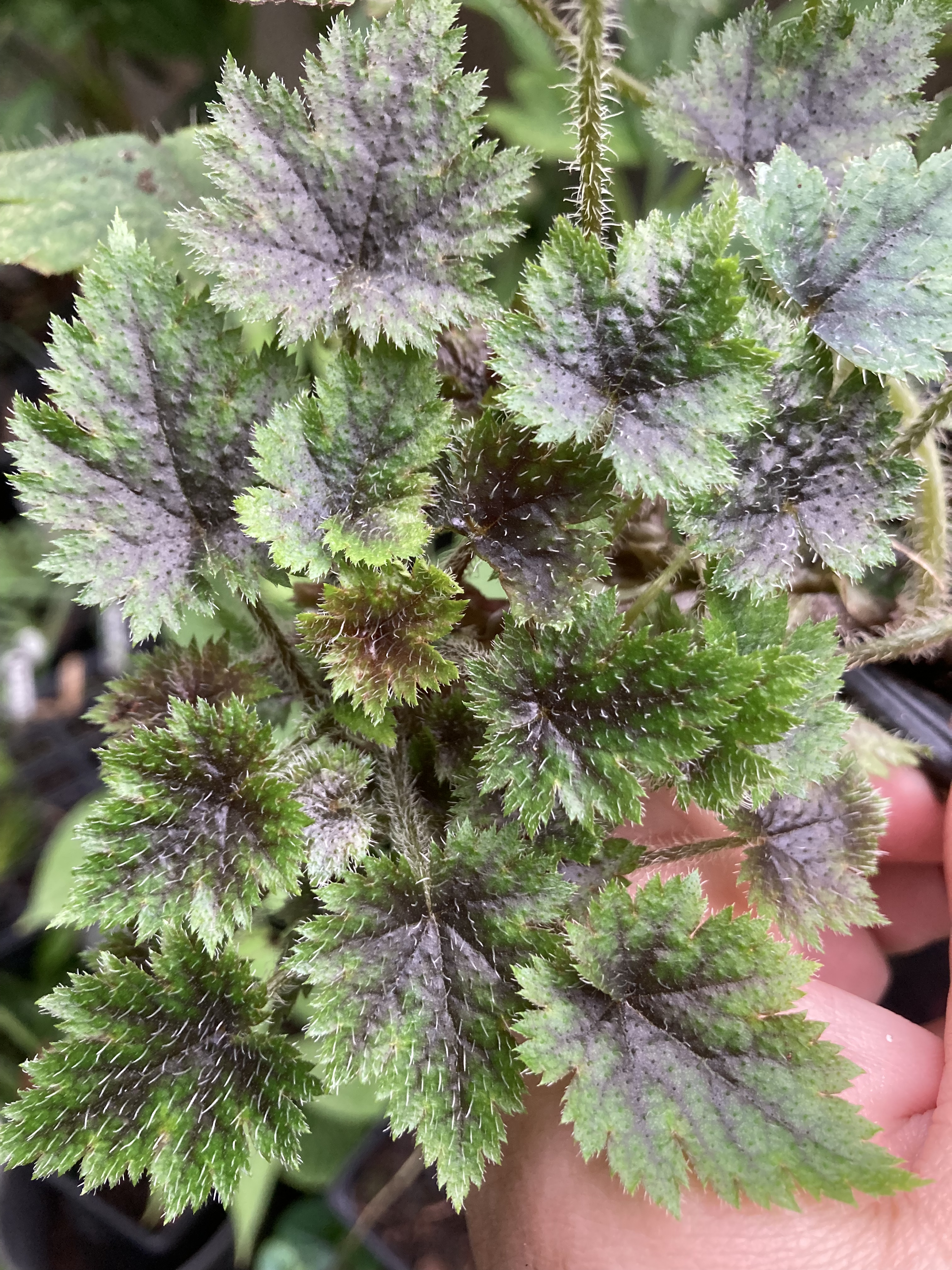
Asimitellaria kiusiana is another low-growing plant, to only 20 cm or so. The green leaves have variable red patterning along the veins, and the flower spikes are pale green.